
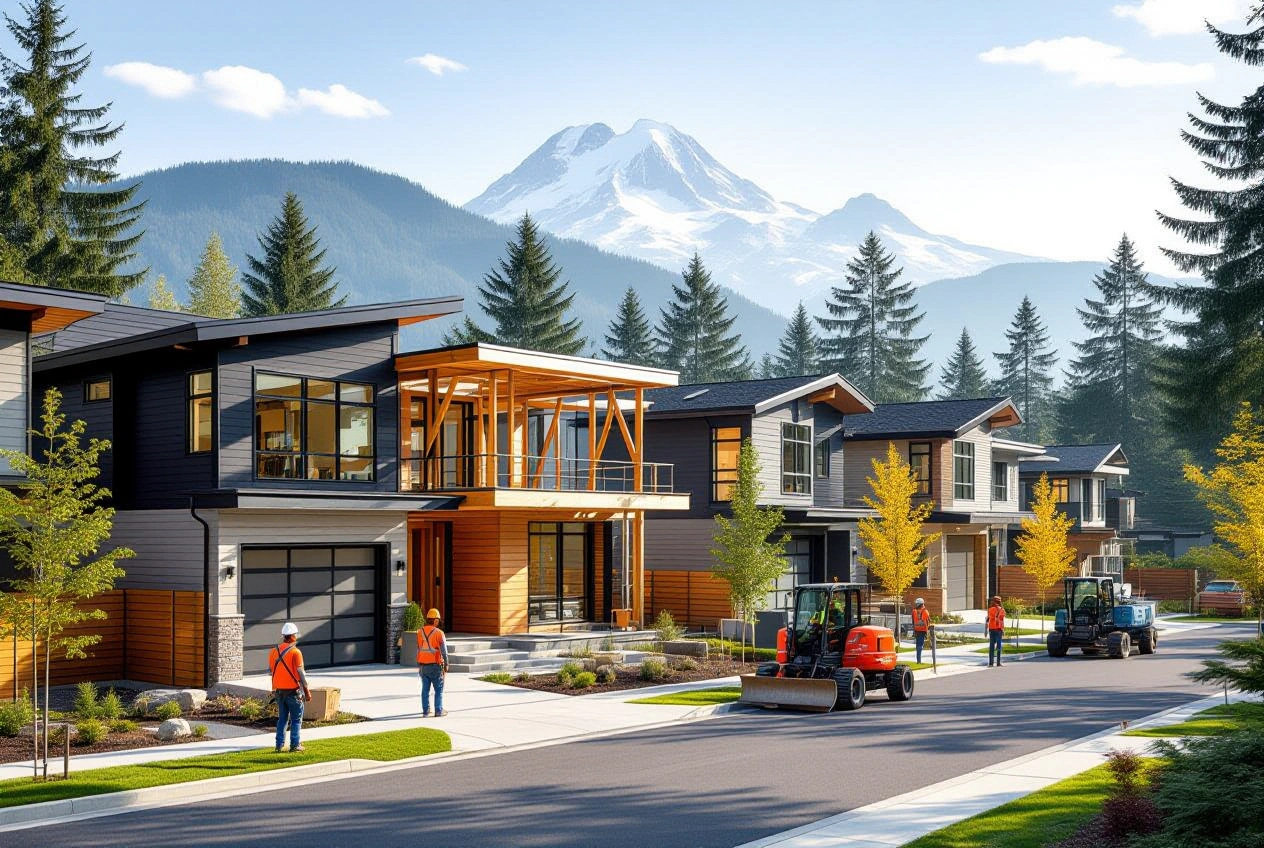
Washington Housing Construction Gains Momentum in 2026
Washington’s residential construction market has shown stronger activity during the first half of 2026, with builders obtaining substantially more housing permits than during the same period last year.
U.S. Census Bureau data show that Washington authorized approximately 20,877 new residential housing units through June 2026. That represents an increase of roughly 27% from the first six months of 2025. The figures include single-family and multifamily housing units authorized through building permits.
The increase suggests that developers are responding to continued housing demand across the state, although permit activity does not necessarily mean that all permitted homes have already begun construction.
Construction Activity Strengthens
Washington recorded its strongest monthly permit activity of the first half of the year in May 2026, when approximately 4,442 housing units were authorized.
April was also strong, with 4,289 units authorized, while June recorded 3,539 units.
Single-family construction remains an important part of the market. In June alone, Washington authorized 1,693 single-family units, according to Census Bureau data.
The remaining permitted units came from structures containing two or more housing units, highlighting the continued importance of multifamily and other forms of higher-density housing.
Multifamily Housing Remains an Important Part of the Supply Pipeline
Washington’s housing activity is not limited to detached single-family homes.
Multifamily construction continues to contribute substantially to the state’s overall housing pipeline. The Census Bureau’s Building Permits Survey tracks units authorized in structures ranging from single-family homes to buildings containing five or more units.
This is particularly important as communities look for ways to add housing while making more efficient use of available land.
The state’s Washington Accelerator for Residential Production (WARP) program is also examining ways to remove barriers to housing construction, reduce development costs and accelerate housing-production timelines. The program was established through the state’s 2026 supplemental capital budget.
Seattle-Tacoma Region Continues to Drive Activity
The Seattle-Tacoma-Bellevue metropolitan area remains one of the state’s major housing markets.
In June 2026, the metropolitan area recorded 1,947 housing units authorized by building permits, including 586 single-family units.
The region’s continued development reflects the combination of population growth, employment opportunities and persistent demand for housing in the Puget Sound area.
However, housing construction is occurring across a much broader part of Washington, with communities outside the Seattle metropolitan area also contributing to the state’s overall supply.
What This Means for Homebuyers
More construction can provide buyers with additional choices, particularly as new communities and multifamily developments come onto the market.
New construction can offer:
- Modern energy-efficient features
- New appliances and building systems
- Contemporary floor plans
- Lower immediate maintenance requirements
- New community amenities
- More housing choices at different price points
Buyers should nevertheless compare the total cost of a new home with existing properties, including HOA fees, property taxes, insurance, financing costs and potential builder incentives.
What This Means for Homeowners and Sellers
For existing homeowners considering selling, increased new-home construction can create additional competition.
Builders may offer incentives such as:
- Mortgage-rate buydowns
- Closing-cost assistance
- Upgrade packages
- Appliance incentives
- Promotional financing
These incentives can make newly constructed homes more attractive to buyers.
However, the effect will vary considerably by location and price range. A rise in statewide permits does not automatically mean that every local housing market will experience increased inventory or downward pressure on prices.
Growth Beyond the Major Metropolitan Areas
Housing construction is also occurring in communities outside the Seattle area.
Washington’s regional markets are experiencing different levels of development depending on employment growth, land availability, infrastructure capacity and local housing demand.
For homeowners and community associations, this means local development activity may be more relevant than statewide totals.
A new subdivision, apartment development or mixed-use project near an existing community can affect:
- Traffic patterns
- School demand
- Road infrastructure
- Utility requirements
- Parks and recreation
- Retail development
- Community services
- Future property demand
Faster Permitting Could Help Housing Production
One of the state’s goals is to make housing development more efficient.
The Washington Accelerator for Residential Production specifically identifies reducing development barriers and accelerating housing-development milestone timelines as objectives.
However, I would remove the original claim that average permit approval time fell from 63 days to 47 days statewide unless you have a specific Washington county or state report supporting those numbers. I could not verify that figure in the official sources I checked.
What This Means for HOAs and Community Associations
For community associations, increased residential construction can have longer-term implications.
New housing developments may eventually bring more residents into surrounding areas, creating additional demand for:
- Roads and transportation
- Community amenities
- Retail services
- Parks
- Schools
- Utilities
- Public services
HOA boards and community managers should pay attention to major development proposals near their communities and understand how planned growth could affect infrastructure and neighborhood operations.
What Buyers and Sellers Should Watch
For buyers
Monitor new developments and compare builder incentives with the actual purchase price and financing terms.
For sellers
Understand the amount and type of new construction competing with your property in the immediate market.
For investors
Look at local development pipelines rather than relying solely on statewide permit numbers.
For HOAs
Monitor nearby subdivision and multifamily proposals that could affect traffic, infrastructure and future community growth.
Looking Ahead
The latest Census Bureau data indicate that Washington’s housing-construction pipeline strengthened during the first half of 2026.
At the same time, permit data should be interpreted carefully. A building permit represents authorization to build; it does not necessarily mean that construction has started or that a home will immediately enter the market. The Census Bureau distinguishes permits from housing starts and completions in its residential-construction statistics.
As additional 2026 data become available, the most useful indicators to watch will be permits, housing starts, units under construction and completed homes.
Final Takeaway
Washington’s residential construction market is showing meaningful momentum in 2026.
Approximately 20,877 housing units were authorized by building permits during the first six months of the year, based on Census Bureau data, up substantially from the same period in 2025.
The increase suggests that builders are responding to housing demand with both single-family and multifamily projects.
For homeowners, buyers and community associations, the important question isn’t simply how many permits Washington issued statewide. It’s where those homes are being built and how that development will affect individual communities.