
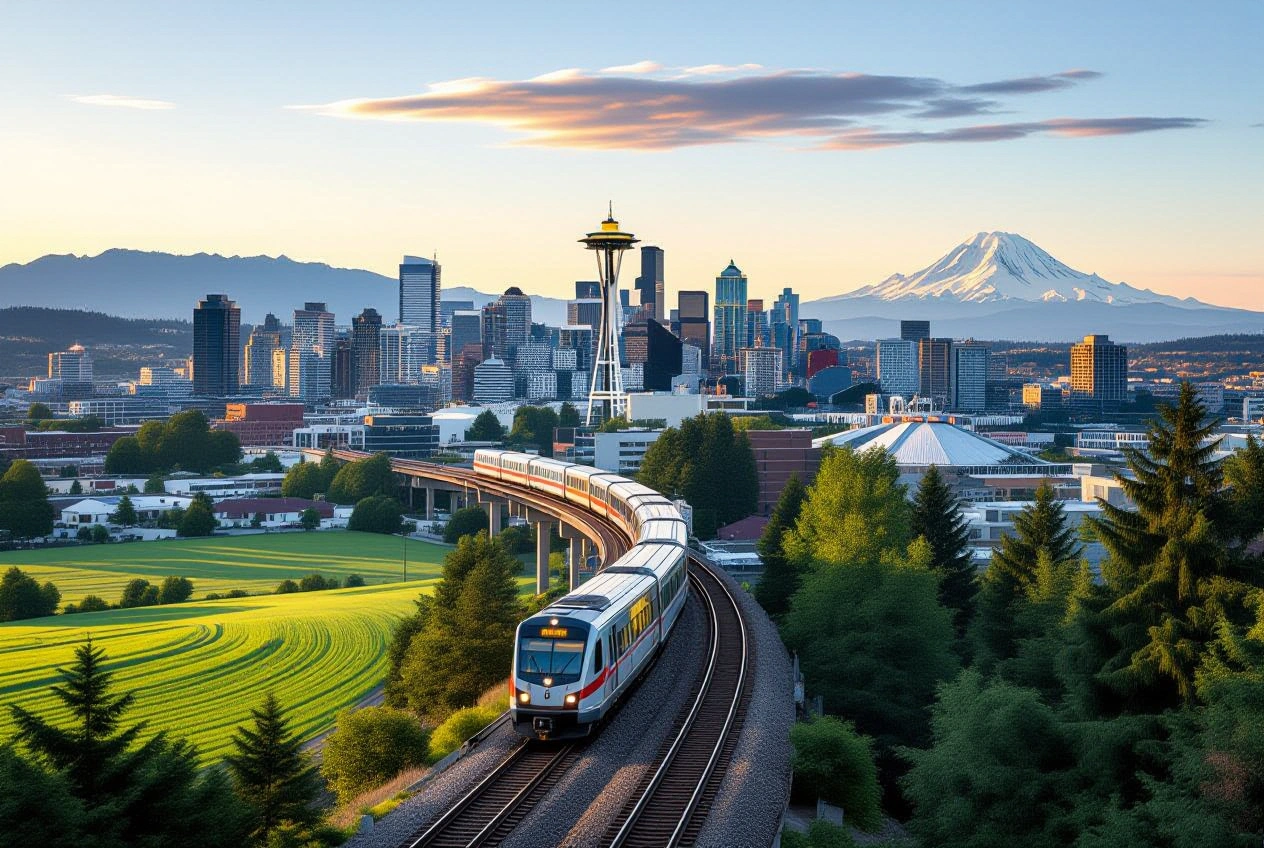
Cascadia High-Speed Rail Planning Moves Forward Across the Pacific Northwest
Plans for a potential high-speed rail system connecting Portland, Seattle and Vancouver, British Columbia are continuing to advance as Washington, Oregon and British Columbia work together to evaluate the future of passenger transportation across the Cascadia region.
The project, known as Cascadia High-Speed Rail, is currently in the planning and development stage. The Washington State Department of Transportation (WSDOT) is working with its regional partners to evaluate potential routes, service options, ridership demand, environmental considerations and the economic implications of a future high-speed rail system.
A Major Regional Transportation Planning Effort
The Cascadia High-Speed Rail project is part of a larger WSDOT program that looks at both high-speed rail and the future needs of the Interstate 5 corridor.
The broader Cascadia Megaregion includes the metropolitan areas of Vancouver, B.C., Seattle and Portland, which share major economic, transportation and population-growth connections. WSDOT estimates that the megaregion could add approximately 3.4 million people by 2050.
The goal of the planning effort is to determine whether high-speed rail could provide a faster, more reliable transportation option while complementing highways, airports, Amtrak Cascades and local transit systems.
Federal and State Funding Is Supporting the Planning Phase
The Federal Railroad Administration awarded the Cascadia project a $49.7 million Corridor Identification and Development grant in December 2024.
Washington is also providing $5.5 million in state matching funds, bringing the current planning budget to approximately $55 million.
This funding is being used for the next stage of planning rather than construction of a high-speed rail line.
That distinction is important: the project does not yet have a final route, station plan or construction schedule.
What the Current Study Is Examining
WSDOT’s current Service Development Plan is examining several major questions.
Potential Routes
The study will evaluate possible corridor and route options between the major metropolitan areas.
Specific route alignments have not yet been selected. WSDOT expects route and service options to be developed during the current planning process.
Ridership and Market Demand
Researchers are examining current and projected travel patterns to determine how much demand could exist for high-speed rail.
The 2025 market analysis looked at existing transportation conditions, demographic trends, travel volumes and potential future demand for high-speed rail.
Environmental Considerations
The planning process will also consider potential environmental opportunities and challenges.
More detailed environmental review would occur in later phases if the project advances.
Travel Time and Service Options
WSDOT is evaluating factors that could affect travel speeds and travel times, including potential route alignments and the number and location of stations.
High-Speed Rail Would Complement Amtrak Cascades
The proposed high-speed rail system would not replace Amtrak Cascades.
WSDOT says the two systems would complement one another.
High-speed rail would be designed for faster trips between major metropolitan areas, while existing passenger rail and local transit could continue serving intermediate destinations.
Proposed high-speed services could operate at speeds of approximately 160 to 250 miles per hour, depending on the eventual system design.
What This Could Mean for Residents
A future high-speed rail system could provide another transportation option for people traveling between major cities in the Pacific Northwest.
Potential benefits could include:
- Additional intercity transportation options
- Reduced dependence on automobile travel
- Faster connections between major metropolitan areas
- Better connections to local transit
- Increased access to employment centers
- Greater regional connectivity
- Potential reductions in highway congestion
However, these are potential future benefits, not results that residents are experiencing today.
Potential Economic Impact
Previous WSDOT studies have identified potentially significant economic benefits from a future high-speed rail system.
A 2019 business-case analysis estimated that an eventual ultra-high-speed system could contribute substantially to regional economic growth and employment. However, those figures were based on earlier scenarios and should not be presented as guaranteed outcomes of the current project.
The current planning process is intended to provide more updated information about the project’s potential market, economic and transportation impacts.
Property and Community Development Considerations
Major transportation investments can influence development patterns over time.
If a high-speed rail system is eventually constructed, communities surrounding future stations could potentially experience increased interest in:
- Residential development
- Commercial development
- Hotels
- Restaurants
- Retail
- Transit-oriented development
- Office space
However, it is too early to identify specific properties or neighborhoods that will benefit because station locations have not yet been determined.
Property owners and investors should therefore avoid treating current conceptual maps as final development plans.
What This Means for HOAs and Community Associations
Long-term transportation planning can also be relevant to homeowners associations.
Communities located near major transportation corridors may eventually experience changes in:
- Traffic patterns
- Population growth
- Development activity
- Infrastructure demand
- Commercial activity
- Transit access
- Property development
For community associations, staying informed about regional transportation planning can help boards understand how future infrastructure decisions could affect their communities.
Public Engagement Will Be Important
Community involvement is expected to be part of the planning process.
WSDOT has emphasized engagement with the public, tribes and Indigenous communities, elected officials, transportation agencies, business and labor groups and other stakeholders.
Residents interested in the project should follow WSDOT’s official Cascadia High-Speed Rail updates rather than relying on conceptual maps or unofficial social-media discussions.
What Residents Can Do Now
Residents who want to follow the project can:
Monitor WSDOT updates: Follow the official Cascadia High-Speed Rail project page.
Review planning reports: WSDOT publishes market analyses and project status reports.
Participate in public engagement: Watch for opportunities to provide feedback as route and service options are developed.
Monitor local planning: Communities potentially affected by future transportation infrastructure may incorporate regional growth considerations into their long-term planning.
Avoid assuming station locations: Current route concepts are still being evaluated.
Looking Ahead
The current Service Development Plan is expected to continue through 2028.
During this period, WSDOT and its partners will continue evaluating route and service options, market demand, ridership potential, environmental considerations and other factors necessary to determine whether the project should advance.
The next several years will therefore be focused primarily on planning and analysis—not construction.
Final Takeaway
The Cascadia High-Speed Rail project represents one of the Pacific Northwest’s most ambitious long-term transportation proposals.
Washington, Oregon and British Columbia are studying the possibility of creating a faster passenger rail connection between Portland, Seattle and Vancouver, B.C., with federal and state funding supporting the current planning phase.
The project could eventually provide new transportation choices, strengthen connections between major economic centers and influence future development patterns across the Cascadia Megaregion.
For now, however, the project remains in the planning stage. No final route, station locations or construction timeline has been established.
For residents, businesses and community associations, the best approach is to follow the official planning process and understand how future transportation decisions could affect regional growth.