
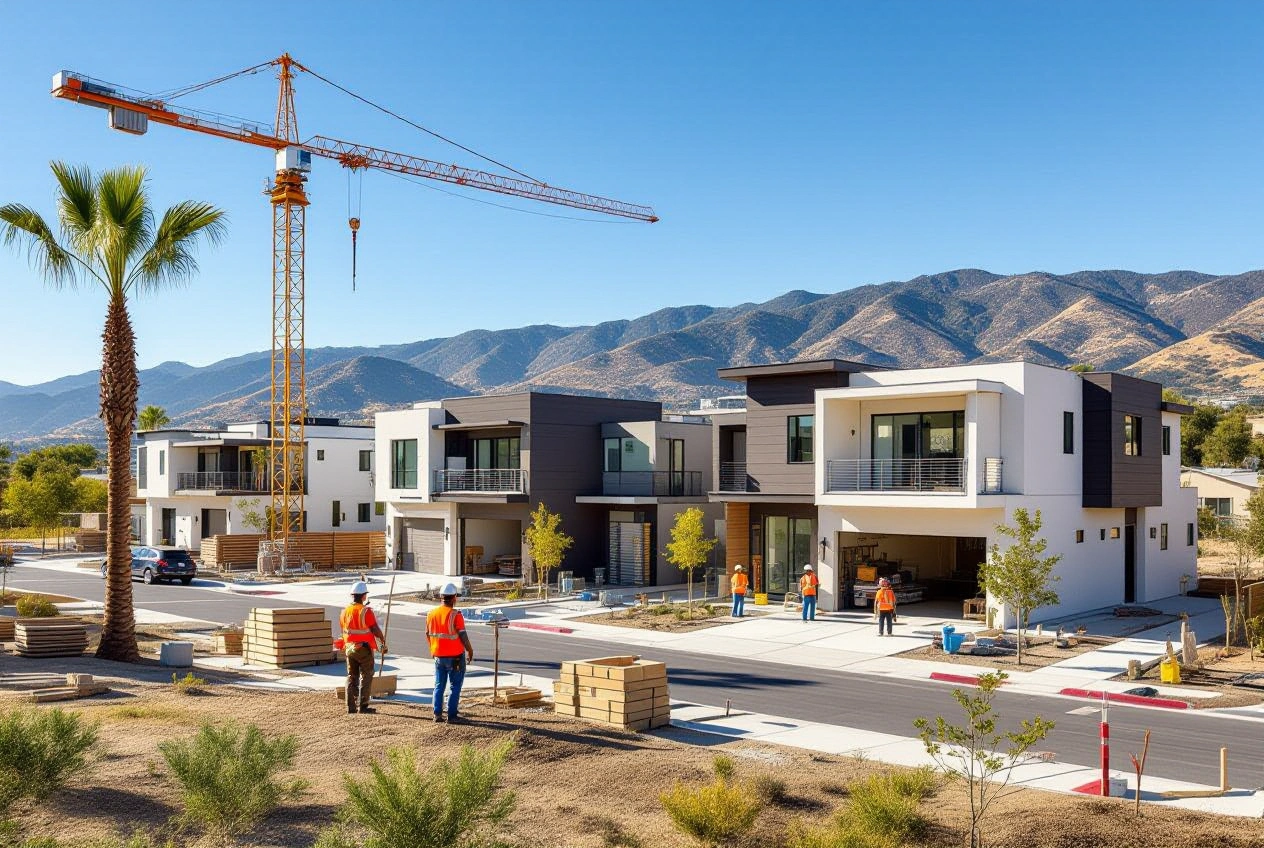
California Housing Construction Continues to Accelerate as State Pushes for More Homes
California’s housing market is undergoing a significant transformation as the state continues to increase residential construction, streamline development approvals and invest in new affordable housing.
According to the California Department of Housing and Community Development (HCD), annual residential construction has increased 59% since 2019, rising from approximately 70,000 homes built in 2018 to about 111,000 homes in 2024. More than 682,000 homes have been built statewide since 2019.
The increase is part of California’s broader effort to address a longstanding housing shortage while accommodating continued population and economic growth.
California Is Building More Homes
One of the most significant changes has been the increase in housing production and the state’s efforts to make the development process more efficient.
HCD reports that the average time from a housing development application to entitlement declined by 57%, from 160 days to 68 days in 2024. The state has attributed part of this progress to housing laws and reforms designed to streamline approvals and reduce unnecessary delays.
California’s housing strategy also includes substantial investment in affordable housing.
In August 2026, Governor Gavin Newsom announced nearly $239 million in funding for 20 construction-ready affordable rental housing developments that are expected to create 1,700 homes. The projects are located throughout California and include developments that have already gone through streamlined approval processes.
Major Metropolitan Areas Continue to Develop
Housing construction is not limited to one part of California.
Major metropolitan areas throughout the state continue to plan and approve residential projects, including communities in Southern California, the Bay Area and the Central Valley.
San José, for example, has approved the large Downtown West mixed-use development near Diridon Station. The project allows for up to 4,000 new housing units, along with office, retail, public-space and other components.
Projects such as Downtown West demonstrate how California is increasingly combining housing with employment centers, transportation infrastructure and commercial amenities.
Transit-Oriented Development Is Becoming More Important
California is also encouraging housing development near major transportation corridors.
The goal is to create communities where residents have greater access to employment, retail, public transportation and other services without relying entirely on long-distance automobile travel.
San José’s Diridon Station Area is one example of this approach. The city’s long-term planning for the area incorporates housing, transportation and mixed-use development around a major regional transit hub.
This type of development can have an important impact on surrounding communities because new housing often brings additional demand for infrastructure, retail, parks, transportation and community services.
What This Means for California Homebuyers
More construction can provide homebuyers with additional choices, particularly as new developments come online.
However, increased construction does not automatically mean housing will become affordable everywhere. Local land costs, construction costs, mortgage rates, location and the availability of affordable housing all continue to influence what buyers can afford.
The state’s current approach therefore focuses not only on increasing the total number of homes but also on expanding affordable housing opportunities.
What This Means for Existing Homeowners and Communities
New development can also affect existing homeowners.
When new neighborhoods and apartment communities are built, surrounding areas may experience changes in traffic, infrastructure demand, retail activity and public services.
For homeowners associations and community managers, population growth can create additional operational considerations, including:
- Increased demand for community amenities
- Greater traffic and parking needs
- Expansion of common-area maintenance
- Increased demand for homeowner communication
- New infrastructure and landscaping requirements
- Greater coordination with local governments and developers
As California continues to add housing, effective community planning and management will become increasingly important.
California’s Housing Growth Is a Long-Term Strategy
The current construction activity is part of a much larger effort to address California’s housing shortage.
HCD reports that communities throughout the state have planned to accommodate at least 3.6 million additional homes, including approximately 1.4 million affordable units, as part of their long-term housing planning.
At the same time, the state continues to invest in affordable housing projects and streamline the development process.
This means California’s housing story is not simply about a short-term construction increase. It is part of a longer-term strategy to increase housing supply and make development more efficient.
What Californians Should Watch
Residents, homeowners and prospective buyers should continue watching several factors as development progresses:
New housing supply: Additional homes can provide more choices for buyers and renters.
Affordable housing investment: State funding is supporting projects designed specifically to provide affordable rental housing.
Development approvals: Faster approval processes could allow more projects to move from planning to construction.
Transit-oriented development: Housing near transportation hubs may continue to reshape major metropolitan areas.
Community infrastructure: New residential development can increase demand for roads, utilities, parks, schools and other services.
Final Takeaway
California’s housing market is continuing to evolve as the state increases residential construction and works to address its longstanding housing shortage.
The latest state data shows substantial growth in housing production since 2019, while new investments in affordable housing and streamlined development processes are creating additional opportunities for construction.
For homeowners and communities, the impact extends beyond the housing market itself. New development can reshape neighborhoods, increase demand for infrastructure and services, and create new challenges for community planning and management.
As California continues its push to build more homes, the ability of communities to grow while maintaining effective services, communication and neighborhood management will remain increasingly important.