
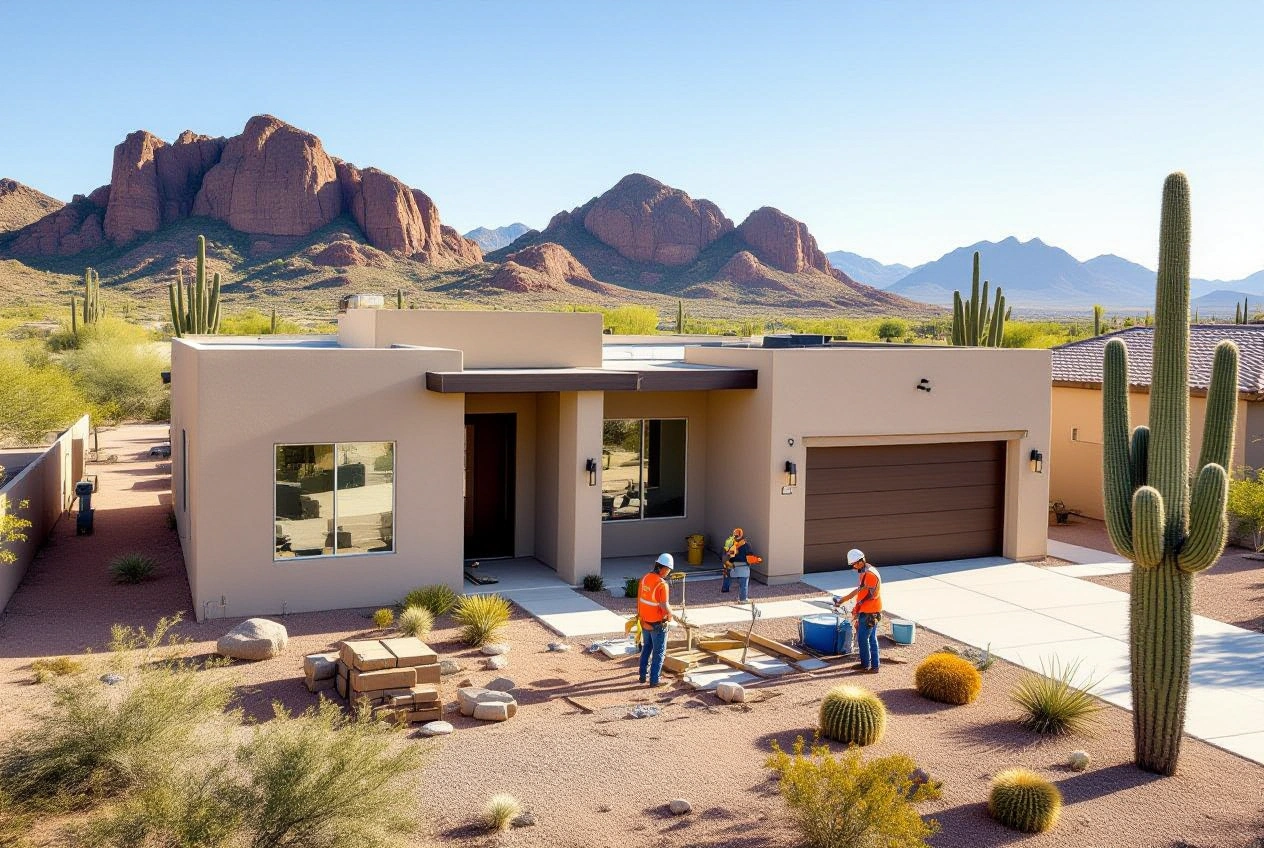
Arizona Housing Market Continues to Evolve as New Construction and Buyer Choices Expand
Arizona’s housing market continues to change in 2026 as new construction, shifting inventory and elevated mortgage rates reshape the choices available to buyers and sellers.
Recent data from the Arizona Regional Multiple Listing Service (ARMLS) shows that July 2026 brought a modest improvement in single-family home sales compared with the same month last year. At the same time, the market remains sensitive to pricing, with many homes selling below their original asking price.
The combination of new construction and changing buyer behavior is creating a more competitive environment for both new and existing homes.
New Construction Remains an Important Part of Arizona’s Growth
Communities across the Phoenix metropolitan area continue to experience residential development, although construction activity varies significantly from one market to another.
Queen Creek, for example, continues to see substantial new-home development. The town’s FY2025–26 financial report shows 209 new single-family building permits during the reported period, compared with 83 in the previous year. The report also shows a 12-month rolling total of 1,244 permits, compared with 1,552 previously.
Buckeye is another area experiencing ongoing development. The city continues to process permits for new residential construction, reflecting continued expansion in the West Valley.
These developments are important not only for homebuyers, but also for the communities surrounding them. New neighborhoods can increase demand for roads, utilities, retail, schools, parks, recreational facilities and community services.
What This Means for Homebuyers
For buyers, the current market offers a different environment from the highly competitive conditions seen during the housing boom of 2020 and 2021.
ARMLS reported that 75% of single-family homes sold in July 2026 closed below their original list price, while only 12% sold above the original asking price.
That does not mean every buyer has the same negotiating power. Competition remains stronger in some lower-priced segments, while higher mortgage rates continue to affect affordability.
For buyers considering new construction, it is also important to compare builder incentives, financing options, community fees, home features and long-term costs rather than focusing only on the advertised purchase price.
What This Means for Existing Homeowners
New construction can create additional competition for homeowners who are preparing to sell.
Builders may offer incentives or financing programs that can make newly constructed homes attractive to buyers. Existing homeowners therefore need to pay close attention to how their property compares with nearby new homes in terms of price, condition, features and amenities.
ARMLS’s July data reinforces the importance of accurate pricing. With most homes closing below their original list price, sellers may need to be realistic about current buyer expectations.
Development Is Changing Arizona Communities
The impact of new construction extends beyond individual home sales.
As residential developments expand, communities may also see additional demand for:
- Roads and transportation infrastructure
- Retail and commercial services
- Schools and educational facilities
- Parks and recreational amenities
- Utilities and public services
- Community management and maintenance services
For homeowners associations and community managers, continued residential development can create both opportunities and challenges. New communities require strong planning, communication and operational support as homeowners move in and neighborhoods become established.
Arizona’s Housing Market Is Not Simply a “Construction Boom”
While Arizona continues to experience significant development, the latest data suggests a more complicated picture than simply saying construction is at record levels.
Phoenix-area single-family building permits have fluctuated during 2026, while national housing construction has also faced pressure from elevated mortgage rates and construction costs.
At the same time, ARMLS data shows improving sales activity, lower year-over-year inventory and a slower pace of price declines.
This creates a market where location, pricing and the type of property matter more than broad statewide headlines.
What Arizona Residents Should Watch
Homebuyers, sellers and homeowners should continue watching several factors throughout the remainder of 2026:
Mortgage rates: Higher borrowing costs continue to influence affordability and purchasing decisions.
New construction: New communities and homes can increase choices for buyers while creating additional competition for existing properties.
Inventory: Changes in available homes can affect negotiating power for both buyers and sellers.
Home prices: Asking prices and actual closing prices can differ significantly, making accurate market data increasingly important.
Community development: New residential projects can influence local infrastructure, amenities and long-term community planning.
Final Takeaway
Arizona’s housing market is continuing to evolve rather than moving in a single direction.
New construction remains an important part of the state’s growth, particularly in expanding communities such as Queen Creek and Buckeye. At the same time, buyers are becoming more selective, sellers are facing greater pressure to price accurately, and mortgage rates continue to influence affordability.
For Arizona homeowners and communities, understanding these local housing trends will be increasingly important as development continues throughout 2026.