
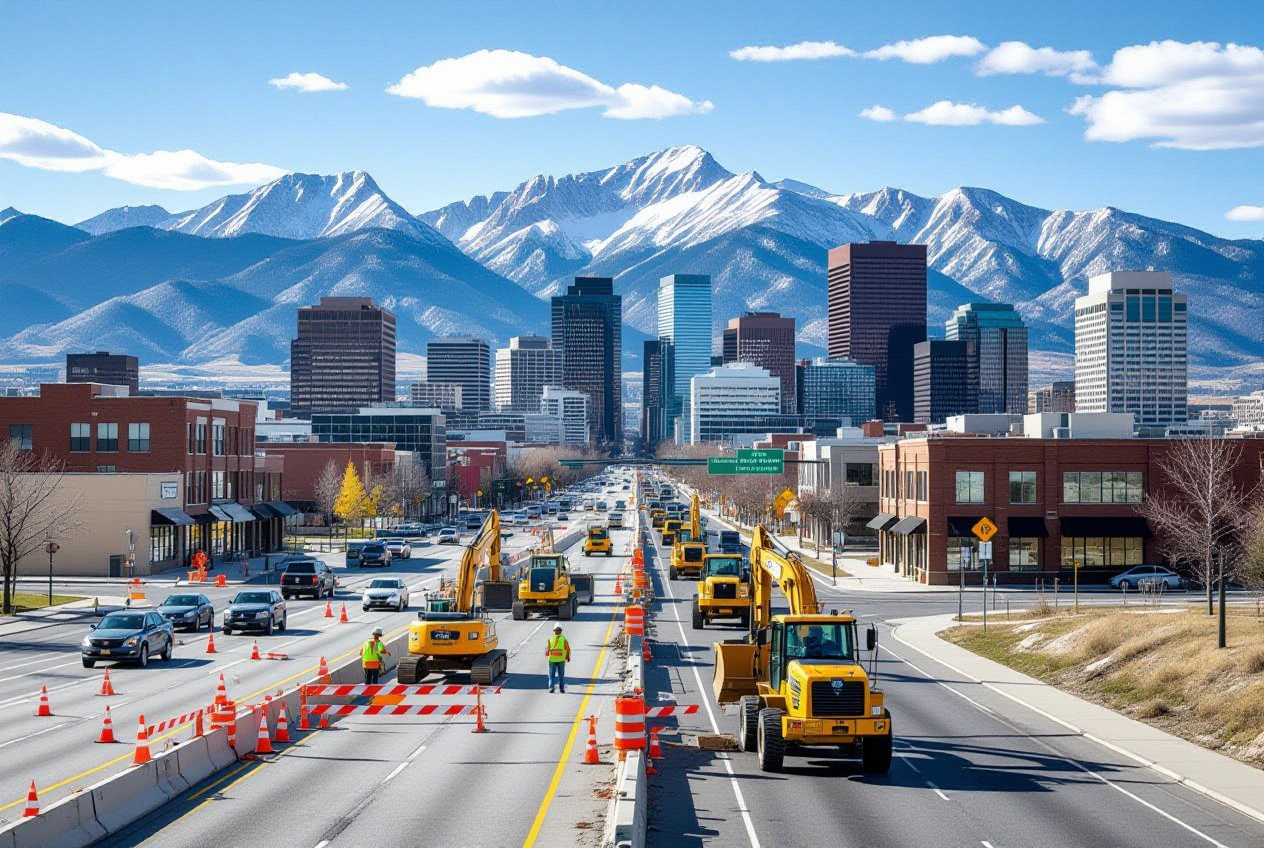
Colorado’s I-25 North Corridor Continues to Expand as Northern Colorado Grows
Colorado’s Interstate 25 corridor between Denver and Fort Collins is undergoing a major transformation as the state continues investing in highway capacity, safety and transportation options.
Rather than being one single construction project, the improvements are being delivered through multiple segments and phases along the I-25 North corridor. The broader corridor extends approximately 61 miles from Denver Union Station to the Fort Collins/Wellington area.
The work is designed to improve mobility and safety while supporting the rapid growth occurring throughout Northern Colorado.
A Major Transportation Corridor Is Being Upgraded
The Colorado Department of Transportation (CDOT) has divided the I-25 North Express Lanes program into three major segments:
- Mead to Berthoud
- Berthoud to Johnstown
- Johnstown to Fort Collins
Each segment forms part of the broader effort to improve the highway between Denver and Northern Colorado.
Approximately 20 miles of improvements have already been completed between Berthoud and Fort Collins.
The remaining Mead-to-Berthoud segment is approximately six miles long and is currently under construction. CDOT expects this section to be completed in 2028.
What Is Being Improved?
The I-25 North projects include more than simply adding highway lanes.
The Mead-to-Berthoud project includes:
- A new express lane in each direction
- Wider roadway shoulders
- Reconstruction of the Weld County Road 34 interchange
- Reconstruction of several bridges
- Safety improvements
- Improved travel reliability
- Infrastructure upgrades along the corridor
The project will connect the existing improvements south of Berthoud with the Express Lanes already completed farther north.
Once the Mead-to-Berthoud project is completed, CDOT says it will mark an important milestone: for the first time, I-25 will have more than two lanes in both directions between Denver and Fort Collins.
Why Is Colorado Investing in I-25?
Northern Colorado has experienced significant population and economic growth, placing additional pressure on the transportation network.
CDOT says communities along the I-25 North corridor are expanding rapidly and that the highway improvements are intended to support economic growth while improving mobility and safety.
The improvements are also intended to make travel more predictable for commuters, freight operators, transit users and other travelers.
Express Lanes Give Drivers More Options
A major feature of the I-25 North improvements is the addition of Express Lanes.
Express Lanes provide another transportation option for travelers. Depending on the specific segment and rules, motorists may be able to use the lanes by paying a toll, while carpoolers and transit users can also benefit from the additional capacity.
CDOT says Express Lanes can improve travel reliability and help manage congestion by increasing the number of people and vehicles that can move through the corridor.
The broader corridor plan also incorporates transit and intelligent transportation systems.
The Long-Term Vision
Colorado’s I-25 North plan extends well beyond the projects currently under construction.
CDOT’s planning documents envision an eventual corridor with three general-purpose lanes and one tolled Express Lane in each direction, together with additional carpool and transit facilities.
However, CDOT notes that the ultimate build-out is dependent on available funding. Based on existing revenues, the agency currently estimates that the complete long-term build-out could extend as far as 2075.
That means the transformation of I-25 is not a single four-year construction project. It is a long-term transportation strategy being implemented in phases.
What This Means for Colorado Communities
The improvements have implications beyond commuters.
As communities along the Front Range continue to grow, transportation infrastructure can influence:
- Residential development
- Commercial growth
- Commuting patterns
- Access to employment centers
- Freight movement
- Public transportation
- Regional connectivity
For homeowners and community associations, transportation improvements can also influence the growth and development of surrounding neighborhoods.
New roads, interchanges and transportation capacity can make previously developing areas more attractive for residential and commercial investment.
Construction Will Continue to Affect Travelers
While the completed improvements provide long-term benefits, construction can create temporary disruptions.
CDOT has reported lane and road closures associated with ongoing work around the Mead-to-Berthoud segment, including closures affecting Weld County Road 32 and frontage roads. Travelers are encouraged to check CDOT’s current travel information before making trips through active construction areas.
Construction schedules can also change because of weather, site conditions and other factors.
What Residents Should Watch
Residents and businesses along the I-25 corridor should pay attention to several developments:
Construction schedules: Individual project segments have different timelines.
Traffic impacts: Temporary closures and lane shifts can affect daily commutes.
New Express Lanes: Additional Express Lanes will provide another transportation option as segments are completed.
Community growth: Improved transportation connections can influence residential and commercial development.
Long-term planning: Additional I-25 projects are included in CDOT’s 2026–2036 transportation planning program.
Final Takeaway
Colorado’s I-25 North corridor is undergoing one of the state’s most significant long-term transportation improvement efforts.
The transformation is happening gradually through multiple projects rather than through one new $2.8 billion construction project beginning in 2027.
With additional Express Lanes, reconstructed interchanges, improved bridges and expanded transportation capacity, the improvements are designed to support the continued growth of Northern Colorado.
For residents and communities along the Front Range, the changes could influence not only daily travel but also future residential development, commercial activity and regional growth.