
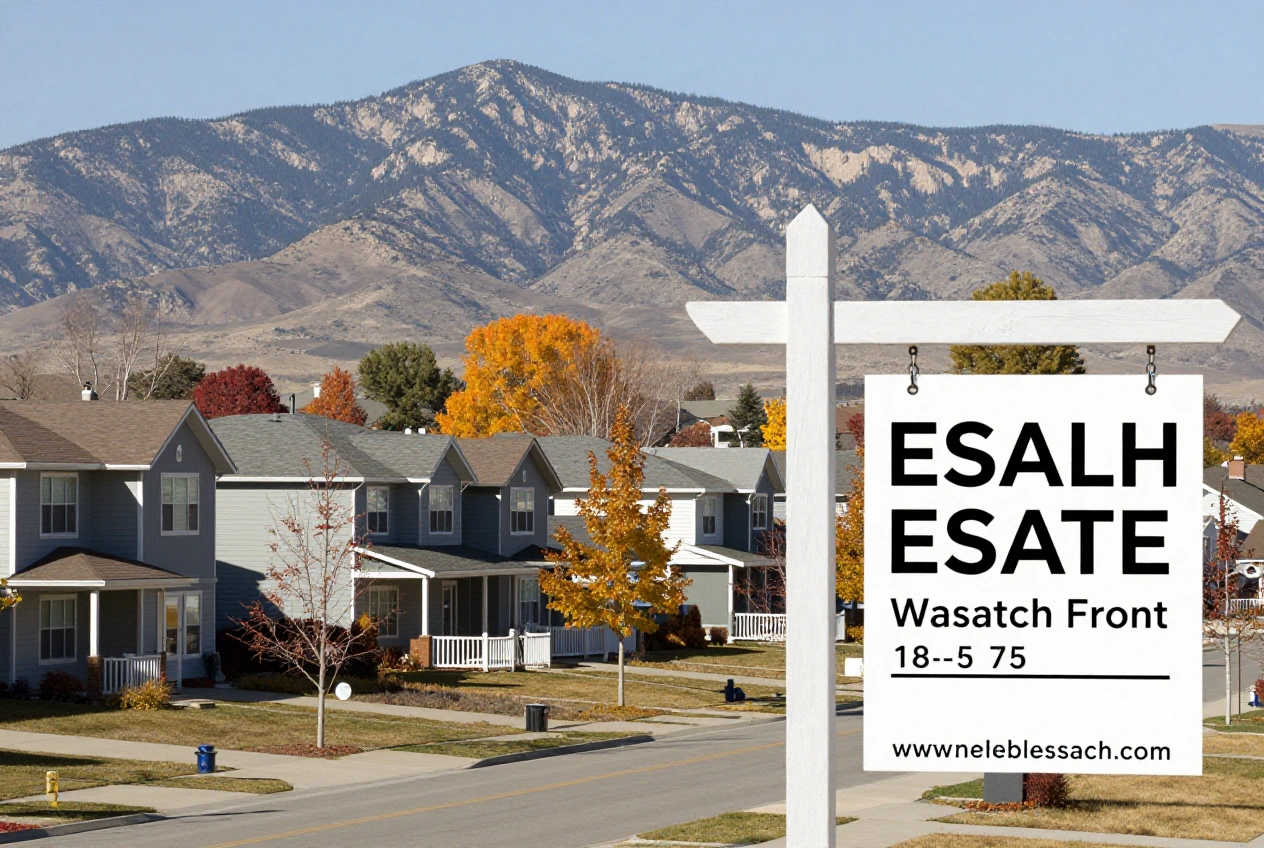
Utah Housing Market Shifts as Inventory Rises and Sellers Cut Prices
Utah’s housing market is showing signs of a shift this fall, with more homes available for sale and a growing share of sellers reducing their asking prices. Recent data point to a more competitive environment for sellers, particularly across several counties along the Wasatch Front.
For buyers, the increase in available listings may provide more opportunities to compare properties and negotiate. Sellers, meanwhile, may need to adjust their pricing strategies as buyers become more selective and mortgage costs continue to affect affordability.
Utah Home Inventory Reaches a Multi-Year High
Realtor.com data published through the Federal Reserve Bank of St. Louis recorded 15,416 active residential listings statewide in September 2026. This was the highest September inventory figure in the series, which dates back to 2016, and represented a 9.1% increase from September 2025.
The Salt Lake City metropolitan area also recorded a substantial increase in available homes. Realtor.com reported 3,923 active listings in September, up 14.1% year over year and the highest monthly count in its data series, which began in July 2016.
More available homes can give buyers additional choices and reduce the pressure to make immediate offers. However, inventory figures vary by geographic area and reporting method, so statewide totals should not be confused with the number of listings in an individual city or county.
Price Reductions Increase Across the Wasatch Front
A separate analysis of listing data by real estate platform Movoto, reported by The Salt Lake Tribune on October 12, found that five Utah counties ranked among the 10 counties nationwide with the largest increases in the share of active listings priced below their original asking price.
The analysis compared July 14 with September 1, 2026, and covered Davis, Salt Lake, Tooele, Utah, and Weber counties.
In Davis County, the share of active listings priced below their original asking price rose from 10.2% to 24.6%, an increase of 14.4 percentage points. Salt Lake County recorded a 12.4-percentage-point increase, reaching 23.0%. In Weber County, the share increased from 11.9% to 22.5%.
The findings suggest that more sellers are adjusting their expectations to attract buyers. Local real estate professionals cited high mortgage rates, competition from new construction, and buyer selectivity as factors contributing to the trend.
These figures measure listings priced below their original asking price at specific points in time. They do not mean that every home has reduced its price or that the same percentage of properties has experienced a decline in final sale prices.
Homes Are Taking Longer to Sell
Additional market indicators point to a slower pace of activity in parts of Utah.
Realtor.com reported a median of 58 days on the market in the Salt Lake City metro area in September 2026, compared with 57 days a year earlier. Its September report also showed that the median listing price was $565,000, down 3.6% year over year.
The statewide picture also shows differences between listing prices and completed sales. Realtor.com reported a September median listing price of $579,000 statewide, while its median sold-price measure was approximately $485,935. These are separate measures: listing prices reflect sellers’ asking prices, while sold prices reflect completed transactions.
For buyers, longer marketing periods may create opportunities to negotiate on price, repairs, or closing costs. For sellers, the data reinforce the importance of reviewing recent comparable sales and setting a realistic asking price from the beginning.
What the Market Shift Means for Buyers and Sellers
For buyers: More listings can make it easier to compare neighborhoods, property conditions, and prices. Buyers may also have more opportunities to negotiate with sellers whose homes have remained on the market or undergone price reductions. Financing costs and monthly affordability should still be central to the decision.
For sellers: Pricing a home competitively is increasingly important. Sellers should review recent closed sales, competing listings, and the amount of time comparable properties have spent on the market. A price reduction may help attract attention, but its effectiveness depends on the property’s condition, location, and original pricing.
For homeowners: A rise in active listings or price reductions does not automatically mean a particular home has lost value. Local conditions, property features, and recent completed sales are more useful for assessing an individual property’s likely market value.
For real estate investors: Greater inventory may create additional opportunities to evaluate properties, but purchase prices must be assessed alongside financing expenses, taxes, maintenance, rental demand, and potential resale conditions.
A More Competitive Market, but Not the Same Everywhere
The latest data suggest that Utah is moving away from the highly competitive conditions seen during earlier periods of the housing boom. Buyers have more choices in many areas, and sellers are increasingly using price adjustments to remain competitive.
However, the market is not uniform across the state. Inventory, prices, and selling times differ by county, city, property type, and price range. Some homes may continue to attract strong interest, while others require more time and pricing flexibility to secure an offer.
Practical Takeaway
Utah buyers may find more room to compare homes and negotiate this fall, while sellers should pay close attention to current local market data before setting their asking prices.
Anyone preparing to buy or sell should review recent comparable sales, active competition, and local inventory rather than relying on statewide headlines alone. Consulting a qualified local real estate professional can help determine how these broader trends apply to a specific property or neighborhood.