
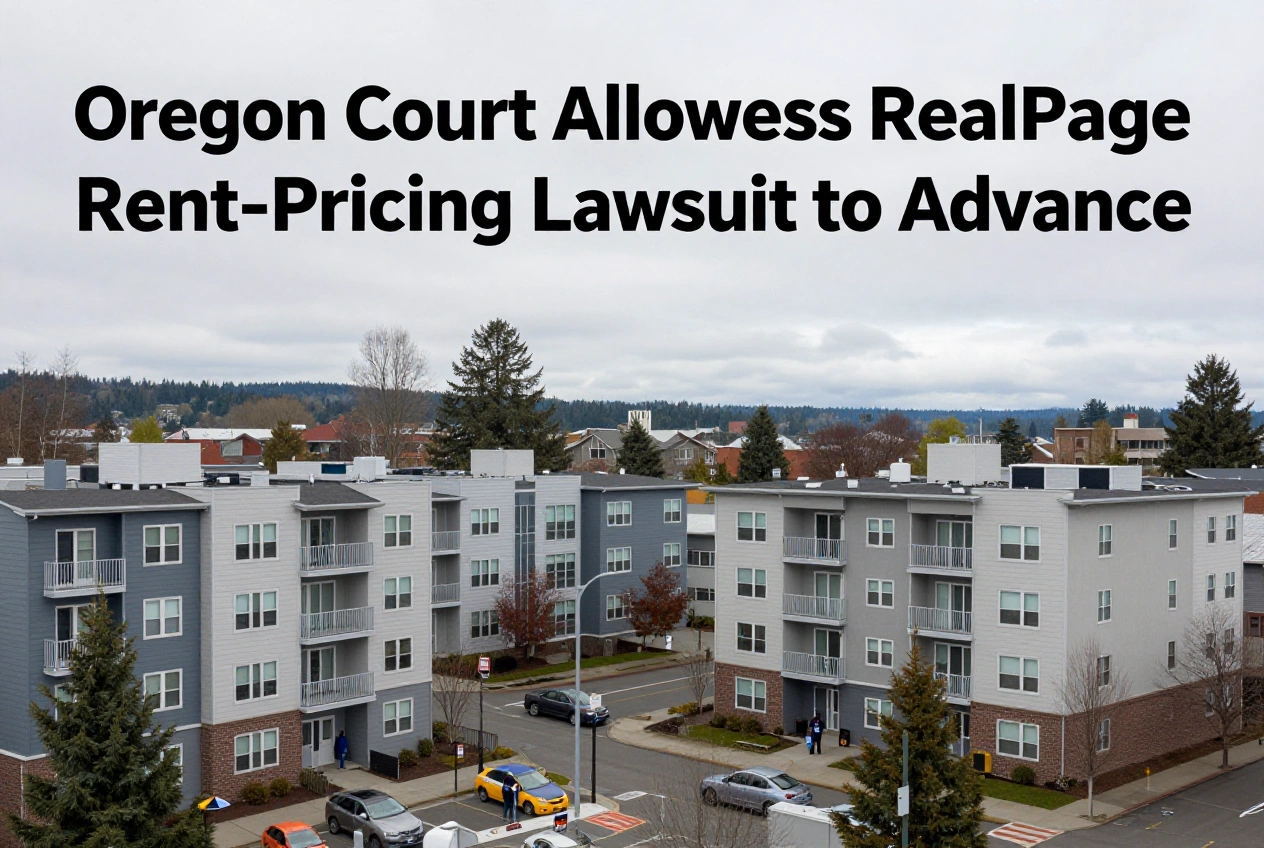
Oregon RealPage Rent-Pricing Lawsuit Moves Forward After Federal Judge Rejects Dismissal
Oregon’s antitrust case against RealPage will continue after a federal judge rejected the company’s effort to have the remaining claims dismissed.
The ruling, issued October 2, 2026, keeps Oregon and other states’ claims against RealPage moving forward. The case centers on allegations that RealPage’s rental-pricing software uses sensitive information from landlords and property managers to recommend apartment rents in ways that can reduce competition.
Why This Matters to Oregon Renters
Housing costs remain a major concern for Oregon households, particularly in larger rental markets such as Portland, Salem and Eugene.
The RealPage case focuses on whether the use of algorithmic pricing software and the sharing of competitively sensitive information among landlords can improperly influence rents.
Importantly, the October ruling does not establish that RealPage illegally raised rents. Those allegations remain claims that will be addressed as the litigation continues.
What the Lawsuit Alleges
Oregon joined the U.S. Department of Justice and other states in suing RealPage in 2024.
According to the allegations, landlords and property managers provided RealPage with nonpublic information—including rental prices, discounts and information about available units. RealPage then used that information in its revenue-management software to generate recommended rental prices.
The states allege that the system could facilitate coordination among landlords and contribute to rents being higher than they would be in a competitive market. The lawsuit also alleges that some property managers were encouraged to follow the software’s recommendations automatically.
The October 2 Court Decision
The latest decision means the remaining state antitrust claims against RealPage will proceed rather than being dismissed at this stage.
The federal case has already changed in other ways. The U.S. government reached a settlement with RealPage earlier in 2026, while several landlord defendants have also entered settlements or consent agreements. The court’s October decision determined that the states’ remaining claims were not eliminated by those earlier resolutions.
For Oregon, that means the state’s claims against RealPage remain active.
Related Settlements Involving Major Landlords
The broader litigation has also resulted in agreements involving several large property-management companies.
Oregon’s Department of Justice says the state has reached settlements with Greystar and LivCor. A multistate settlement with LivCor totaled $7 million and requires the company to stop using other landlords’ private data to set rents. Oregon had previously settled with Greystar.
These settlements are separate from the remaining claims against RealPage and should not be interpreted as a final ruling against every company involved in the broader litigation.
What This Means for Renters
For renters, the decision does not immediately change the rent on an individual apartment or guarantee lower prices.
Instead, the ruling allows the legal challenge to continue over whether certain uses of rental-pricing software and private market information violate antitrust laws.
Any eventual court ruling, settlement or regulatory action could have broader implications for how landlords and property managers use algorithmic pricing systems.
What Happens Next?
The litigation will continue as the remaining claims are addressed in federal court.
The U.S. Department of Justice’s case records show that claims and settlements involving RealPage and various landlord defendants have been resolved or narrowed at different stages, while some state claims remain pending.
That makes it important to distinguish between claims that are still being litigated, settlements that have already been reached and allegations that have not been proven in court.
Key Takeaway
The October 2 ruling is a significant procedural development for Oregon’s RealPage case, but it is not a final finding that RealPage violated antitrust law.
For Oregon renters and property professionals, the case is worth watching because its outcome could influence how rental-pricing technology, nonpublic market data and competition in the apartment industry are handled in the future.
For official updates, residents can follow the Oregon Department of Justice and the U.S. Department of Justice’s Antitrust Division.