
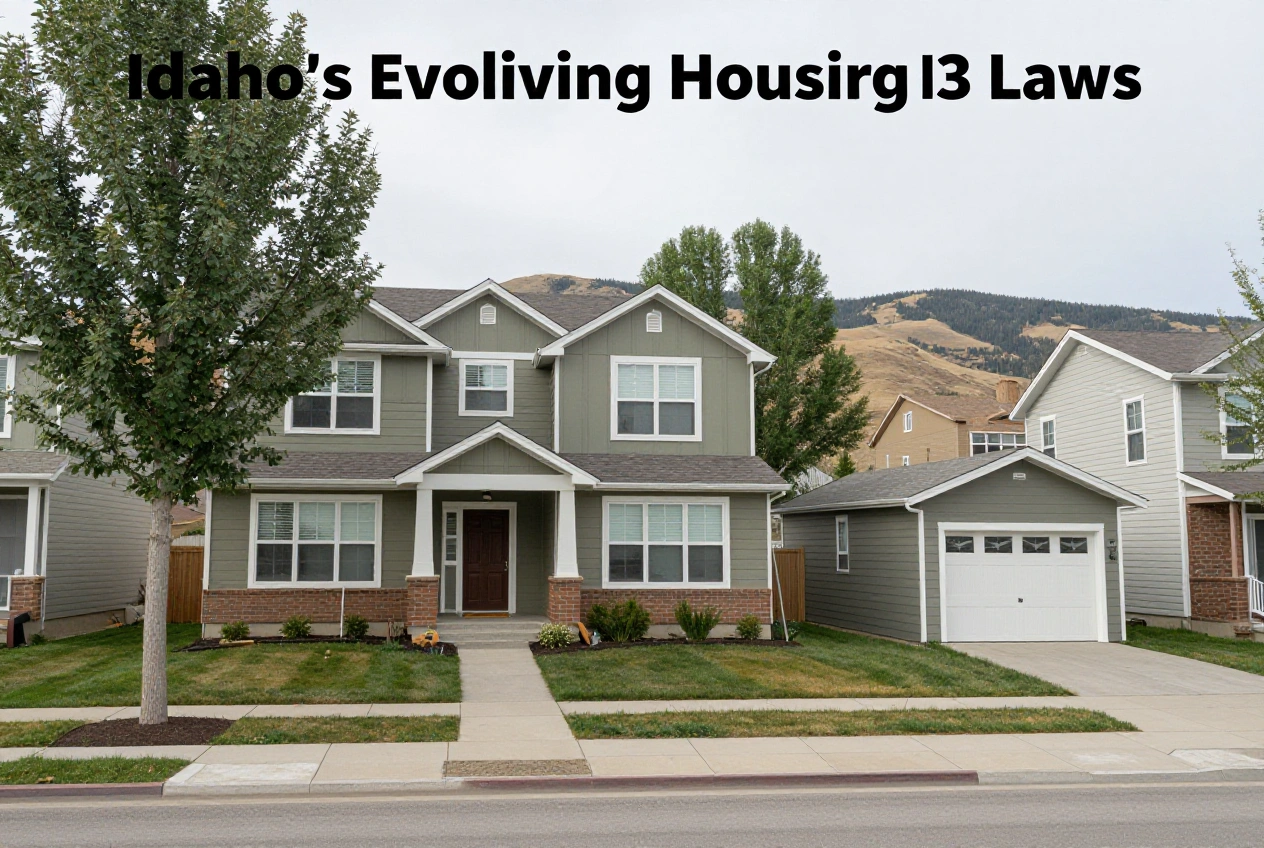
Idaho Expands Housing Options Through New Residential Zoning Laws
Idaho has enacted several housing-related laws aimed at expanding residential options and reducing certain barriers to development. Signed by Governor Brad Little during the 2026 legislative session, the measures address accessory dwelling units (ADUs), manufactured housing, and building standards for certain small apartment buildings.
The changes could give homeowners, developers, and local communities more flexibility as Idaho continues to address housing affordability and supply. However, the laws address different aspects of residential development, and each has specific requirements and limitations. The accessory dwelling unit provisions and the separate manufactured-housing and building-code measures took effect July 1, 2026. (Idaho legislative records; House Bill 800; House Bill 706)
Key Changes in Idaho’s Housing Laws
1. More Opportunities for Accessory Dwelling Units
Senate Bill 1354 updates Idaho law governing accessory dwelling units, which are smaller, self-contained homes located on the same lot as a primary residence. Depending on the property, an ADU may be created within an existing home, attached to it, or built as a separate structure.
The law limits cities’ ability to prohibit ADUs in residential zoning areas and establishes requirements for allowing them in qualifying single-family residential areas. It also addresses certain local restrictions, including parking requirements, fees, size limits, and setbacks.
For homeowners, ADUs may offer an additional housing option for relatives or long-term renters. Nevertheless, applicable building codes, utility requirements, property conditions, and other lawful restrictions still matter. An ADU is not automatically approved simply because the state law permits it. (Idaho Senate Bill 1354)
2. Changes to Manufactured-Housing Rules
House Bill 800 addresses where certain manufactured homes can be placed under local zoning rules. The measure expands opportunities for qualifying single-section manufactured homes in single-family residential areas and addresses the treatment of manufactured duplexes and other manufactured housing in zoning ordinances.
These changes may help broaden the range of housing types available to Idaho residents. Manufactured housing can offer an alternative to conventional site-built homes, although actual costs and feasibility depend on land, installation, infrastructure, financing, and local conditions.
Property owners and developers should confirm that a proposed home meets the applicable statutory definitions, size requirements, installation standards, and local permitting rules. (Idaho House Bill 800)
3. A Path for Certain Single-Stair Apartment Buildings
House Bill 706 authorizes local governments to allow certain apartment buildings to use a single interior exit stairway when specified design and life-safety requirements are met.
The law establishes limits involving building height, the number of units per floor, floor area, and construction type. It also requires enhanced fire-safety features, including sprinkler protection and fire-rated building elements.
This provision may create additional design options for some smaller apartment projects. It does not mean that every apartment building can use a single stairway; eligibility depends on the law’s conditions and the applicable building-code process. (Idaho House Bill 706)
What These Changes Could Mean for Idaho Residents
The practical effects will vary by property and jurisdiction, but the legislation may create several opportunities:
- Homeowners: Qualifying properties may offer more flexibility to add an ADU for family use or long-term rental housing.
- Homebuyers: A broader range of housing types could provide additional choices as new projects move forward.
- Property owners and investors: Updated zoning and building rules may make certain residential projects more feasible, subject to costs and permitting.
- Developers: The legislation may create additional design and site-planning options for qualifying manufactured homes and smaller apartment buildings.
- Community associations: HOA boards may need to review applicable ADU rules and governing documents to ensure their policies comply with Idaho law.
These measures are intended to expand housing options, but they do not guarantee lower home prices, faster construction, or rental income. The results will depend on local implementation, construction costs, infrastructure, and market demand.
What Homeowners and Community Associations Should Do
Anyone considering an ADU or another residential development should start by contacting the relevant city or county planning department. Confirm the property’s zoning, permitted uses, setbacks, utility capacity, building and fire-code requirements, and application process.
Homeowners in planned communities should also review their association’s governing documents and consult qualified legal or planning professionals when needed. Idaho’s ADU law limits certain prohibitions, but it does not eliminate every reasonable HOA rule or every requirement that applies to a property.
For community association boards and managers, this is also an opportunity to review existing policies, identify provisions that may need updating, and communicate any changes clearly to residents.
Looking Ahead
Idaho’s 2026 housing legislation reflects a broader effort to expand residential options and address barriers that can limit housing development. ADUs, qualifying manufactured homes, and certain smaller apartment buildings may each contribute to a more varied housing supply.
For homeowners and community associations, the most important next step is understanding which provisions apply to their specific property and ensuring that decisions align with current state law and local requirements.
For official updates, consult the Idaho Legislature, and contact your local planning department for property-specific guidance.