
New California Law Temporarily Limits Certain Housing Density Projects in Altadena
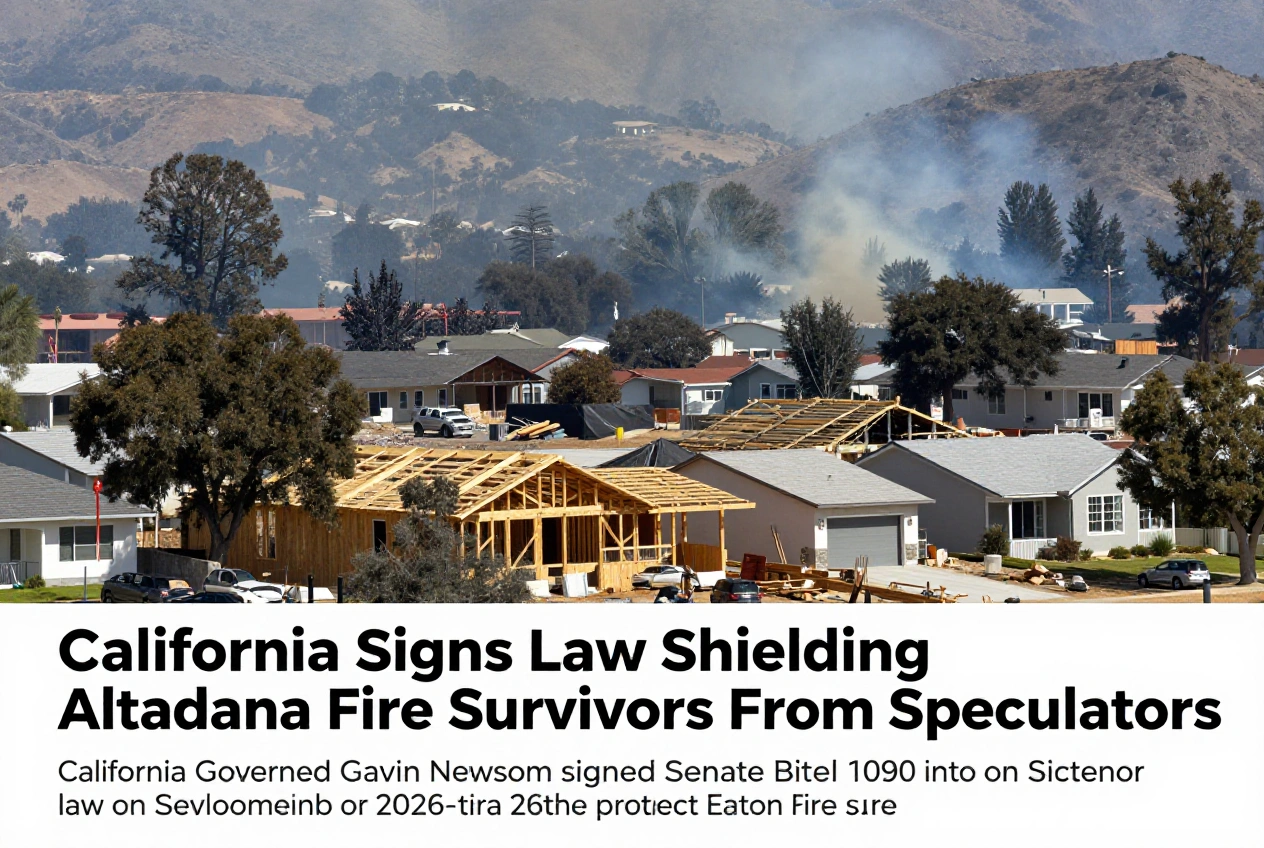
A new California law is temporarily limiting certain housing-density development in Altadena as the community continues rebuilding from the 2025 Eaton Fire.
Gov. Gavin Newsom signed Senate Bill 1090, known as the Keep Altadena Land in Altadena Hands Act, on September 30, 2026. The legislation was authored by state Sen. Sasha Renée Pérez and took effect October 1 under an urgency clause.
The law creates a temporary moratorium on certain development projects using Senate Bill 1123 in specified Altadena areas. The measure was designed in response to concerns from Eaton Fire survivors and community leaders about speculative purchases and higher-density redevelopment during the recovery period.
Why This Matters to Altadena Residents
Altadena is still rebuilding after the Eaton Fire, which destroyed homes and affected large portions of the unincorporated community.
SB 1090 temporarily changes how certain state housing-density provisions apply in Altadena. Supporters of the law, including Sen. Pérez and Los Angeles County Supervisor Kathryn Barger, said the measure is intended to give residents more time to rebuild while reducing pressure from speculative development.
The legislation also seeks to give Altadena protections similar to those already provided to certain fire-affected areas of the Pacific Palisades.
What SB 1090 Changes
The law establishes a three-year moratorium on SB 1123 development in Altadena.
SB 1123 is a statewide housing law that provides a streamlined process for certain housing developments and allows increased residential density on qualifying properties. According to the bill’s author, projects under the law can allow development of up to 10 housing units on certain residential properties, depending on the property’s characteristics and applicable requirements.
SB 1090 temporarily pauses that pathway for qualifying projects in the specified Altadena areas.
The legislation was prompted in part by concerns that investors could purchase fire-damaged properties and use state density laws to pursue larger redevelopment projects before the community had fully recovered. Those concerns were raised by Altadena residents and community organizations during the legislative process.
The Law Does Not Stop All Rebuilding or Housing Development
An important distinction is that SB 1090 does not create a blanket ban on rebuilding or new housing construction in Altadena.
The measure is targeted at specific state housing-density provisions and development applications covered by the law. Other rebuilding options and housing regulations continue to apply.
Sen. Pérez said the legislation preserves residents’ ability to pursue projects such as accessory dwelling units and lot splits that are otherwise allowed under applicable law.
Property owners should therefore determine whether a proposed project is actually subject to the SB 1090 moratorium rather than assuming that all new construction or redevelopment is prohibited.
Why SB 1123 Became a Focus
California has adopted housing laws intended to increase the state’s housing supply and streamline development.
SB 1123 is one of those measures. Supporters of the statewide housing approach argue that increasing development opportunities can help address California’s housing shortage.
In Altadena, however, local residents and officials argued that applying those density provisions immediately after the Eaton Fire could create additional development pressure while residents were still dealing with rebuilding, infrastructure and recovery challenges.
Gov. Newsom’s signing statement similarly described the circumstances surrounding the Eaton Fire as unusual enough to warrant a temporary, targeted adjustment to housing rules while emphasizing that California’s broader housing-streamlining laws remain important.
Connection to Pacific Palisades
The legislation was also intended to address what Altadena officials and residents viewed as an uneven application of state housing rules following the Los Angeles-area wildfires.
Certain Pacific Palisades fire-affected areas already received protections from SB 9 and SB 1123 because of their designation as very high fire hazard severity zones.
Sen. Pérez said much of the Altadena burn area did not receive the same protection because it was not within that designation. SB 1090 was therefore presented as a way to provide a temporary form of parity for Altadena during its recovery.
What This Means for Property Owners and Buyers
For Altadena homeowners rebuilding after the Eaton Fire, the law may provide additional time before certain higher-density development pathways can be used on qualifying properties.
For buyers, sellers and developers, the change means that projects relying on SB 1123 should be reviewed carefully before a property transaction or development plan moves forward.
The exact effect will depend on the property’s location, the type of project, when an application was submitted and whether the project qualifies for an exception or has vested property rights.
Practical Steps for Property Owners
Homeowners considering rebuilding or redevelopment should:
- Confirm whether the property is within the area covered by SB 1090.
- Determine whether the proposed project relies on SB 1123 or another housing law.
- Check the applicable application date and whether the project has vested rights.
- Consult Los Angeles County planning officials regarding current permitting requirements.
- Obtain professional legal or planning advice when a project involves complex zoning or development rights.
Buyers and investors should also verify the current development rules before relying on a property’s potential density.
Key Takeaway
SB 1090 does not stop rebuilding in Altadena. Instead, it temporarily limits a specific state housing-density development pathway under SB 1123 in designated Altadena areas while the community continues recovering from the Eaton Fire.
The law reflects a targeted balance between California’s broader goal of increasing housing opportunities and the specific rebuilding challenges facing a community recovering from a major wildfire.