
-
Idaho Supreme Court Upholds Dismissal of Challenge to Meridian’s Tiny Home Restrictions
MERIDIAN, IDAHO | November 2026
The Idaho Supreme Court has affirmed a lower court decision involving Meridian’s restrictions on tiny homes on wheels, leaving the city’s existing zoning requirements in place while highlighting the importance of following local permitting procedures.
In its November 9, 2026, decision in Decker v. City of Meridian, the court ruled against homeowner Robert Calacal and tiny-home owner Chasidy Decker, who challenged the city’s enforcement of rules restricting the use of mobile tiny homes as residential units on private property.
However, the decision did not determine whether Meridian’s restrictions are constitutional. Instead, the court found that the owners’ substantive due process claims were not ready for judicial review because they had never submitted a formal application for a secondary dwelling unit permit.
The ruling is relevant to Idaho property owners, prospective buyers, and community associations because it demonstrates how local zoning requirements and permitting procedures can affect alternative housing arrangements.
Background of the Tiny Home Dispute
The case began in 2022 when Robert Calacal purchased a single-family residential property in Meridian that already had recreational vehicle (RV) connections for water, electricity, and sewer services.
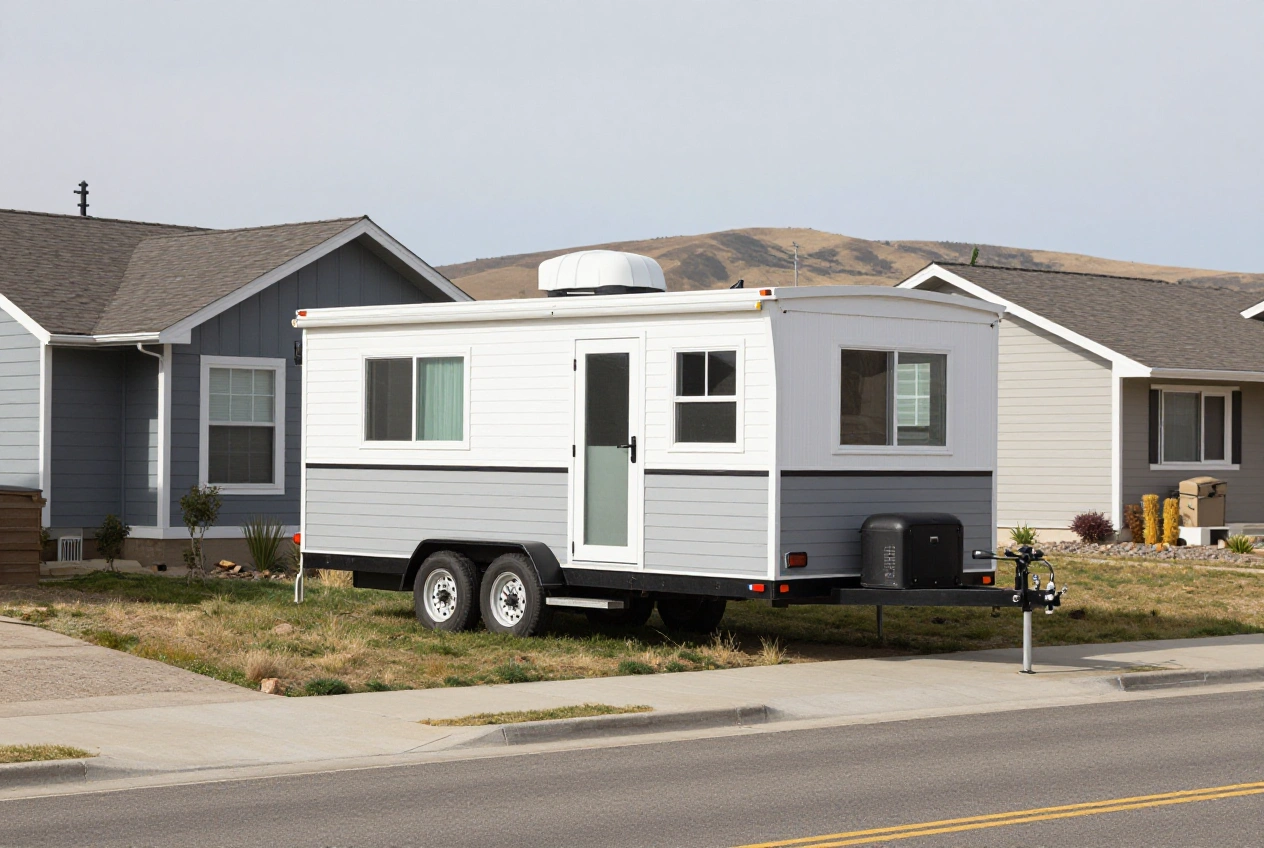
Calacal planned to rent the space to help offset his mortgage expenses. Chasidy Decker subsequently signed a lease and moved her 252-square-foot tiny home onto the property on May 18, 2022.
The structure was built on a chassis, designed for above-ground utility connections, and certified as a recreational vehicle by the Recreational Vehicle Industry Association.
A neighbor formally complained to Meridian’s code enforcement office the following day. City officials investigated the property and informed the owners that the tiny home could not be occupied as a residence because it was not attached to an approved foundation and was being used outside an authorized RV park.
On June 14, 2022, the city issued violation notices and orders to abate, citing provisions of the Meridian Unified Development Code.
The owners subsequently challenged the city’s restrictions, arguing that the regulations violated their constitutional rights and that enforcement was selective.
What the Idaho Supreme Court Decided
The Idaho Supreme Court affirmed the district court’s judgment, but its decision involved two separate legal issues.
1. The Constitutional Challenge Was Considered Premature
The owners argued that Meridian’s restrictions on mobile tiny homes violated their substantive due process rights.
The Supreme Court concluded that their claims were not ripe for judicial review because they had never applied for a secondary dwelling unit permit.
Although city officials had made statements suggesting that an application would encounter problems, the court found that the outcome of a formal application was still uncertain.
The justices explained that the city had not reviewed the proposed structure, foundation modifications, utility arrangements, or other requirements through its actual permitting process.
The court also noted that the city’s review process could involve discussions and modifications that might allow an application to move toward compliance.
As a result, the court affirmed dismissal of the substantive due process claims without prejudice. This means the court did not resolve the underlying constitutional questions on their merits, and the claims were not permanently barred on that basis.
2. The Selective-Enforcement Claim Was Rejected
The owners also argued that Meridian officials had treated their property differently from nearby properties with trailers and other structures.
The Supreme Court upheld the lower court’s rejection of this equal protection claim.
The justices found substantial evidence that the code enforcement investigation began because of a formal complaint from a neighbor.
The court also considered testimony explaining that the city’s code enforcement office generally initiates investigations in response to formal complaints, particularly because staff resources and the difficulty of identifying older, potentially lawful nonconforming uses can affect enforcement decisions.
The court therefore concluded that the investigation was not shown to be unconstitutional selective enforcement.
Unlike the due process claims, the equal protection claims were dismissed with prejudice.
The city was also awarded its appellate costs.
What Meridian’s Existing Rules Say About Tiny Homes
The case involved provisions of Meridian’s Unified Development Code that restrict the residential use of mobile tiny homes.
One provision generally prohibits vehicles and trailers, including mobile tiny houses and recreational vehicles, from being used as living quarters outside approved RV parks.
Another provision restricts manufactured homes, mobile homes, and recreational vehicles from being used as secondary dwelling units.
The court also discussed the city’s requirements concerning owner occupancy and unified ownership of a primary residence and secondary dwelling.
An important distinction is that the city code does not necessarily prohibit every tiny home structure. The court discussed how certain foundation modifications could potentially change a structure’s classification under applicable building requirements.
However, any proposed unit must still satisfy the relevant zoning, building, and permitting requirements.
The Supreme Court did not issue a blanket ruling that every tiny home on wheels is prohibited under all circumstances.
What the Decision Means for Idaho Homeowners and Property Buyers
The ruling reinforces the importance of checking local zoning regulations before placing or purchasing a tiny home intended for residential use.
Property owners considering alternative housing arrangements should understand that a structure’s recreational vehicle certification does not automatically establish permission to use it as a permanent residence on private residential property.
Before making a purchase or preparing a property for a secondary dwelling, owners should consider:
- Local zoning: Confirm whether the property allows the intended type of residential structure.
- Building requirements: Determine whether the proposed foundation, utilities, and construction meet applicable standards.
- Permit applications: Follow the local approval process before using a structure as a residence.
- Property restrictions: Review recorded covenants, HOA requirements, and other applicable land-use restrictions.
- Financial considerations: Confirm that the proposed use is permitted before investing in land, construction, or a mobile dwelling.
The decision specifically concerns Meridian’s regulations. It does not establish a statewide prohibition on tiny homes throughout Idaho, where zoning requirements can differ between cities and counties.
What This Means for Community Associations
The case also provides a useful reminder for HOA boards and community managers.
Community associations may have their own governing documents addressing recreational vehicles, temporary structures, secondary dwellings, parking, and property appearance.
However, HOA rules and municipal zoning requirements are separate regulatory considerations. A homeowner may need to comply with both.
For associations, this makes it important to:
- Review governing documents before responding to alternative-housing requests.
- Apply architectural and property-use standards consistently.
- Distinguish between municipal zoning violations and private covenant restrictions.
- Encourage homeowners to obtain necessary government approvals before installing residential structures.
- Seek qualified legal guidance when state law or local zoning changes affect existing restrictions.
The case also demonstrates why clear documentation of complaints, inspections, and enforcement decisions is important when associations and local authorities address property-use concerns.
Frequently Asked Questions
Did the Idaho Supreme Court permanently ban tiny homes on wheels in Meridian?
No. The court affirmed the dismissal of the owners’ legal challenge but did not issue a final ruling on the constitutionality of Meridian’s restrictions. The city’s existing rules remain in place.
Why did the court rule against the tiny-home owners?
The court found that their substantive due process claims were premature because they had not submitted a formal secondary dwelling unit permit application. It also upheld the rejection of their selective-enforcement claim.
Does recreational vehicle certification allow a tiny home to be used as a permanent residence?
No. RV certification does not automatically override local zoning or residential-use requirements. Property owners must check the rules governing the specific location.
Can tiny homes still be used as secondary dwellings in Idaho?
Potentially, depending on the structure, location, applicable state law, and local zoning and building requirements. Meridian’s restrictions should not be treated as a statewide rule.
What should homeowners do before installing a tiny home?
Contact the local planning and zoning department, review applicable building requirements, check HOA governing documents, and obtain any required permits before proceeding.
Can the owners bring another legal challenge?
The Supreme Court affirmed dismissal of their substantive due process claims without prejudice. That distinction leaves open the possibility of a future challenge if a concrete permitting dispute develops, although any future case would depend on its facts and applicable legal requirements.
The Takeaway
The Idaho Supreme Court’s November 9 decision leaves Meridian’s existing restrictions on residential use of mobile tiny homes in place, but it does not settle the broader constitutional debate over those regulations.
The ruling emphasizes that property owners must follow established permitting procedures before asking courts to decide whether a particular zoning restriction is unlawful.
For homeowners, prospective buyers, and community associations, the practical lesson is straightforward: verify local zoning, review property restrictions, and obtain the necessary approvals before investing in alternative residential structures.