
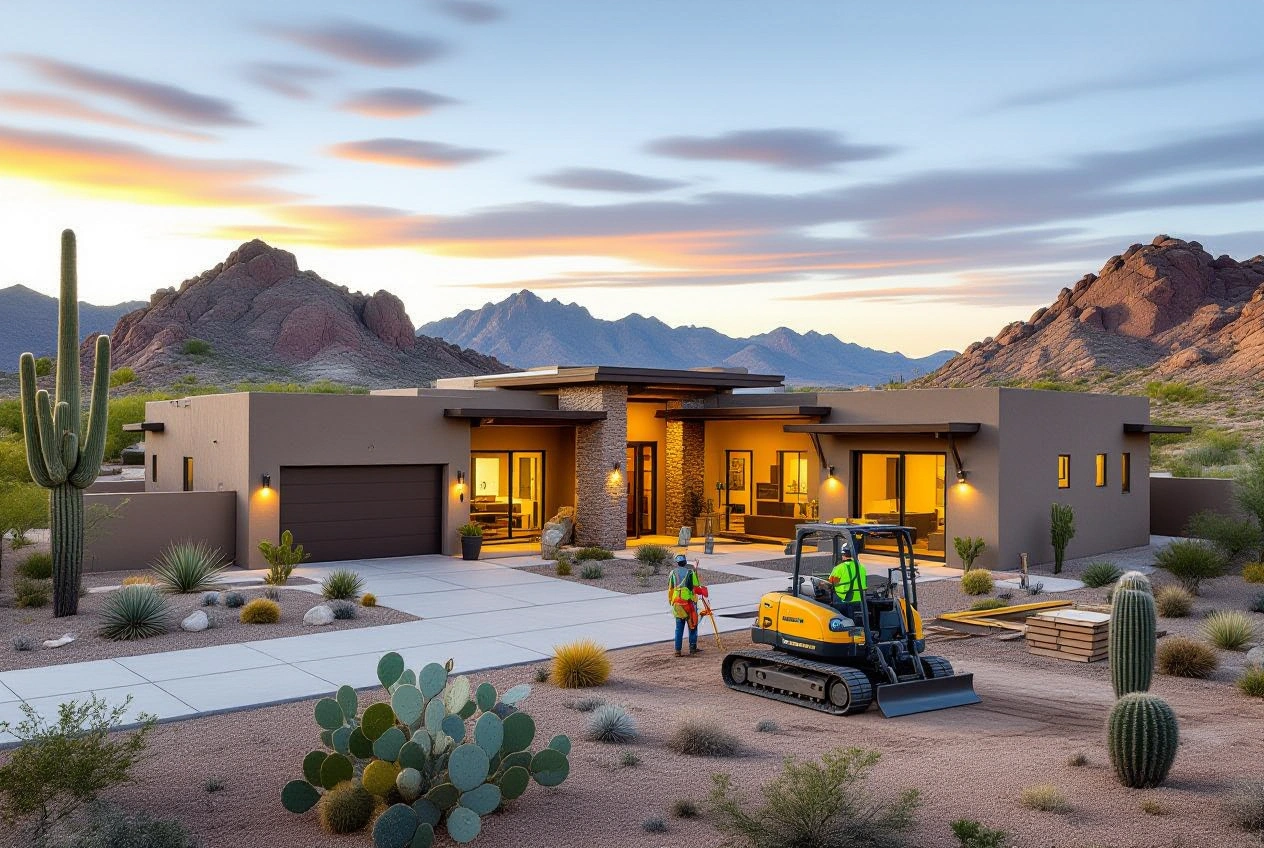
Greater Phoenix Housing Market Sees Continued New-Construction Activity
Arizona’s housing market continues to evolve as builders, homebuyers, and existing homeowners adjust to changing demand, affordability, and inventory levels.
While new-home construction remains an important part of the Greater Phoenix housing market, the latest data does not show a broad-based construction surge. Instead, activity is mixed across different communities and housing types.
Why New Construction Matters
New construction continues to influence the housing market by giving buyers more choices, including newer layouts, modern features, energy-efficient systems, and lower-maintenance homes.
At the same time, increased competition from new homes can create challenges for homeowners selling older properties. Sellers may need to pay closer attention to pricing, property condition, and the features buyers are looking for.
The Arizona Regional Multiple Listing Service (ARMLS) reported that new-home sales in Maricopa County declined 14% year over year in May 2026. However, the price difference between new construction and resale homes narrowed to approximately 7%, compared with a historical May average of about 30%. This suggests that builders and resale homeowners are increasingly competing for the same buyers.
Where Development Continues
Growth and development remain particularly important in communities throughout the East Valley, including areas around Queen Creek and San Tan Valley.
Scottsdale also continues to have significant housing development in its pipeline. Scottsdale’s 2025 housing report identified thousands of multifamily units that were permitted or under construction, along with hundreds of permitted single-family units.
The city also launched its new Scottsdale SPUR planning and permitting system in 2026, providing an updated way to track development applications, permits, and construction projects.
Phoenix Construction Activity Is Mixed
Recent permit data shows why the market should not simply be described as a construction boom.
The Phoenix-Mesa-Chandler metropolitan area recorded 2,255 new housing units authorized by permits in May 2026. That was down from the same month a year earlier. However, June increased to 3,923 permitted units, showing that monthly activity can fluctuate considerably.
Within the City of Phoenix, single-family construction permits were also running below the previous year. The city reported a 31.6% year-over-year decline in year-to-date single-family permits in its June 2026 economic update. Meanwhile, multifamily permitting was significantly higher than the previous year, although city officials noted that the multifamily market may be overdeveloped and could slow later in 2026 and into 2027.
Tucson is also seeing ongoing construction activity, although its permit numbers have fluctuated from month to month. The Tucson metropolitan area recorded 437 housing units authorized by permits in June 2026, compared with 319 in May.
What This Means for Homeowners
For existing homeowners, new construction can create both opportunities and challenges.
Buyers now have more choices between new and resale properties, which means sellers of existing homes may need to compete on more than price. Updates, maintenance, energy efficiency, community amenities, and overall property condition can all influence a buyer’s decision.
For homeowners living in HOA communities, continued development can also affect community planning, infrastructure needs, landscaping, amenities, traffic, and long-term neighborhood growth.
Bottom Line
Greater Phoenix continues to experience significant residential development, but the latest data points to a changing and uneven market rather than a simple construction surge.
Builders are still adding new housing, while buyers are becoming more selective and resale homeowners face increasing competition. Keeping track of development activity and market trends can help homeowners, community associations, and boards make better long-term decisions.
Sources
For current Arizona housing information, homeowners and community leaders can follow the Arizona Regional Multiple Listing Service (ARMLS), City of Phoenix Planning and Development Department, City of Scottsdale Planning and Development, and U.S. Census Bureau housing-permit data.