
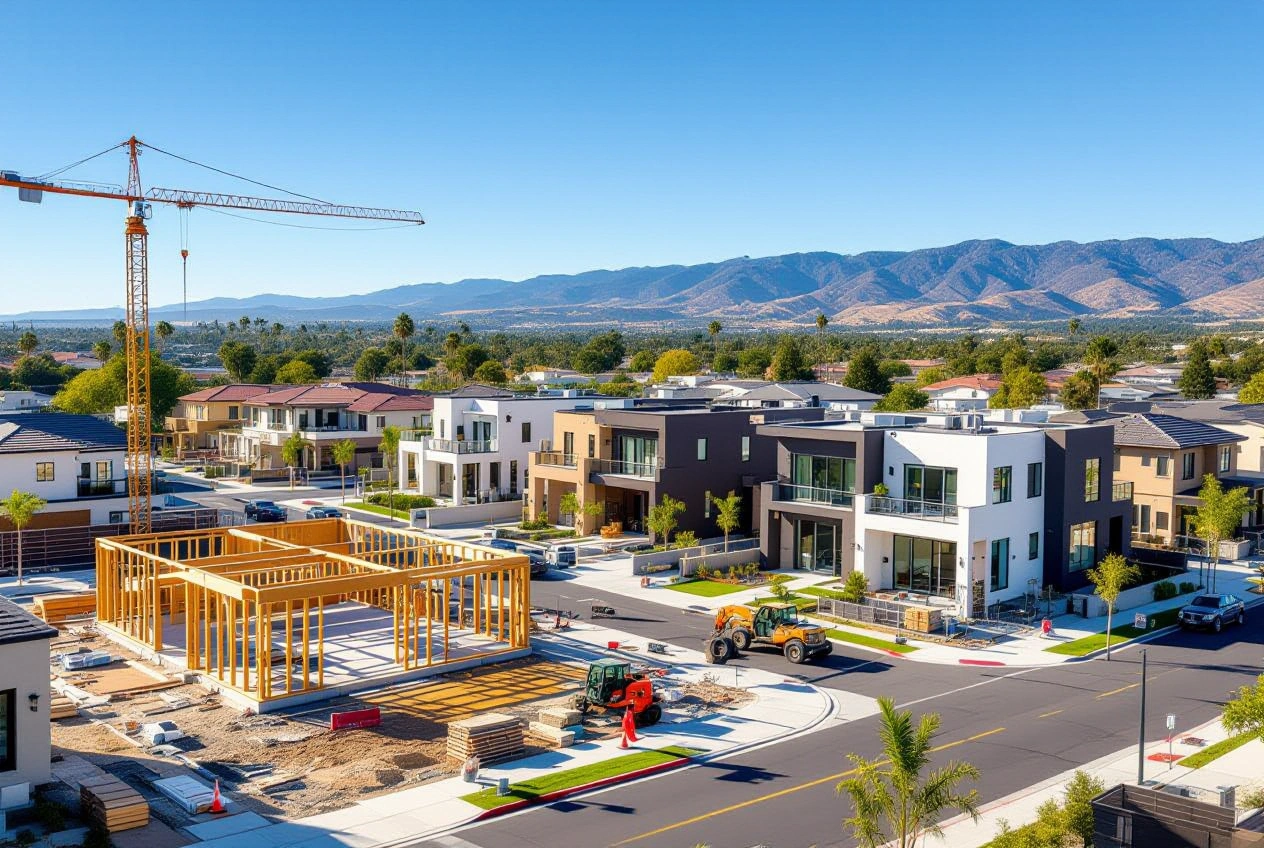
California Housing Construction Gains Momentum as Multifamily Development Expands
California’s housing market is showing signs of increased construction activity, particularly in the multifamily sector, as state and local governments continue efforts to address the state’s long-standing housing shortage.
Recent U.S. Census Bureau data shows that California has become the nation’s leading state for multifamily building permits. Through the first five months of 2026, California’s multifamily permitting was 47.9% higher than during the same period in 2025.
The increase is an important development for a state that has faced high housing costs, limited inventory, and strong demand for both rental and ownership housing.
Permit Activity Shows Signs of Improvement
California’s overall permitting activity has been uneven from month to month, but several recent reports show year-over-year gains.
In May 2026, California authorized approximately 10,196 residential units, representing a 9.1% increase compared with May 2025. Sacramento also performed strongly, with the region issuing 1,094 residential permits in May, up 14% from the same month a year earlier.
March was another particularly strong month. California’s seasonally adjusted annualized rate of permitted housing units reached 98,800, which was 19.1% higher than March 2025. The increase was driven by both single-family and multifamily permitting.
However, construction activity remains uneven across the state. For example, the Bay Area recorded 645 residential permits in May 2026, down approximately 36% from May 2025.
Multifamily Housing Is Driving Much of the Growth
One of the most significant trends is the strength of multifamily development.
California issued more multifamily permits than any other state during the first five months of 2026, with permitting up 47.9% from the same period the previous year.
This continued emphasis on apartments and other multifamily housing is important because many Californians remain priced out of homeownership and depend on rental housing.
California’s Department of Housing and Community Development also reports that multifamily construction has reached its highest level in decades. More than 682,000 homes have been built statewide since 2019, while annual residential construction increased from approximately 70,000 homes in 2018 to about 111,000 in 2024.
State Policies Are Supporting Faster Housing Development
California has introduced several policies intended to make housing development faster and less costly.
Recent reforms have streamlined environmental review and permitting for qualifying housing projects. In 2025, California enacted major CEQA reforms designed to accelerate housing and infrastructure projects while maintaining protections for sensitive lands.
Accessory Dwelling Units (ADUs) are another important part of the state’s housing strategy. California’s Department of Housing and Community Development describes ADUs as an important tool for expanding the state’s housing supply. Qualifying ADUs can be processed ministerially and may be exempt from CEQA.
The state’s streamlining efforts appear to be having an impact. According to HCD, the average time from development application to entitlement fell by 57%, from 160 days to 68 days in 2024.
What This Could Mean for Homeowners and Communities
More housing construction could eventually give California homebuyers and renters additional options, particularly in areas where housing supply has struggled to keep pace with demand.
For existing homeowners and community associations, however, new development can bring both opportunities and challenges.
New communities can increase demand for infrastructure, roads, utilities, landscaping, amenities, and property management services. Rapid development can also affect traffic patterns, neighborhood density, community facilities, and the long-term planning needs of existing HOAs.
For developers and investors, the continued growth in multifamily permitting suggests that rental housing will remain an important part of California’s housing strategy.
The Bottom Line
California’s housing market is not experiencing a uniform construction boom across every region. However, the latest data shows meaningful growth in multifamily permitting and continued progress in overall housing production.
With state policies increasingly focused on streamlining approvals and encouraging new housing, California’s construction pipeline could continue to expand. The bigger question will be how quickly permitted projects move from approval to actual construction—and whether the resulting homes become affordable enough to make a meaningful difference for California residents.
Sources
For current California housing information, readers can follow the California Department of Housing and Community Development (HCD), U.S. Census Bureau Building Permits Survey, California Association of REALTORS®, and local city and county planning departments.