
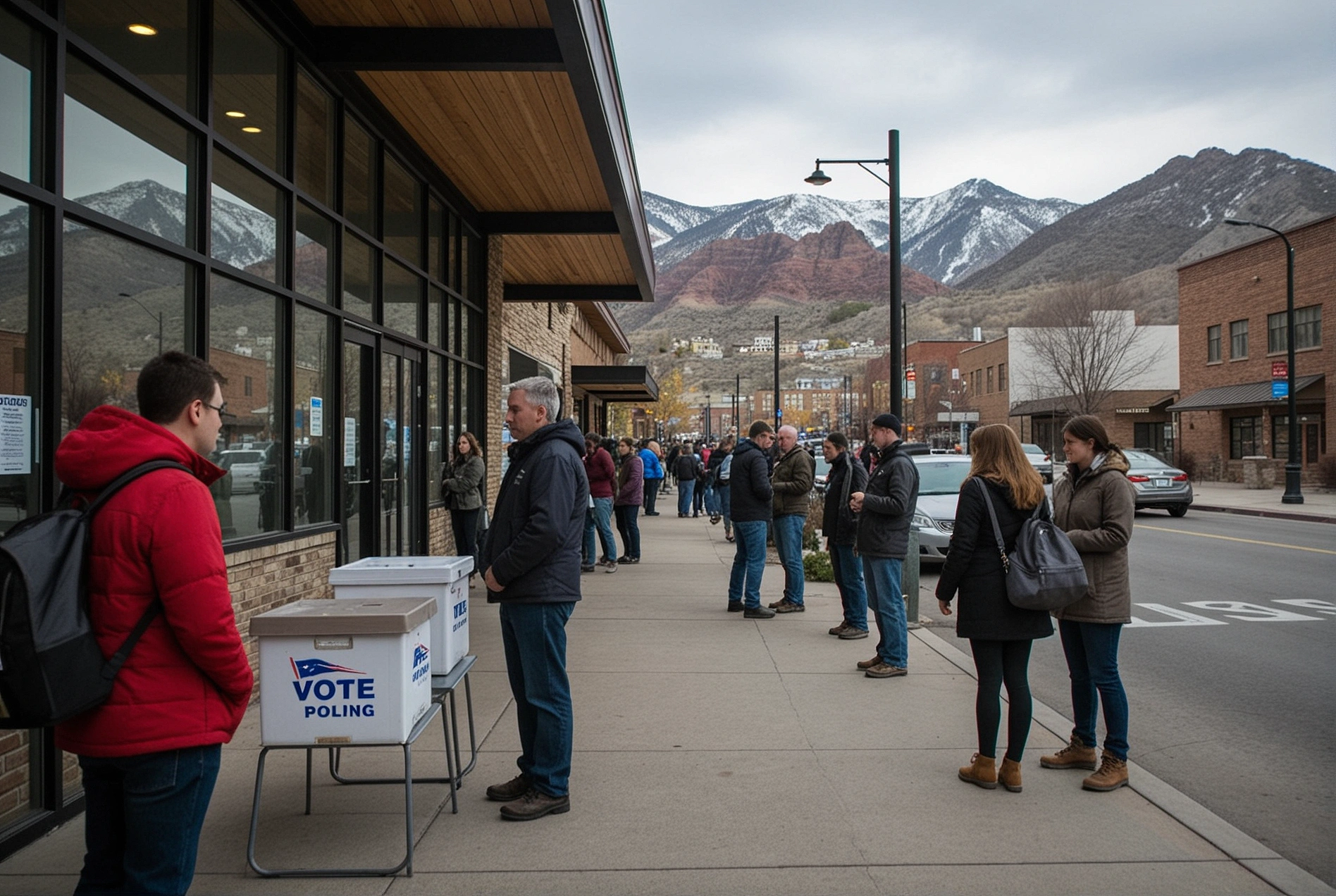
Utah Voters to Decide Two Constitutional Amendments in November Election
Utah voters will decide on two proposed constitutional amendments on November 3, 2026, addressing how proposed constitutional amendments are publicized and how certain citizen-initiated tax measures must be approved.
General election ballots are scheduled to be mailed to active registered voters beginning October 13, with Election Day set for November 3. (vote.utah.gov)
Amendment A Would Change Constitutional Amendment Publication Rules
Amendment A would change Utah’s current constitutional requirement for publishing proposed constitutional amendments.
Under the existing provision, proposed amendments must be published in at least one newspaper in every Utah county where a newspaper is published for two months before the election.
If approved, Amendment A would replace that specific newspaper requirement with a requirement that proposed amendments be published in a manner established by statute for 60 calendar days before the election. (utahnewsdispatch.com)
The change follows a 2024 dispute in which courts determined that constitutional publication requirements had not been met for proposed amendments that year. The amendment’s supporters have argued that the current newspaper requirement does not reflect how many Utah residents receive information today. (deseret.com)
Amendment A passed the Legislature without opposition and has not generated the same organized campaign activity as Amendment B. (deseret.com)
Amendment B Would Raise the Approval Threshold for Certain Tax Initiatives
Amendment B would change the approval threshold for certain citizen-initiated ballot measures involving taxes.
Under the proposed amendment, a citizen initiative would need at least 60% voter approval if it would impose a new tax, expand or increase an existing tax, or make certain changes involving property-tax rates. (utahnewsdispatch.com)
Currently, qualifying citizen initiatives generally require a simple majority of voters to pass.
Arguments From Supporters and Opponents
Supporters say requiring 60% approval would ensure that tax increases resulting from citizen initiatives have broader voter support. Billy Hesterman of the Utah Taxpayers Association has argued that tax increases should receive more than a narrow majority. (sltrib.com)
Opponents argue that the higher threshold would make the citizen-initiative process more difficult to use and could reduce voters’ ability to enact policies through direct democracy. Utahns Protecting Our Constitution launched an organized opposition campaign in September. (utahnewsdispatch.com)
Those are competing positions on the effect of the proposed constitutional change; the amendment itself would not eliminate Utah’s citizen-initiative process.
What Recent Polling Shows
A Noble Predictive Insights poll of 602 registered Utah voters, conducted September 8–12, found 50% supported Amendment B, 21% opposed it and 23% were unsure. The reported margin of error was ±3.99 percentage points. (utahnewsdispatch.com)
This is a snapshot of voter opinion from early September and should not be treated as a prediction of the November result.
Amendment B has also attracted organized campaign spending. Utah News Dispatch reported that the opposition group had collected approximately $593,000 in contributions as of September, based on campaign-finance disclosures. (utahnewsdispatch.com)
Why These Measures Matter
The two amendments address different parts of Utah’s constitutional and election processes.
Amendment A concerns how voters receive official notice about proposed constitutional changes. Amendment B concerns the level of voter approval required for certain tax-related citizen initiatives.
If approved, both would change provisions of the Utah Constitution, meaning their effects would extend beyond the 2026 election.
For residents, understanding the actual ballot language and the official arguments for and against each proposal can help provide context before voting.
Important Election Dates
Utah’s official election calendar lists several dates voters should know:
- October 13: General election ballots begin being mailed.
- October 20: In-person early voting may begin, depending on the county.
- October 23: Registration deadline for voters who want to register without voting provisionally.
- October 27: Deadline to request a regular absentee ballot.
- November 3: General Election Day. (vote.utah.gov)
Voters can use Vote.Utah.gov to check registration information, election resources and ballot-related information.
Key Takeaway
Utah voters will decide two constitutional amendments in November.
Amendment A would replace the Constitution’s specific newspaper-publication requirement for proposed amendments with a 60-day publication requirement established by statute.
Amendment B would require 60% voter approval for certain citizen-initiated measures involving taxes, rather than the current simple-majority standard.
The two proposals have generated different levels of public debate, with Amendment B drawing organized campaigns and polling. Ultimately, voters will determine whether either constitutional provision changes on November 3.