
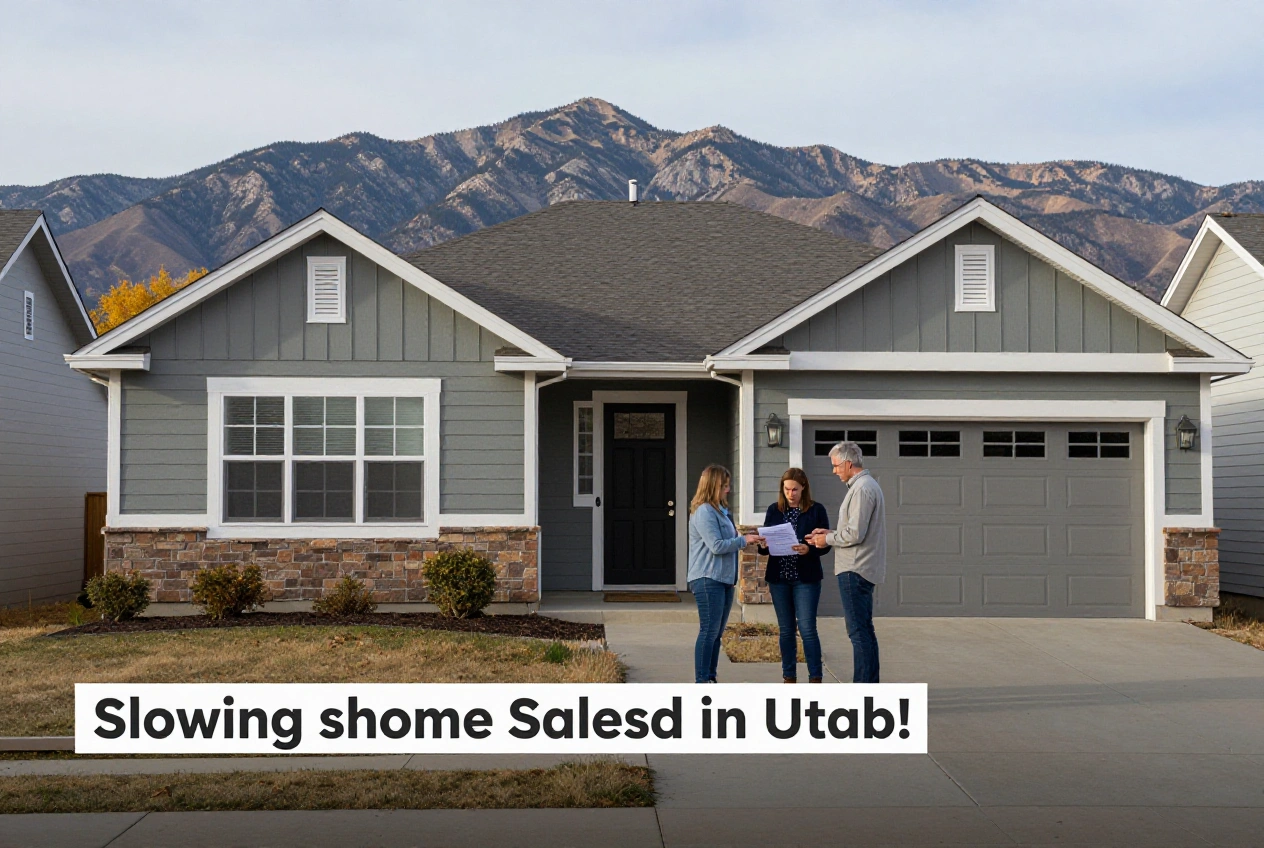
Utah Housing Market Slows as Pending Home Sales Fall Sharply
Utah’s housing market is showing signs of a slowdown as fewer homes go under contract and mortgage costs continue to challenge buyers. New data from September and late October indicate that homebuying activity has weakened across the state, even as statewide median prices remain slightly higher than a year ago.
The trend could give some buyers more time to compare properties and negotiate, while sellers may need to pay closer attention to pricing and competition. However, fewer pending sales do not automatically mean home prices will fall across every Utah community.
National and Local Pending Sales Decline
Pending home sales across the United States reached a record low in Redfin’s tracking for the four weeks ending October 18, 2026. The company recorded 281,749 homes with accepted offers, a 1.9% decline from the previous week and a 14.4% decrease compared with the same period a year earlier.
Redfin’s records for this measure begin in 2021. The decline came as mortgage rates remained elevated, putting pressure on buyers’ budgets and reducing the number of households able or willing to proceed with a purchase.
Utah has experienced a similar slowdown. According to figures cited by the Salt Lake Board of Realtors and reported by KSL.com, Salt Lake County had 719 homes under contract as of October 24, down 16% from 855 on the same date in 2025.
Statewide, 3,191 homes were under contract, an 18% decline from 3,903 a year earlier.
The Utah Association of Realtors’ September report showed an even sharper annual decline in new pending sales. The state recorded 2,744 pending sales during September, down 26.8% from 3,748 in September 2025.
These figures cover different reporting periods and measures. Redfin’s national total is a rolling four-week figure, while Utah’s monthly pending-sales number counts contracts initiated during September. Both, however, point to reduced homebuying activity.
Mortgage Rates Add to Affordability Pressures
Higher borrowing costs remain a major challenge for prospective homebuyers. Mortgage rates rose into the 7% range during October, increasing the monthly cost of financing a home.
When mortgage rates rise, buyers generally qualify for smaller loans if their income and monthly budgets remain unchanged. Some households respond by postponing a purchase, searching for less expensive properties or negotiating for seller concessions that help reduce upfront costs.
Redfin reported that the typical monthly mortgage payment for a U.S. homebuyer reached $2,796 for the four weeks ending October 18, up 10.4% year over year. That figure reflects national conditions rather than a Utah-specific payment estimate, but it illustrates the broader affordability pressure facing buyers.
For Utah sellers, fewer buyers actively signing contracts can mean more competition for offers. Homes that are priced above comparable properties may take longer to attract interest, while well-priced homes can still draw qualified buyers.
Inventory Increases as Sales Activity Weakens
Utah had 17,528 homes for sale at the end of September, up 3.6% from a year earlier, according to the Utah Association of Realtors’ market statistics. The state recorded 4.7 months of supply, while closed sales fell 11.9% year over year.
More available homes can give buyers a wider selection than they had during periods of tighter inventory. However, a modest increase in listings does not mean every area has enough supply to favor buyers. Conditions vary by county, property type and price range.
The combination of fewer pending sales and a somewhat larger inventory suggests that the market is becoming less competitive in some segments. Buyers may have more room to ask for repairs, closing-cost assistance or other concessions, depending on the property and the seller’s circumstances.
Home Prices Remain Resilient Overall
Despite the slowdown in transactions, Utah’s statewide median sale price reached $530,000 in September 2026, up 1.9% from $520,000 a year earlier.
The difference between sales activity and pricing is important. Pending sales measure homes entering the contract stage, while the median sale price reflects properties that have actually closed. A decline in buyer activity may show up in contract numbers before it produces a noticeable change in completed sales prices.
Statewide figures also mask differences between communities. A market with limited supply or strong local demand may continue to see prices rise even as activity declines elsewhere.
Regional Differences Across Utah
County-level figures in the September market data show that price performance varied across the state. Utah County’s median price rose 4.2% to $519,990, while Davis County’s median fell 4.3% to $521,500. Washington County recorded a 3.6% decline to $499,495.
In Salt Lake County, the median price across all home types dipped slightly to about $550,000, while the median for single-family homes increased 1.5% to $650,000.
These figures underline why buyers and sellers should examine the market for their specific location and property type rather than relying solely on statewide trends. New construction, available inventory, property mix and local demand can all affect reported prices.
What Utah Buyers and Sellers Should Consider
For buyers, the slowdown may create opportunities to compare more properties, negotiate repairs or closing costs, and avoid rushing into a decision. Buyers should still assess their monthly payment at current rates, account for taxes and insurance, and secure financing appropriate to their budget.
Sellers may need to review comparable recent sales, price their homes realistically and ensure that listings are presented well. In areas where competing properties are plentiful, flexibility on price or contract terms may help attract qualified offers.
Investors should avoid interpreting falling pending sales as a guaranteed sign of lower purchase prices or stronger returns. Local rental demand, operating expenses, financing costs and long-term resale prospects remain important to any investment decision.
Outlook: A Slower Market, Not a Uniform Price Decline
Utah’s housing market is experiencing a clear slowdown in contract activity, with September pending sales down sharply and late-October under-contract counts below year-earlier levels. Higher mortgage costs are likely contributing to the hesitation among buyers.
At the same time, the statewide median sale price remained higher than a year earlier, and market conditions differ across counties. The latest data therefore point to weaker transaction activity rather than a uniform statewide decline in home values.
Key takeaway: Utah buyers may find more opportunities to negotiate in some markets, but affordability remains a hurdle. Sellers should pay close attention to local competition, while both sides should use current local data to guide their decisions.
Data sources: Redfin, Utah Association of Realtors, UtahRealEstate.com and reporting by KSL.com. Figures reflect the reporting periods specified in the article.