
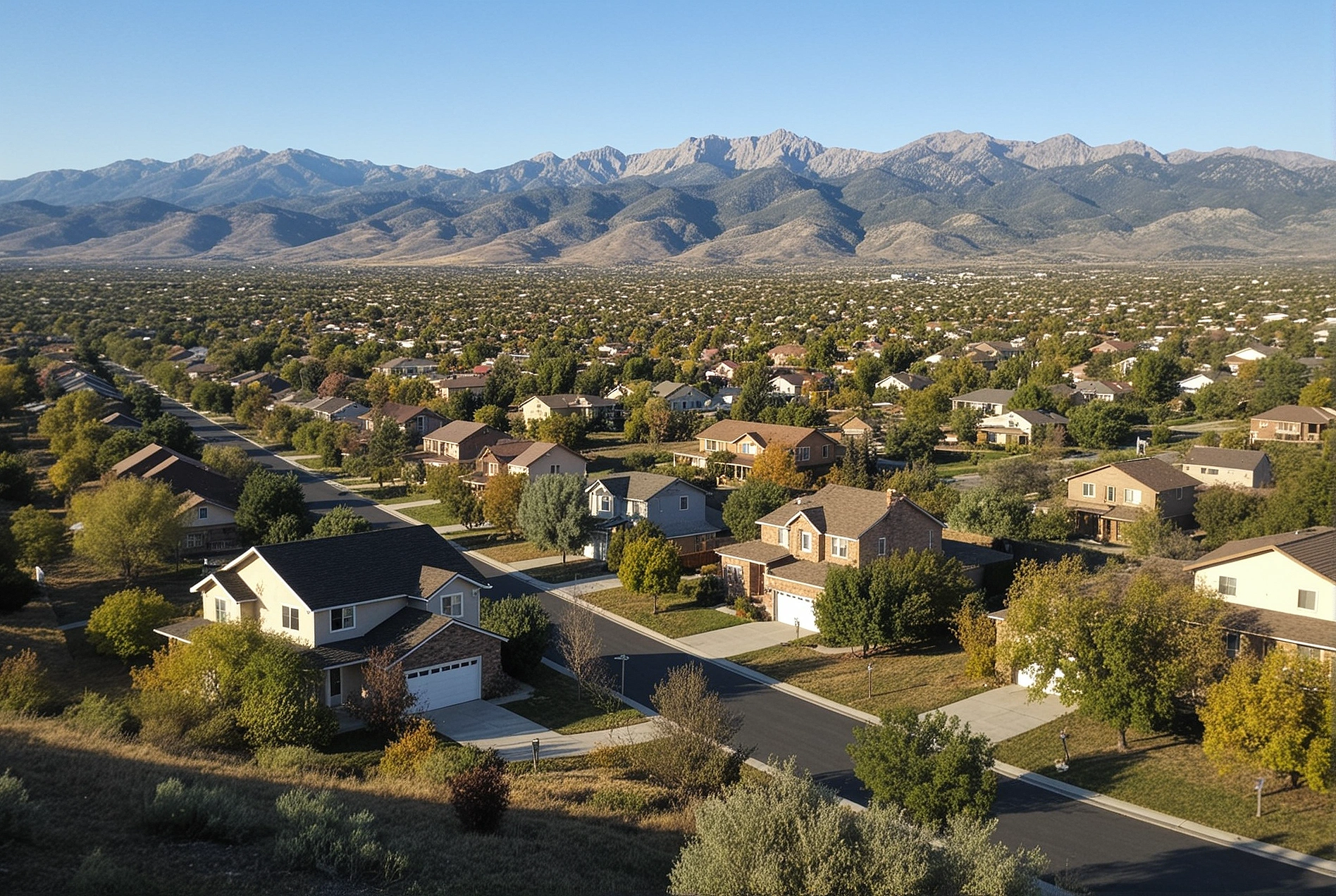
Utah Housing Market Update: Home Prices, Inventory, and Regional Trends in 2026
Utah’s housing market is showing modest price growth alongside changing inventory and buyer activity. Conditions vary across Salt Lake, Utah, and Washington counties, making local market data especially important for buyers, sellers, and real estate investors.
The latest statewide figures available from the Utah Association of REALTORS® show that home prices increased 1.1% year over year in July 2026. Homes for sale increased 1.4%, while sales declined 1.9%. These figures point to a market that is adjusting rather than experiencing a uniform statewide surge.
Utah Home Prices: What the Latest Data Shows
The Utah Association of REALTORS® reported a statewide median sale price of approximately $525,000 in July 2026, up 1.1% from July 2025.
This differs from the draft’s claim that the statewide median reached $485,000 in late September, with annual growth of 6.8%. The available official statewide report does not verify those September figures.
Price measures also vary depending on the source and property type. For example, Realtor.com reported a statewide median listing price of $579,000 in September 2026. A listing price reflects what sellers are asking, not what buyers ultimately paid.
Understanding these differences helps avoid misleading comparisons between market reports.
Regional Housing Trends
Salt Lake County
Salt Lake County remains a major part of Utah’s housing market, but recent data does not support the draft’s stated September median of $510,000 and 7.1% annual increase.
A September 2026 local market report showed a median single-family sale price of approximately $633,720 over the 12 months ending September 30, up 1.5% year over year. The report also indicated 3.4 months of supply and a median of 34 days on market.
These are trailing-year single-family figures, not a September monthly median across all property types. The distinction matters when comparing them with statewide statistics.
Utah County
Utah County has also shown price growth, although the pace depends on the reporting period and property type.
A local market update reported a median sale price of $534,950 across all home types in July 2026, up 5.3% from July 2025. For single-family homes in August, the median sale price was $613,600, up 2.3% year over year. Active single-family listings increased 6.8%, and homes spent a median of 54 days on the market.
These figures do not match the draft’s September median of $535,000 and 6.4% increase. They also show why a single county-level number may not describe every part of the market.
Washington County
Washington County’s market shows a different pattern from the northern Utah counties.
Redfin’s report for the three months ending August 2026 showed a median sale price of approximately $543,182, up 3.4% year over year. Homes took a median of 64 days to sell, compared with 62 days a year earlier. Closed sales in August were down 12.4% from the same month in 2025.
A separate local MLS-based report showed an August median sale price of $520,000, down 2.7% year over year, with active listings up 4.4%.
The differing results reflect variations in data source, time period, and reporting method. Neither source confirms the draft’s stated $465,000 median and 5.9% annual increase.
Inventory and Market Conditions
The claim that Utah’s active listings were 12% below the prior year is not supported by the latest statewide report reviewed.
In July 2026, the Utah Association of REALTORS® reported that homes for sale were up 1.4% year over year. Local market data also shows that inventory conditions vary by county and property type.
For example, Utah County’s August single-family listings were up 6.8% year over year. Salt Lake County’s September report indicated 3.4 months of supply, while a local Utah County report showed 4.5 months of supply in its September update.
Months of supply estimates how long current inventory would take to sell at the recent sales pace, assuming no additional listings enter the market. Six months is often used as a broad reference for a balanced market, but conditions can differ considerably among neighborhoods and price ranges.
What the Market Means for Buyers and Sellers
For buyers
Buyers should consider more than the headline price trend when deciding where and when to purchase.
Practical steps include:
- Getting mortgage pre-approval to understand a realistic budget.
- Comparing recent closed sales for similar homes.
- Reviewing how long comparable properties have been listed.
- Checking for price reductions and seller concessions.
- Accounting for mortgage payments, taxes, insurance, and maintenance.
Some neighborhoods may still have limited choices, but the available data does not support assuming that all Utah buyers face multiple offers or must submit offers within a week.
For sellers
Sellers should review current competition and recent sales before setting an asking price.
In markets where homes are taking longer to sell or inventory is increasing, realistic pricing and property presentation become especially important. Some well-priced homes may attract strong interest, while other listings may require price adjustments or concessions.
Local market conditions are more useful than a statewide assumption that sellers are consistently receiving quicker offers.
For real estate investors
Investors should evaluate each property using its own financial assumptions.
Important considerations include:
- Purchase price and financing costs.
- Expected rental income and vacancy.
- Property taxes, insurance, and maintenance.
- Local rental demand.
- Potential resale value and market risks.
Statewide appreciation does not guarantee a particular property will rise in value at the same rate. A careful assessment of the local market and the property’s expected cash flow is essential.
What Could Shape Utah’s Housing Market Through the End of 2026?
Several factors could influence Utah’s housing market during the final quarter of 2026:
- Mortgage rates: Financing costs affect purchasing power and buyer demand.
- New construction: Additional housing supply may create more options in some communities.
- Local inventory: The number of available homes in each price range influences competition.
- Employment and population trends: Economic conditions can affect household formation and housing demand.
- Affordability: Prices, mortgage rates, and household income all influence access to homeownership.
The available evidence does not establish a specific statewide price-growth forecast for the rest of 2026. Forecasts should be treated as estimates, particularly when local conditions vary.
The Bottom Line
Utah’s housing market is showing modest statewide price growth, with different trends across Salt Lake, Utah, and Washington counties. The latest statewide report shows a slight increase in homes for sale and a decline in sales, while regional reports reveal a mixture of price gains, longer selling times, and changing inventory.
For buyers, sellers, and investors, the most useful approach is to track recent local sales, active listings, days on market, and total ownership costs. These indicators provide a clearer picture of the opportunities and challenges in each community than broad claims about statewide price growth or limited supply.