
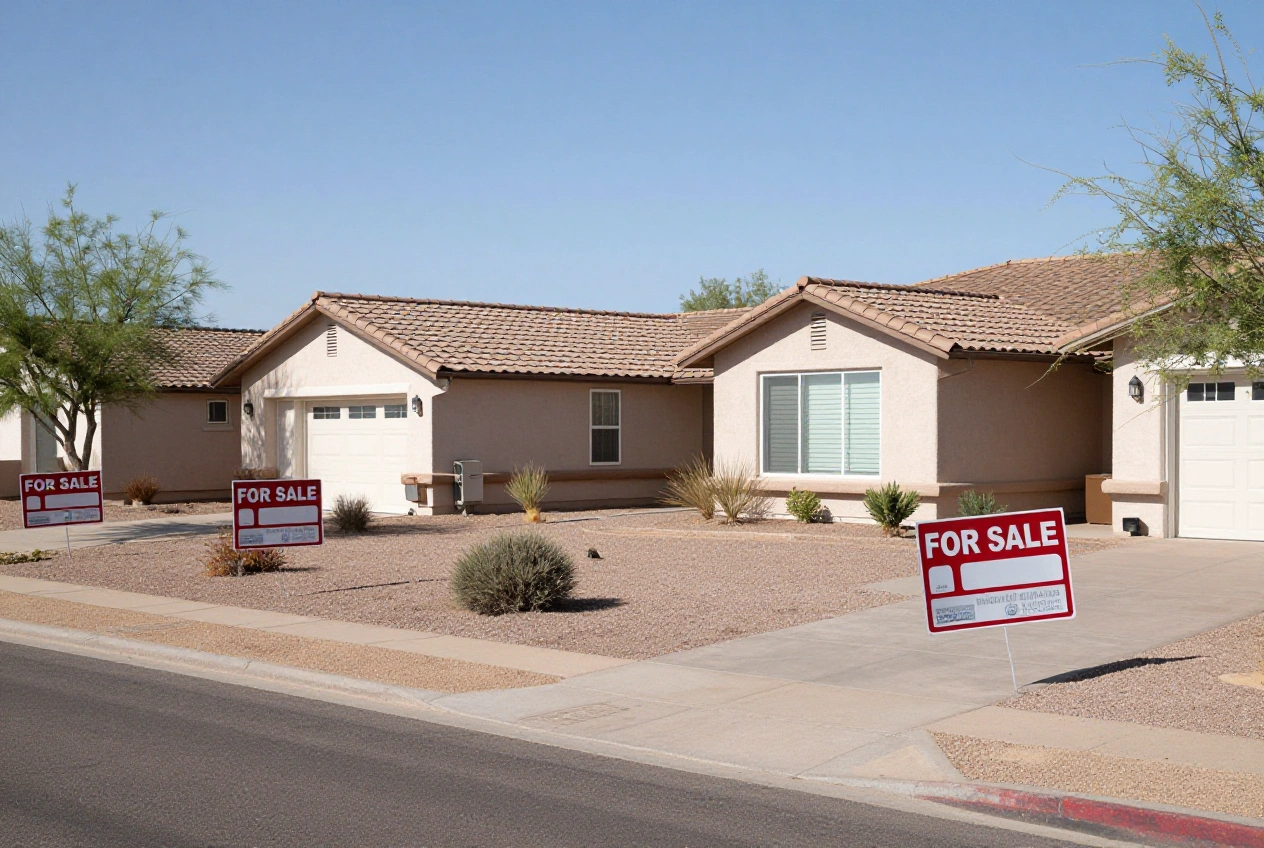
Greater Phoenix Housing Market Slows as Pending Sales Fall in September 2026
Greater Phoenix’s single-family housing market experienced a slowdown in September 2026, as pending sales fell sharply and higher mortgage rates added pressure to buyers’ budgets. Data from Phoenix REALTORS showed declines in closed sales and new listings compared with September 2025, even as the region maintained year-to-date sales gains.
The figures suggest that affordability and uncertainty over borrowing costs are weighing on buyer activity. Although more homes are available than a year ago, the effect varies across the Phoenix metro area and individual communities.
Why This Matters to Oregon Residents
Some Oregon residents consider Arizona destinations such as Phoenix, Scottsdale and Tucson when evaluating relocation, retirement or investment opportunities. Understanding the Arizona market can help prospective movers compare housing costs and conditions before making a decision.
However, Greater Phoenix’s performance does not directly predict what will happen in Oregon. Buyers considering a move should compare local home prices, property taxes, insurance costs, employment opportunities and financing options in both locations.
September Sales and Listing Trends
According to Phoenix REALTORS data reported in October, Greater Phoenix’s single-family market recorded several year-over-year declines in September:
- Closed sales fell 4.9%.
- New listings declined 3.7%.
- Pending sales dropped 40.1%.
- Active inventory increased 6.7%.
Despite the monthly slowdown, year-to-date closed sales remained above the same period in 2025 in some market reports. The sharp decline in pending sales is particularly notable because homes going under contract often precede future closings.
The figures also show that fewer new listings do not necessarily mean inventory is shrinking. When homes take longer to sell or buyers delay decisions, the number of properties available can rise even as fewer sellers bring new homes to market.
Home Prices Vary Across the Metro Area
Price trends differed between Greater Phoenix and individual cities.
In Phoenix proper, the median single-family home price was reported at $485,000 in September, down 3.5% from a year earlier. Closed sales in the city declined 4.7%, while pending sales fell 37.3%.
Scottsdale showed a different pattern. Closed sales increased 2.2% year over year, and its reported median home price rose to approximately $1.2 million. The city’s higher-priced housing segment continues to operate differently from many other parts of the metro area.
These comparisons illustrate why buyers and sellers should review data for the specific city and property type they are considering. A metro-wide figure may not reflect conditions in a particular neighborhood or price range.
Mortgage Rates Add Pressure on Buyers
Mortgage rates climbed throughout September. Freddie Mac reported that the average 30-year fixed mortgage rate rose from 6.71% on September 3 to 7.03% on September 24. It reached 7.28% on October 1 before rising further to 7.40% on October 8.
Higher borrowing costs can significantly affect monthly payments, reducing the price a household can comfortably afford. When buyers face greater uncertainty about financing, they may delay making offers or reconsider the homes they can purchase.
The timing of the rate increases coincided with a sharp decline in pending sales, although the figures alone do not establish that mortgage rates were the sole cause.
Inventory and Market Conditions
Greater Phoenix inventory increased year over year, giving buyers more properties to compare. One local market report placed supply at approximately 4.45 months in September, up from 3.39 months in June.
More available homes can give buyers additional time to evaluate properties and negotiate price or seller concessions. However, market conditions remain dependent on location, property condition, price and competition from other buyers.
Sellers may need to pay closer attention to comparable recent sales and price their homes realistically. Properties that are well maintained and competitively priced may still attract interest, while others may take longer to sell.
What Buyers and Sellers Should Watch Next
For buyers, the combination of higher mortgage rates and expanded inventory makes it important to assess the full cost of homeownership rather than focusing on the asking price alone. Comparing lender quotes and considering the potential costs of insurance, taxes and maintenance can help clarify affordability.
For sellers, the latest data highlights the importance of understanding neighborhood-level demand. Pricing decisions should reflect current comparable sales and the number of competing listings, rather than relying solely on last year’s market conditions.
Scottsdale’s stronger sales and price performance also demonstrates that the region is not moving uniformly. Local conditions should guide decisions more than broad metro-wide headlines.
Practical Takeaway
September’s Greater Phoenix housing data shows slower contract activity, fewer closed sales and more inventory than a year earlier. Higher mortgage rates have added another challenge for buyers, while conditions differ substantially between cities and price ranges.
Oregon residents considering a move to Arizona should treat these figures as one part of their research, not as a forecast for either state. Reviewing current local data and comparing the full cost of ownership can help households make better-informed relocation and real estate decisions.