
Oregon Appeals Court Ruling Could Help Make Affordable Housing Conversions More Feasible
A recent Oregon Court of Appeals decision could make it easier for developers to turn underused buildings into affordable housing. The September 16, 2026, ruling clarified how Oregon’s residential-construction exemption from prevailing-wage requirements applies when an existing building is repurposed to create affordable apartments.
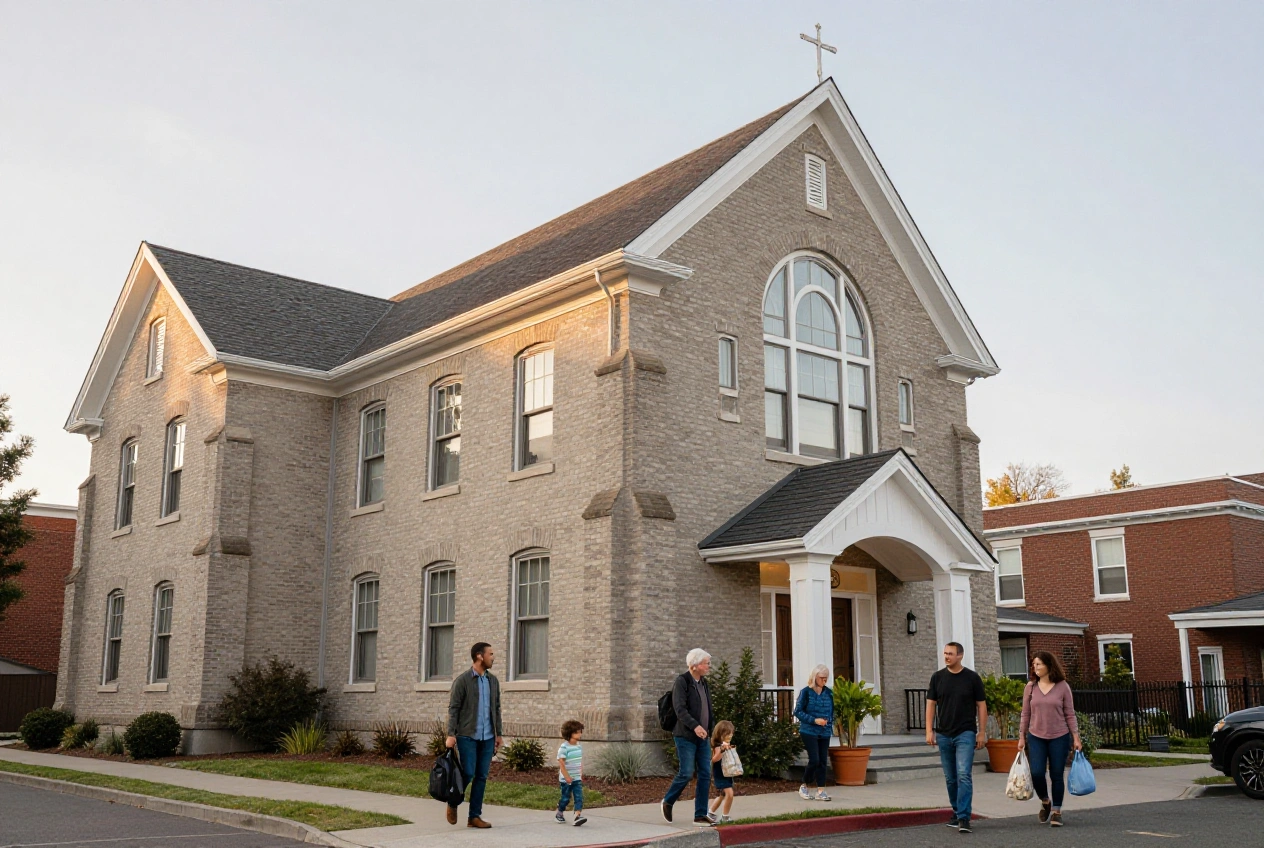
The case, DevNW v. Oregon Bureau of Labor and Industries, involved a nonprofit developer that transformed a century-old church in Salem into 17 affordable apartments. The court reversed the agency’s decision denying the project an exemption and sent the case back for further proceedings.
The ruling could have implications for other affordable housing projects that reuse existing structures, although eligibility will depend on the applicable law and the circumstances of each development.
Background: A Salem Church Becomes Affordable Housing
DevNW, a nonprofit affordable housing developer, acquired property containing a former church and a parsonage with plans to create affordable housing.
The project retained the church building’s foundation, exterior walls and certain exterior windows while substantially removing and rebuilding the interior. The completed development consisted of 17 affordable apartments.
DevNW sought confirmation from the Oregon Bureau of Labor and Industries (BOLI) that the project qualified for the residential-construction exemption under Oregon’s prevailing-wage law.
The exemption applies to qualifying privately owned residential-construction projects that predominantly provide affordable housing. BOLI denied the request, reasoning that the work involved renovating a church rather than constructing a residential building.
An administrative law judge upheld that determination. DevNW then challenged the decision before the Oregon Court of Appeals.
What the Court Decided
In its September 16 opinion, the court’s majority concluded that the legislature intended the affordable-housing exemption to cover qualifying projects that repurpose older structures, rather than limiting it to construction on previously undeveloped land.
The majority focused on what the project created: residential housing where affordable apartments had not previously existed. The fact that some materials from the former church remained did not, by itself, prevent the project from qualifying as residential construction under the exemption.
The court reversed BOLI’s determination and remanded the case. One judge dissented, disagreeing with the majority’s interpretation of the statute.
The decision is significant because it clarifies how the exemption may apply to adaptive-reuse projects. However, it should not be interpreted as a blanket exemption for all conversions of churches, offices, schools or commercial buildings into housing.
Why Prevailing-Wage Requirements Matter to Project Costs
Prevailing-wage requirements establish minimum wage rates for covered construction work. Whether a project qualifies for an exemption can therefore affect its overall development budget.
DevNW reported that BOLI’s denial added nearly $870,000 to the project’s costs—approximately $50,000 per apartment. The organization said the added expense placed pressure on the project’s budget.
That figure reflects DevNW’s account of the project’s financial impact, rather than a cost calculation made by the court. It illustrates why the interpretation of an exemption can matter to nonprofit developers working with limited affordable-housing funding.
For projects that meet the legal requirements, the ruling may reduce uncertainty over whether retaining parts of an existing structure automatically disqualifies a development from the residential-construction exemption.
Potential Implications for Developers and Property Owners
The decision may be relevant to developers evaluating underused buildings for affordable housing, particularly where retaining portions of an existing structure is practical.
Potential benefits of adaptive reuse include making use of existing sites, preserving parts of older buildings and creating housing without requiring entirely new construction on undeveloped land. However, each project still faces its own financial, structural, zoning, permitting and accessibility considerations.
Property owners interested in redevelopment may wish to explore partnerships with nonprofit housing organizations or experienced developers. Investors considering affordable-housing projects should assess whether a proposed conversion meets the exemption’s requirements instead of assuming that the court’s ruling guarantees eligibility.
The decision may also be relevant to public agencies and housing organizations assessing the feasibility of converting surplus or underused buildings. Its precise application will depend on the project details and any subsequent legal or administrative developments.
What This Means for Oregon’s Housing Supply
Oregon continues to face challenges involving housing affordability and the availability of homes. Reusing existing buildings is one potential way to add housing, particularly in established communities where land and development opportunities may be limited.
The DevNW decision addresses a specific legal question about prevailing-wage exemptions. It does not, by itself, resolve Oregon’s broader housing shortage or guarantee that more conversion projects will proceed.
For developers and property owners, the immediate takeaway is to evaluate adaptive-reuse opportunities carefully and seek guidance on applicable wage requirements early in the planning process. The ruling provides important clarification, but project feasibility will still depend on funding, construction costs, regulatory approvals and the needs of the intended residents.