
-
OHA and DHHL Advance Plan for Native Hawaiian Housing in Kakaʻako Makai
The Office of Hawaiian Affairs (OHA) and the Department of Hawaiian Home Lands (DHHL) have signed an agreement to pursue a housing development on OHA-owned land in Kakaʻako Makai, opening a potential path to new homes for eligible Native Hawaiian families in urban Honolulu.
Signed on October 23, 2026, the agreement outlines a partnership to develop a roughly 3.3-acre parcel near Ala Moana Boulevard. The proposal comes after years of restrictions on residential construction in Kakaʻako Makai, where OHA owns land acquired through a state settlement in 2012.
The project could eventually add hundreds of homes to Honolulu’s housing supply. However, the agreement is an early step, and further planning, environmental review, financing arrangements and government approvals are still needed before construction can proceed.
Background: Why the Land Has Remained Undeveloped
OHA received nine parcels totaling approximately 29 acres in Kakaʻako Makai in 2012 as part of a settlement addressing unpaid state public land trust revenue.
Although the land is in an urban area close to jobs, transportation and public amenities, a state-imposed residential moratorium has restricted housing development in Kakaʻako Makai for nearly two decades. Previous efforts to change the rules have faced political and community opposition.
The new partnership focuses on a specific parcel known as Lot I, rather than immediately opening all nine OHA-owned parcels to residential development.
Under the proposed arrangement, OHA would transfer its interest in the site to DHHL, subject to the necessary approvals and final agreements. DHHL would lead the housing project, while OHA is expected to receive ownership or another agreed long-term interest in a commercial component of the completed development.
What the Proposed Housing Project Could Include
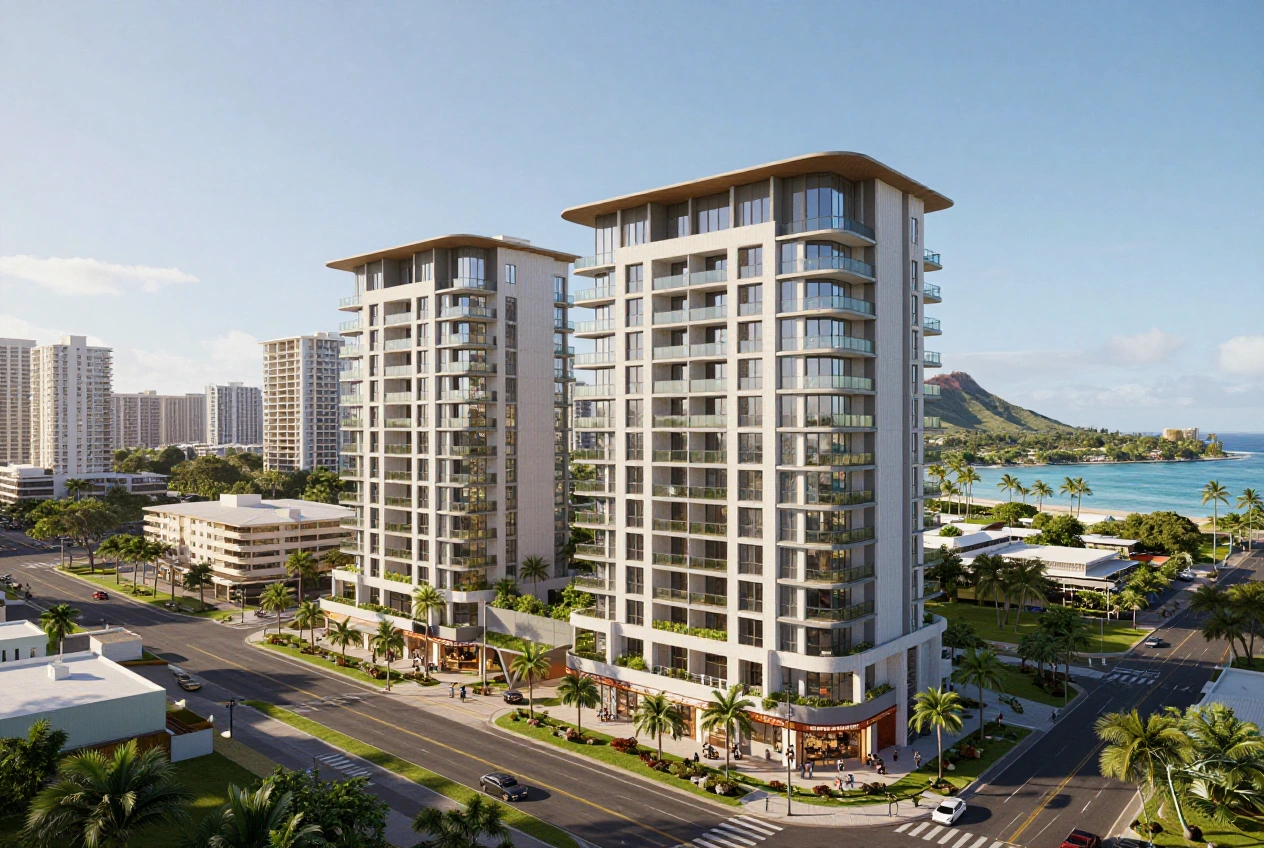
Early plans call for a mixed-use development with residential condominium units, commercial space and structured parking. Community and cultural facilities have also been discussed as part of the broader vision for Kakaʻako Makai.
Initial media reports described a project of approximately 400 homes, while Pacific Business News reported a plan for 446 units. The final number of homes, building configuration and other design details have not yet been settled.
The development is intended for eligible DHHL beneficiaries rather than the general residential market. That distinction is important for prospective buyers: eligibility requirements and the eventual ownership or homestead arrangements will determine who can obtain a unit and under what conditions.
The project is also expected to operate within applicable building-height and aviation restrictions. OHA’s published information identifies a 200-foot height limit for development in the area, although final plans will need to be evaluated through the relevant planning process.
How the OHA-DHHL Partnership Could Move Housing Forward
The agreement brings together two agencies with different roles. OHA manages land and resources to advance the well-being of Native Hawaiians, while DHHL develops housing opportunities for eligible beneficiaries.
DHHL has independent authority under state law to develop housing for its beneficiaries. The agencies believe this partnership could provide a route toward housing on a parcel where residential use has long been restricted.
However, the agreement should not be interpreted as a blanket exemption from all land-use, environmental or safety requirements. The project still needs to satisfy applicable legal obligations and complete the required planning and approval steps.
If realized, the development could provide eligible Native Hawaiian households with another opportunity to live in urban Honolulu, closer to employment centers, public services and existing infrastructure.
Environmental Review and Community Concerns
The proposal has also raised questions about environmental conditions and the suitability of the site for housing.
Residents and public officials have expressed concerns about the area’s industrial history and its proximity to Kakaʻako Waterfront Park, which was built over a former municipal landfill.
OHA distinguishes its own parcels from the landfill beneath the park. According to the agency, its land is primarily reclaimed coastal property with a history of industrial and harbor uses. Nevertheless, OHA has secured federal funding for additional environmental assessment and says testing is being conducted with oversight from the Hawaiʻi Department of Health.
Those reviews are an important part of determining what mitigation measures may be needed before development can proceed. Environmental findings, public input and the applicable approval process will help shape the project’s future.
Potential Impact on Honolulu’s Housing Market
The proposed development could contribute to housing supply in an area where buildable urban land is limited. It may also create opportunities for eligible Native Hawaiian families who want to remain in Hawaiʻi and live near employment and community services.
The project is not expected to serve as a general-market condominium development, so its direct effect on prices across Kakaʻako and the wider Honolulu market remains uncertain.
For nearby residents, future development could bring additional activity, commercial uses and changes to the neighborhood. Traffic, parking, public access, environmental conditions and the design of community spaces will be important considerations as the proposal moves through planning.
Construction jobs and commercial activity could also create economic opportunities, although the scale of those benefits will depend on the final development plan.
What Happens Next?
The agencies must continue work on the proposed land transfer, development terms, financing, design and required approvals. Environmental testing and review will also be critical to establishing whether and how the site can safely accommodate housing.
No construction start date, completion schedule or final unit pricing has been confirmed in the reports reviewed. Prospective beneficiaries should therefore treat the project as a proposal in development rather than an available housing opportunity.
Practical Takeaway
The OHA-DHHL agreement represents a significant step toward exploring Native Hawaiian housing in Kakaʻako Makai, but substantial work remains before the proposed homes can be delivered.
Eligible families should follow official updates from DHHL and OHA for information about beneficiary participation, eligibility, project approvals and future housing opportunities. Buyers, nearby property owners and real estate professionals should monitor the planning and environmental review process before making assumptions about timing or market impact.
The project’s progress will depend on whether the agencies can turn the agreement into an approved, financially viable development that meets legal, environmental and community requirements.