
-
Idaho Housing Market Holds Steady as Prices Rise and Inventory Tightens
IDAHO — November 8, 2026
Idaho’s housing market continued to show resilience in September, with statewide home sales and median sale prices higher than a year earlier. However, elevated mortgage rates and the usual seasonal slowdown are creating a more mixed picture for buyers and sellers heading into the final months of 2026.
Redfin reported a statewide median sale price of $493,582 in September, up 3.9% year over year. The number of homes sold increased 3.2% to 2,518 transactions, while active homes for sale declined 14.4% to 10,535 listings.
These figures point to continued market activity, but conditions are not uniform across the state. The Treasure Valley, including Ada and Canyon counties, has its own mix of resale homes and new construction, while markets in eastern and northern Idaho may follow different price and sales trends.
Key Takeaways From Idaho’s Housing Market
- Statewide prices increased: Idaho’s median sale price reached $493,582 in September, up 3.9% from a year earlier.
- Sales remained active: Statewide closed sales rose 3.2% year over year to 2,518 homes.
- Inventory declined: Active listings fell 14.4% compared with September 2025, while new listings decreased 4.8%.
- Ada County recorded higher annual sales: The county reported 854 single-family home sales and a $575,000 median sale price.
- New construction remains important: In Ada County, newly built homes represented a substantial share of available listings, creating different options and price points for buyers.
Statewide Trends Show Continued Market Activity
Idaho’s September housing figures suggest that demand has continued despite higher borrowing costs.
The statewide median sale price of $493,582 was 3.9% higher than in September 2025. Home sales also increased, while the median time on the market fell to 45 days—10 days shorter than a year earlier.
At the same time, fewer homes were available for sale. The decline in active inventory and new listings may limit choices for buyers in some communities, particularly where demand remains strong.
However, statewide figures do not tell the entire story. Median prices can change depending on the types of homes sold during a particular month, and a decline in available listings does not mean every neighborhood is experiencing a shortage.
Buyers and sellers should consider local sales, comparable properties, property type and current competition when assessing market conditions.
Ada County: Higher Sales and Prices, With a Seasonal Slowdown
Ada County, which includes Boise, Meridian, Eagle, Kuna, Garden City and Star, recorded 854 single-family home sales in September 2026. That was approximately 8.5% more than the 787 homes sold in September 2025.
The median sale price reached $575,000, an increase of approximately 2.9% year over year.
Despite those annual gains, activity slowed compared with August. Closed sales fell 10.6% month over month, and the median sale price declined 3.4% from the previous month.
These movements are not necessarily contradictory. Year-over-year comparisons show how the market performed against the same month last year, while month-over-month figures capture more recent changes, including seasonal patterns.
For buyers, the figures suggest that opportunities may vary depending on the property and price range. Sellers should avoid relying solely on annual price growth when deciding how to price a home in the current market.
Canyon County Offers Different Price Points
Canyon County remains an important part of the Treasure Valley housing market, with prices generally below those in neighboring Ada County.
September market reporting placed the median sale price for single-family homes in Canyon County at approximately $443,500, up around 5% year over year. The county recorded approximately 419 sales, broadly similar to the same period in 2025.
The difference between the two counties illustrates why buyers should compare local markets rather than rely on statewide averages. Purchase prices, available properties, commute considerations and neighborhood characteristics can all influence a homebuying decision.
Canyon County may offer lower entry prices for some buyers, although affordability still depends on mortgage costs, household income, property taxes, insurance and other expenses.
New Construction Shapes the Treasure Valley Market
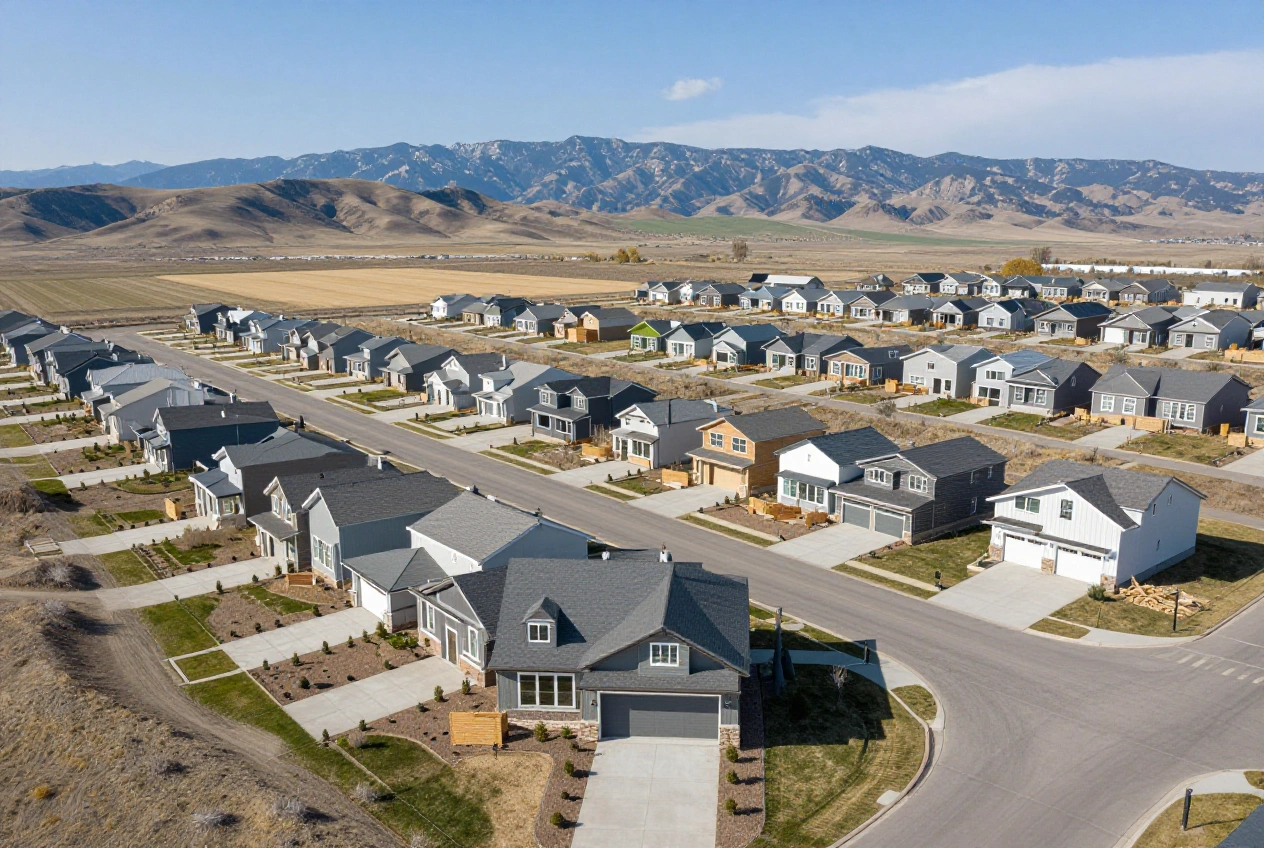
New construction continues to play a significant role in Ada County’s housing supply.
September data showed 1,051 active listings for newly constructed homes, compared with 955 active listings for existing homes. New construction also recorded more pending listings, with 654 compared with 486 for resale properties.
The two segments performed differently. Existing homes recorded 610 sales during September, while newly constructed homes accounted for 244. The median sale price was approximately $561,000 for existing homes and $623,000 for new construction.
These figures do not mean new homes are always more expensive or that they appreciate faster than resale properties. Differences in location, size, features and the mix of homes sold can influence median prices.
For buyers comparing a new build with an existing home, it is worth looking beyond the advertised purchase price. Builder incentives, closing-cost assistance, financing offers, completion timelines, warranties and potential maintenance expenses may affect the overall value.
For sellers of existing homes, competition from builders may make realistic pricing and presentation especially important in neighborhoods with substantial new development.
Mortgage Rates Continue to Affect Affordability
Mortgage costs remain an important consideration for Idaho homebuyers.
Freddie Mac’s national average for a 30-year fixed mortgage reached 7.40% in early October before easing later in the month. Rates can change from week to week, and individual borrowers may receive different offers depending on their credit, down payment, loan type and other factors.
Higher interest rates increase the monthly principal and interest payment on a given loan amount. This can reduce the purchase price a household can comfortably afford, even when home prices remain relatively stable.
For prospective buyers, comparing mortgage offers and calculating the full monthly cost of ownership can help clarify what is financially manageable. Some buyers may also benefit from examining different loan structures or eligible assistance programs with a qualified lender.
For sellers, affordability pressures may influence how quickly a property attracts offers, particularly if the asking price is high relative to comparable homes.
Regional Differences Across Idaho
Idaho’s housing market includes a range of local conditions.
The Treasure Valley continues to attract attention because of its employment base, population growth and substantial new-home construction. Meanwhile, southeastern Idaho communities such as Idaho Falls and Pocatello can experience different price movements based on local employment, available inventory and buyer demand.
Northern Idaho markets may also behave differently from Boise-area communities, particularly where seasonal demand, second-home activity or local supply patterns influence transactions.
Statewide median prices should therefore be treated as a broad indicator rather than a measure of what any individual property is worth. Buyers and sellers should review the latest local market reports and comparable sales before making decisions.
What This Means for Buyers, Sellers and Property Owners
For buyers: Start with a realistic budget and mortgage preapproval. Compare resale homes and new construction, and consider how incentives, repairs, taxes, insurance and other expenses affect the total cost. A statewide increase in prices does not mean every property will attract competing offers.
For sellers: Use recent comparable sales and current listings to set an appropriate asking price. Pay attention to nearby new construction and the features buyers are prioritizing. Pricing that reflects current conditions may help reduce the time a property spends on the market.
For homeowners: Rising median sale prices can be a useful market signal, but they do not automatically establish the value of an individual home. Property condition, location, size and comparable sales remain important.
For investors and property managers: Monitor local sales activity, rental demand, financing costs and operating expenses. Market performance can differ significantly across Idaho, so investment decisions should be based on the specific community and property rather than statewide averages alone.
What to Watch Through the End of 2026
The next few months will help show how Idaho’s market responds to changing mortgage rates and normal seasonal patterns.
Important indicators include new listings, pending sales, closed transactions, days on market and the balance between resale inventory and newly built homes. Changes in these measures can offer clues about whether buyers are gaining more choice or whether competition is increasing in particular locations.
It will also be important to compare statewide results with county-level reports. A change in the mix of properties sold can affect median prices, and one month of data is not enough to establish a long-term trend.
Practical Takeaway
Idaho’s housing market remained active in September 2026, with statewide sales and median prices higher than a year earlier. At the same time, available inventory declined, mortgage affordability remained a challenge, and the Treasure Valley showed differences between new construction and resale homes.
For buyers, careful budgeting and local research are essential. Sellers should price according to current competition, while homeowners and investors should assess conditions in their specific market rather than assume that statewide trends apply equally everywhere.
This article is for general informational purposes only and does not constitute mortgage, legal, financial or investment advice.