
-
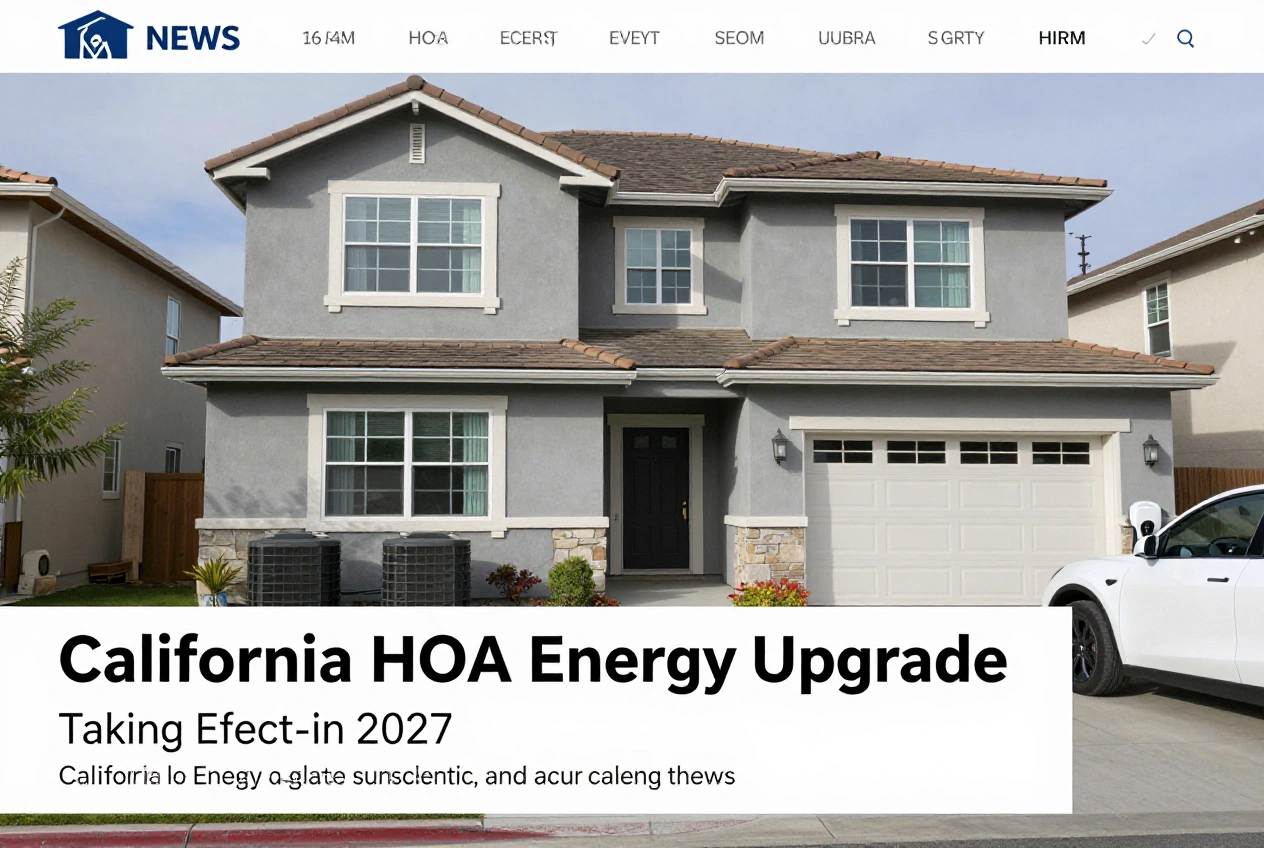
California HOAs Face New Energy Upgrade Rules Starting in 2027
California homeowners living in common interest developments will gain additional protections for energy-efficient home improvements beginning January 1, 2027, as three new state laws limit how homeowners associations (HOAs) can restrict certain residential upgrades.
The legislation expands protections under the Davis-Stirling Common Interest Development Act, addressing energy-efficient window replacements, electric appliance conversions, residential heat pump systems, and electric vehicle (EV) charging stations. The changes are intended to make it easier for homeowners to adopt energy-efficient technologies while preserving certain reasonable installation, safety, and maintenance requirements for associations.
Energy-Efficient Window Replacements
Senate Bill 908 introduces new protections for homeowners seeking to replace residential windows with California Energy Code-compliant products.
Under the new law, associations cannot effectively prohibit qualifying residential window replacement projects or impose requirements that significantly increase project costs or reduce energy efficiency. The legislation generally defines unreasonable restrictions as those that increase the project cost by more than 10% or decrease energy efficiency by more than 10%.
The law still allows certain reasonable installation and aesthetic requirements, subject to the statutory limitations. Homeowners may also be required to obtain association approval, use licensed contractors, and secure applicable permits.
The legislation applies to qualifying window replacement projects, including windows serving individual residences even in certain common-area or exclusive-use common-area situations.
Replacing Gas Appliances With Electric Alternatives
Senate Bill 222 adds another protected use under the Davis-Stirling Act, restricting HOAs from preventing homeowners from replacing fuel-gas-burning appliances with electric appliances when the installations comply with applicable state and local building codes.
The law also protects the installation or use of residential heat pump water heaters and heat pump heating, ventilation, and air conditioning (HVAC) systems from restrictions that effectively prohibit or limit these improvements.
These protections are intended to help homeowners transition to electric appliances and more energy-efficient heating and cooling systems without facing blanket prohibitions from association governing documents, architectural guidelines, or policies.
Updated Protections for Electric Vehicle Charging Stations
Senate Bill 1267 updates existing protections related to electric vehicle charging stations within common interest developments.
The legislation addresses liability and responsibility for damage associated with charging stations installed in common areas or exclusive-use common areas. It requires installers of EV charging stations in certain common-area installations to indemnify or reimburse the association or its members for losses or damages caused by the installation.
The law also allows associations to require maintenance and indemnity agreements in certain circumstances involving charging stations installed in common areas.
While the legislation strengthens protections related to EV charging infrastructure, it also clarifies responsibilities involving installation, maintenance, damage, and potential liability.
What the New Laws Mean for Homeowners and HOA Boards
For homeowners, the new legislation may make it easier to pursue upgrades such as energy-efficient windows, electric appliances, heat pump systems, and EV charging stations without facing restrictions that effectively prevent their installation.
However, these laws do not eliminate every HOA approval requirement. Associations may still impose certain reasonable restrictions, and homeowners must comply with applicable building codes, permitting requirements, installation standards, and other conditions allowed under the law.
For HOA boards and community managers, the changes may require reviewing governing documents, architectural guidelines, application procedures, and existing policies to ensure they do not conflict with the new statutory protections.
Boards may also need to update procedures for handling applications involving window replacement projects, electric appliance conversions, heat pumps, and EV charging stations.
What Buyers and Sellers Should Know
Homebuyers considering properties in California common interest developments may benefit from reviewing association governing documents and understanding how the community handles energy-related upgrades.
Restrictions that previously limited certain installations may no longer be enforceable under the new laws, depending on the specific circumstances and statutory requirements.
For sellers, the ability to install modern energy-efficient features may also be a consideration for buyers looking to reduce utility costs or improve the efficiency of their homes.
A Broader Shift Toward Energy-Efficient Housing
The legislation reflects California’s continued efforts to encourage energy-efficient residential improvements and support the state’s broader environmental objectives.
By limiting certain HOA restrictions on these upgrades, the state is expanding homeowners’ ability to make improvements while requiring associations to adapt their policies to the evolving legal framework.
The new laws take effect January 1, 2027. Homeowners and HOA boards should review the applicable statutes and consult qualified legal counsel when questions arise about specific installations, approval requirements, or governing-document restrictions.