
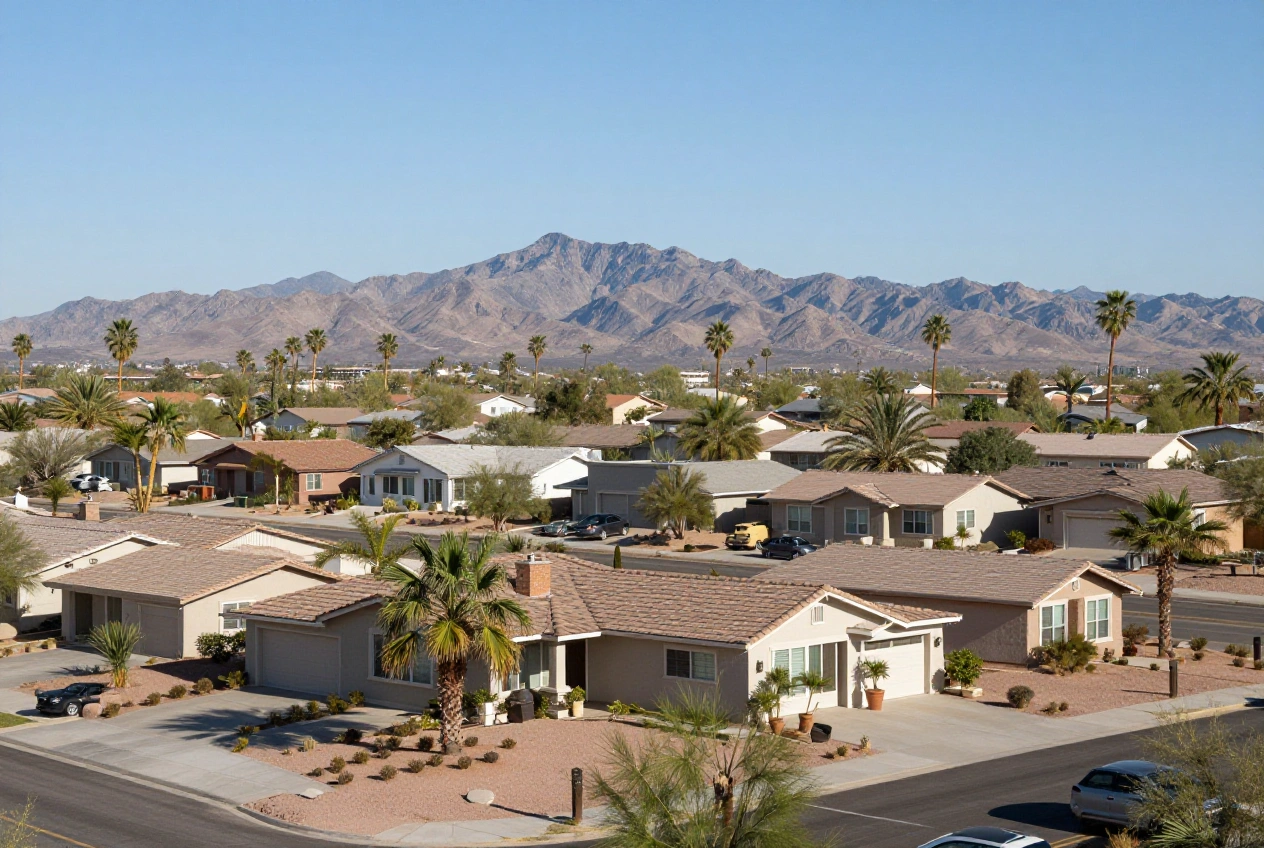
Metro Phoenix Housing Market Tilts Further Toward Buyers as Sales Slow
The Greater Phoenix housing market continued moving toward more buyer-friendly conditions in October 2026, as inventory increased and home sales slowed compared with the same period last year. Recent market data from Phoenix REALTORS® points to softer transaction activity and growing housing supply, while Realtor.com’s third-quarter Market Clock report classifies Phoenix-Mesa-Chandler and Tucson as late balanced, loosening markets.
The changes may create more opportunities for prospective buyers to compare properties and negotiate, although local market conditions, mortgage rates and property prices continue to influence affordability.
Inventory Increases as Home Sales Slow
According to Phoenix REALTORS®’ October 2026 Local Market Update, Maricopa County’s single-family home inventory increased 11.6% year over year to 16,708 homes. Closed sales declined 18.2% to 3,214, while pending sales dropped 46.2% to 2,147, signaling weaker buyer activity entering the coming months.
New listings also declined 9% year over year, with 5,458 single-family homes entering the market during October. The median single-family sales price was approximately $499,990, remaining essentially flat compared with October 2025.
The broader residential market, including single-family homes and townhomes or condominiums, also reflected a softer trend. Phoenix REALTORS® reported a year-over-year decline in closed sales, a decrease in median sales prices and an increase in homes available for sale.
These figures suggest that the market’s shift is being driven in part by slower transaction activity rather than a dramatic increase in new seller activity.
Phoenix and Tucson Classified as Late Balanced Markets
Realtor.com’s third-quarter 2026 Market Clock report placed both Phoenix-Mesa-Chandler and Tucson at the 4 o’clock position, classified as late balanced and loosening.
The classification indicates that market conditions are becoming more favorable to buyers, but neither market is necessarily experiencing a full buyer-dominated environment. Buyers may have greater opportunities to negotiate prices, repairs, closing costs or other terms, depending on the property’s location and competition.
The report also reflected a broader national housing market transition, with many metropolitan areas moving toward more balanced conditions.
Mortgage Rates Continue to Affect Affordability
Despite increased negotiating opportunities, mortgage rates remain an important factor affecting affordability. Higher borrowing costs can limit purchasing power and influence how much buyers are willing or able to spend.
A homebuyer may find more listings available or encounter a seller willing to negotiate, but the overall monthly housing expense can still be challenging depending on the mortgage rate, down payment, property taxes, insurance and other costs.
For this reason, a more balanced housing market does not necessarily mean homeownership has become substantially more affordable for every buyer.
What the Market Shift Means for Buyers and Sellers
For buyers, rising inventory and slower sales activity may provide more time to evaluate properties and negotiate terms. Buyers may also have more opportunities to compare homes and avoid the intense competition experienced during previous seller-dominated market conditions.
For sellers, pricing a property competitively and preparing it for the market may become increasingly important. With fewer buyers entering contracts, sellers may need to consider pricing adjustments, repairs or concessions to attract qualified offers.
Market conditions can vary significantly between Phoenix, Scottsdale, Mesa, Chandler, Gilbert and other surrounding communities. Local neighborhood trends, property type and price range may produce different outcomes from the broader metropolitan figures.
Key Takeaway
Greater Phoenix’s housing market is showing signs of a shift toward more balanced conditions, with higher inventory and slower sales activity compared with the previous year. Realtor.com’s Market Clock also places Phoenix-Mesa-Chandler and Tucson in the late balanced, loosening category.
While buyers may gain additional negotiating opportunities, elevated mortgage costs and local market variations continue to shape affordability and housing demand.
Buyers and sellers should review current neighborhood-level data before making real estate decisions, as broader market trends may not reflect conditions in every community.