
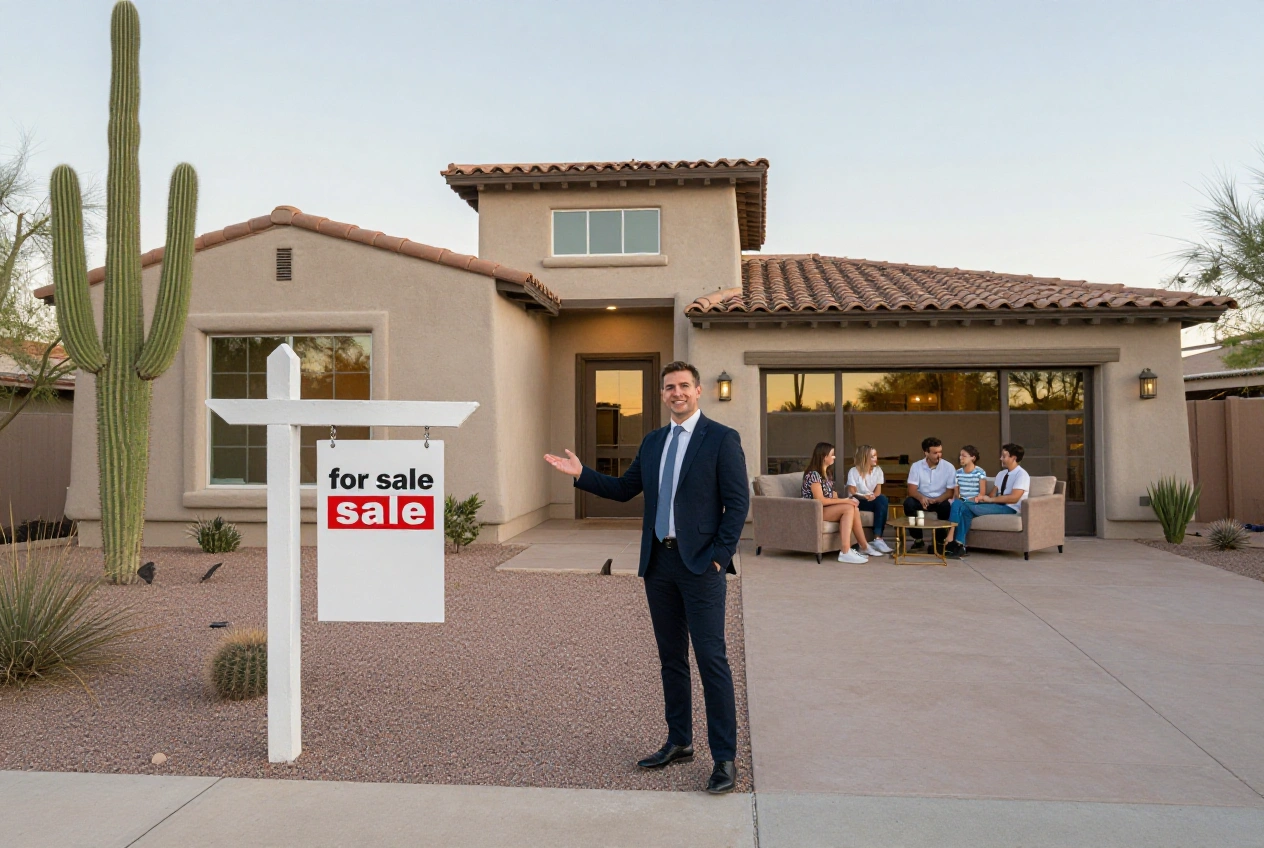
Metro Phoenix Housing Market Moves Further Into Buyer-Friendly Territory
Phoenix, Ariz. — November 22, 2026
The Metro Phoenix housing market continued shifting toward buyers in October, as available inventory increased, pending sales declined, and home prices edged lower compared with a year earlier.
According to October market data, active listings across Greater Phoenix rose to 27,427, up 6.8% year over year, while listings under contract declined 13.5% to 6,347. Closed sales also fell, with 5,155 transactions recorded, down 9.8% from October 2025. The median sales price declined 1.5% to $448,000.
The figures suggest buyers are facing less competition than in previous years, while sellers are increasingly navigating a market where pricing, property condition, and timing can influence how quickly homes sell.
Key October Market Indicators
- Active listings: 27,427, up 6.8% year over year.
- Listings under contract: 6,347, down 13.5%.
- Closed sales: 5,155, down 9.8%.
- Median sales price: $448,000, down 1.5%.
- Cromford Market Index: 70.1, compared with 78.8 a year earlier.
- Median days on market: 50 days.
The Cromford Market Index measures the balance between supply and demand in the housing market. At 70.1, the October index indicates buyer-favorable conditions in Greater Phoenix, according to the market’s reported classification.
How Different Valley Cities Are Performing
Market conditions continue to vary across individual cities and neighborhoods, even as the broader Metro Phoenix market shifts toward buyers.
October data reported the following activity in selected Valley markets:
- Scottsdale: 325 closed sales and a median sales price of approximately $1.1 million.
- Phoenix: 1,034 closed sales and a median sales price of approximately $470,000.
- Gilbert: 185 closed sales and a median sales price of approximately $605,000.
- Chandler: 178 closed sales and a median sales price of approximately $513,000.
Local market conditions can differ substantially depending on price range, property type, neighborhood, and buyer demand. Metro-wide trends do not necessarily reflect the conditions of every individual community.
Year-to-Date Sales and Affordability
Despite October’s slowdown, year-to-date home sales across the market were slightly higher than the same period last year, with closed sales increasing approximately 0.8% through October.
However, October’s decline in transactions reflects continued pressure on buyers from affordability challenges, financing costs, and economic uncertainty.
The median sales price year-to-date remained relatively flat at approximately $480,000 through the end of October compared with the same period in 2025.
Scottsdale recorded a stronger year-to-date price trend, with its median home price reportedly increasing 5.9% to approximately $1.25 million through October.
Housing affordability also remained a challenge. The affordability index declined from 76 to 70 compared with the same period last year. An index of 70 indicates that the median household income is approximately 70% of the income needed to qualify for a median-priced home under the index’s methodology.
Mortgage Rates Continue to Influence Buyers
Mortgage rates remain an important factor shaping housing demand and affordability.
Freddie Mac’s Primary Mortgage Market Survey reported a 30-year fixed mortgage rate of 7.24% for the week of October 29, 2026, compared with 7.32% the previous week.
While rates declined slightly during that period, borrowing costs remain a significant consideration for prospective buyers. Higher monthly mortgage payments can affect purchasing power, qualification requirements, and the ability to move forward with a home purchase.
What a Buyer-Favorable Market Means
With more properties available and fewer homes going under contract, buyers may have greater opportunities to evaluate properties and negotiate.
Depending on the property and seller’s circumstances, buyers may be able to negotiate purchase prices, closing-cost assistance, inspection-related repairs, or other contract terms.
For sellers, the changing market may require more careful pricing, preparation, and marketing strategies. Properties that are priced competitively and presented well may be better positioned to attract buyers in an environment with more choices.
Arizona Housing Market Outlook
As 2026 approaches its final weeks, Metro Phoenix housing conditions remain influenced by inventory levels, mortgage rates, affordability, and buyer confidence.
The combination of increased listings, declining pending sales, and modest price reductions suggests that buyers have gained leverage in many parts of the market. However, housing conditions remain highly localized, and individual communities may experience different levels of demand and price movement.
Similar buyer-favorable trends have also been reported in other Arizona markets, including Tucson.
Statewide listing data for October also showed a median list price of approximately $459,900, down 3.2% from a year earlier, while the number of homes for sale increased 9.1% to 32,340. Median days on market reached 64.
Practical Takeaway
The Metro Phoenix housing market is offering buyers more options than in recent years, while sellers may need to adjust expectations and strategies to reflect current conditions.
Buyers and sellers should evaluate local market data, comparable sales, financing conditions, and property-specific factors when making real estate decisions. Although broader market trends can provide useful context, neighborhood-level information remains essential when determining pricing and negotiating strategy.
Sources: Phoenix REALTORS®, ARMLS market data, The Cromford Report, and Freddie Mac.