
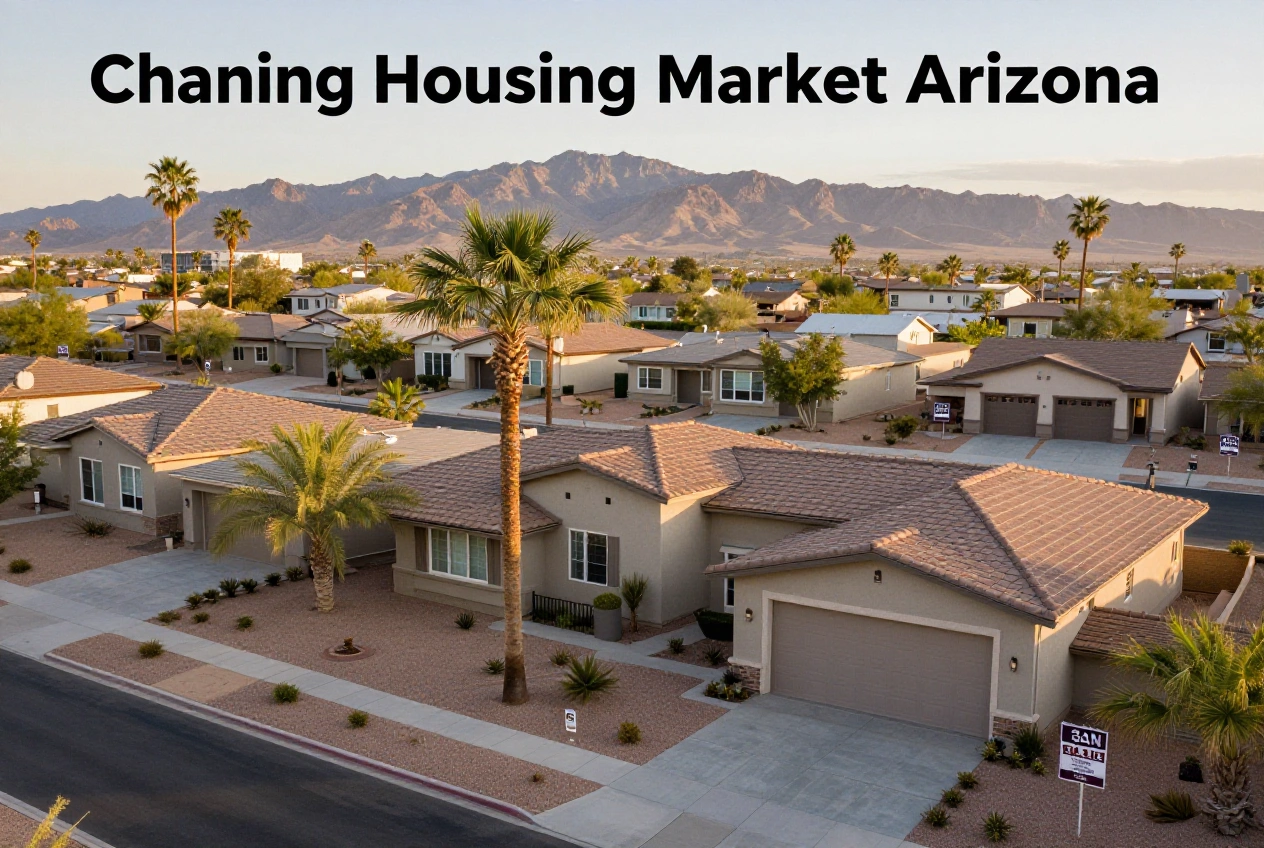
Arizona Housing Markets Shift Toward Buyers, but Phoenix and Tucson Remain Balanced
ARIZONA — November 17, 2026 — Homebuyers in parts of Arizona are gaining more negotiating power as housing inventory increases and sales activity slows. Recent October market data show softer conditions across Metro Phoenix, while Tucson is also experiencing rising inventory and modest price adjustments.
However, the shift does not mean every Arizona market has become a buyer’s market. Realtor.com’s third-quarter 2026 Market Clock classifies both Phoenix-Mesa-Chandler and Tucson as late balanced markets moving toward buyers. Meanwhile, the Cromford Market Index shows Metro Phoenix experiencing more distinctly buyer-favorable conditions.
For buyers considering a move to Arizona, purchasing a second home, or investing in residential property, the changing conditions may create opportunities to negotiate. Sellers, meanwhile, may need to adjust pricing expectations as competition increases.
Metro Phoenix: More Listings, Fewer Sales
The Metro Phoenix housing market continued moving toward buyers in October 2026, with more homes available and fewer properties going under contract.
According to the latest market figures reported by AZ Big Media, active listings increased 6.8% year over year to 27,427 homes. Listings under contract declined 13.5% to 6,347, while closed sales fell 9.8% to 5,155.
The median sales price decreased 1.5% to $448,000.
One important indicator is the Cromford Market Index, which measures the balance between housing supply and demand in the Phoenix area. The index fell to 70.1 in October, below the 100-point benchmark associated with a balanced market.
A reading below 100 indicates that market conditions favor buyers. The decline suggests that buyers have more leverage than they did during stronger seller-market periods.
However, the broader market figures do not mean prices are falling sharply everywhere. The relatively modest 1.5% decline in the regional median suggests that sellers are still maintaining pricing strength in some neighborhoods and property segments.
City-Level Conditions Vary Across the Valley
Conditions differ considerably between individual Phoenix-area communities.
October data from Phoenix REALTORS® show that Scottsdale recorded 325 closed single-family home sales, down 12.9% from the previous year. Its median sales price increased 5.6% to approximately $1.225 million, demonstrating that a slowdown in sales does not necessarily mean lower prices.
Phoenix also experienced fewer transactions. Closed single-family sales declined 13.1% to 712, while its median price increased 2.6% to approximately $481,998.
These figures illustrate why buyers and sellers should look beyond regional averages. Neighborhood location, property type, price range, and available inventory can produce very different market conditions.
For sellers in higher-priced communities, fewer competing buyers may require more careful pricing and preparation. Buyers, on the other hand, should compare recent sales and current listings within the specific neighborhood rather than assume that every property is available at a discount.
Tucson: Inventory Growth Creates More Choices
Tucson is also showing signs of a softer housing market.
Realtor.com’s October 2026 local market report recorded 4,237 active listings in the Tucson metropolitan area, representing a 6.3% increase from October 2025.
The median listing price declined 2.6% year over year to approximately $375,000. Around 24% of active listings had price reductions, indicating that some sellers are adjusting their asking prices to attract buyers.
Homes spent a median of 57 days on the market, slightly less than the same period last year.
These figures suggest that buyers have more properties to consider and may have greater room to negotiate. However, Tucson’s market is not uniformly slowing. Some homes continue to attract interest, particularly when priced competitively and located in desirable neighborhoods.
For sellers, the data reinforce the importance of realistic pricing, property presentation, and understanding comparable sales before listing.
Realtor.com Market Clock: Both Markets Are Late Balanced and Loosening
Realtor.com’s third-quarter 2026 Market Clock report provides a broader comparison of housing conditions across the country.
Both Phoenix-Mesa-Chandler and Tucson received a 4 o’clock reading, placing them in the late balanced, loosening category.
This classification means neither buyers nor sellers have a decisive advantage, but conditions are gradually moving toward buyers.
The report’s national findings also show a broader transition:
- 27 metropolitan areas were classified as seller’s markets.
- 49 were balanced and loosening.
- 17 were buyer’s markets.
- 6 were balanced and tightening.
The distinction matters because a balanced market moving toward buyers is not the same as an established buyer’s market.
For Arizona homeowners, this means the market is becoming more negotiable, but pricing and demand still depend heavily on the property and location.
Mortgage Rates Continue to Affect Affordability
Greater negotiating power does not automatically make buying a home more affordable.
Mortgage rates rose significantly during the early fall. Freddie Mac reported that the average 30-year fixed mortgage rate reached 7.40% on October 8 and October 15, 2026.
Rates subsequently eased. By November 12, the weekly average had declined to 7.11%.
Although the decline provides some relief, borrowing costs remain an important consideration for buyers. Higher mortgage rates can reduce the amount a household qualifies to borrow and increase monthly payments.
This creates a challenging combination: buyers may have more room to negotiate on purchase price, but financing costs can still limit their purchasing power.
Prospective buyers should compare mortgage offers, evaluate total monthly housing expenses, and consider property taxes, insurance, maintenance, and association fees when calculating affordability.
What the Arizona Market Shift Means for Buyers and Sellers
The changing conditions in Phoenix and Tucson may affect different groups of property owners in several ways.
For homebuyers: More available listings and slower sales can create opportunities to negotiate purchase prices, closing costs, repairs, or other contract terms. Buyers should still compare comparable properties and avoid assuming every seller is willing to accept a lower offer.
For sellers: Pricing strategy is increasingly important. Properties that are priced above comparable market values may take longer to attract serious buyers. Sellers should review recent neighborhood sales and prepare their homes carefully before listing.
For real estate investors: Softer market conditions may provide opportunities to evaluate properties with greater negotiating flexibility. However, investors should assess rental demand, operating expenses, financing costs, property taxes, insurance, and potential maintenance costs before purchasing.
For homeowners associations: Changes in property values and sales activity can influence community turnover, homeowner expectations, and long-term planning. Associations should continue monitoring their budgets, reserve requirements, insurance costs, and maintenance priorities rather than assuming that changing market conditions will automatically reduce operating expenses.
Why This Matters to Buyers Considering Arizona
Arizona continues to attract people relocating from other states, including Oregon, as well as buyers looking for second homes and investment properties.
The latest market data may make Phoenix and Tucson worth a closer look for those considering a move. More inventory and slower sales can provide additional time to compare neighborhoods and evaluate properties.
Still, buyers should not make decisions based solely on broad market classifications. Phoenix, Scottsdale, Tucson, and surrounding communities have different price points, housing types, local economic conditions, and neighborhood-level demand.
A property that appears competitively priced at the metropolitan level may still be expensive relative to comparable homes in its immediate area.
Frequently Asked Questions
Is Phoenix currently a buyer’s market?
The Cromford Market Index fell to 70.1 in October, indicating buyer-favorable conditions in Metro Phoenix. However, Realtor.com’s Market Clock classifies Phoenix-Mesa-Chandler as a late balanced market moving toward buyers rather than an outright buyer’s market.
Is Tucson becoming more affordable?
Tucson’s October median listing price declined 2.6% year over year to approximately $375,000, while active listings increased 6.3%. These trends may create more opportunities for negotiation, but affordability also depends on mortgage rates, income, insurance, taxes, and other ownership costs.
Are home prices falling across Arizona?
No. Conditions vary by city and property segment. Although Metro Phoenix’s regional median sales price declined 1.5% year over year, Scottsdale’s median single-family sales price increased 5.6% in October. Local data should be reviewed before drawing conclusions about a particular neighborhood.
Are mortgage rates still above 7%?
Freddie Mac reported an average 30-year fixed mortgage rate of 7.11% on November 12, 2026. Rates have eased from the 7.40% level reported in October but remain elevated compared with lower-rate periods.
Should buyers wait for prices to fall further?
There is no guarantee that prices will decline further. Buyers should evaluate their financial readiness, financing options, preferred location, and the specific property’s value rather than rely solely on predictions about future market movements.
Practical Takeaway for Arizona Buyers and Sellers
The October 2026 housing data point to a more balanced and increasingly buyer-friendly environment in Phoenix and Tucson. Higher inventory, slower sales, and price adjustments are giving prospective buyers more opportunities to compare properties and negotiate.
However, the market shift is not uniform. Scottsdale’s rising median sale price demonstrates that some communities and property segments continue to show resilience.
For buyers, careful research and mortgage planning remain essential. For sellers, realistic pricing and property preparation can make a meaningful difference in a more competitive market.
For homeowners associations and community managers, the changing housing environment is also a reminder to maintain sound financial planning and stay attentive to local real estate conditions.
This article is for general informational purposes only and does not constitute financial, mortgage, legal, tax, or real estate advice. Housing market conditions vary by location, property type, and price range. Buyers and sellers should consult qualified local real estate and financial professionals before making property decisions.