
-
Maui’s Bill 9 Vacation Rental Phase-Out Moves Forward as Condo Rezoning Reviews Continue
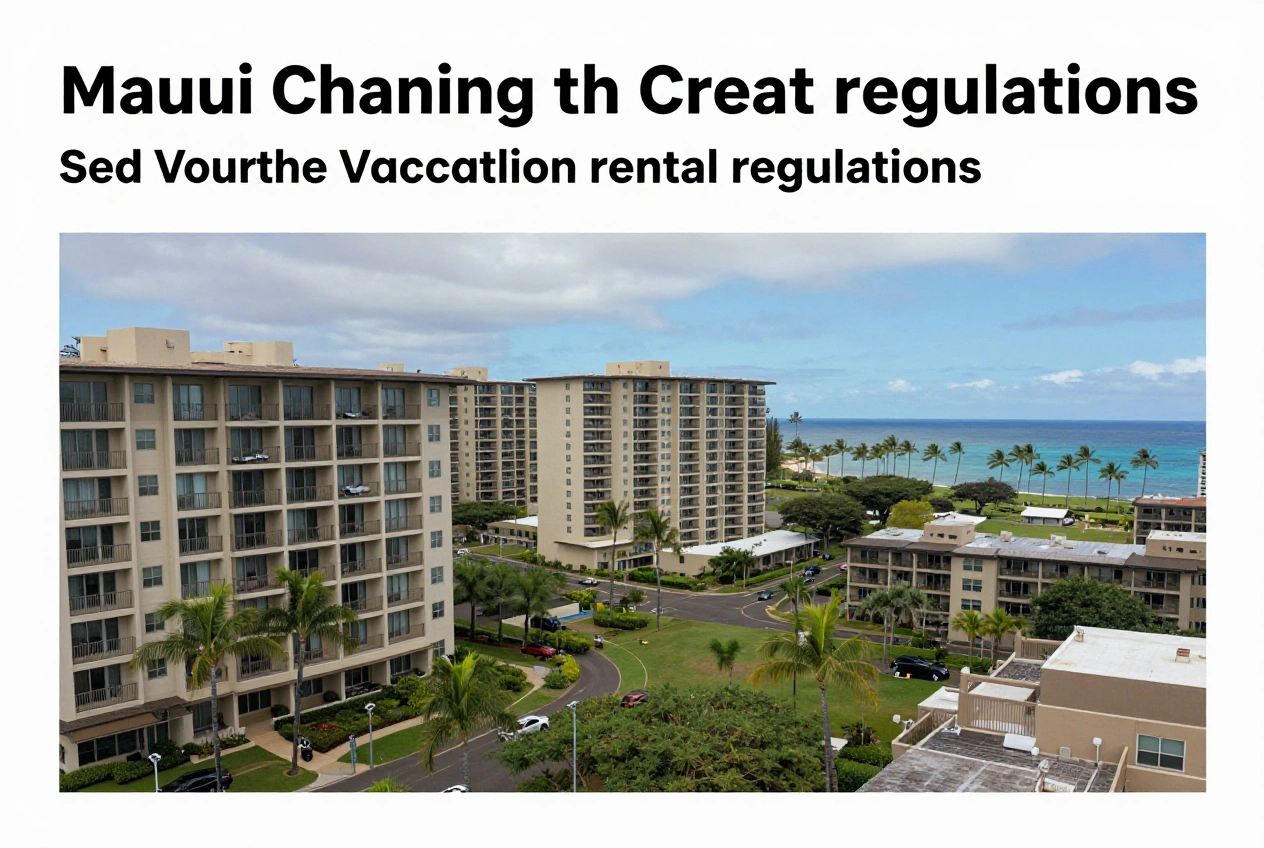
MAUI, HAWAIʻI — November 17, 2026 — Maui County’s short-term vacation rental phase-out under Ordinance 5909, commonly known as Bill 9, remains in effect as condominium owners, buyers, sellers, and community associations navigate upcoming deadlines and a separate rezoning process.
The ordinance targets certain apartment-zoned condominium properties that historically operated as transient vacation rentals, including properties identified on the County’s Minatoya List. The phase-out is scheduled to take effect in stages: affected West Maui properties face a deadline at the end of 2028, while affected properties elsewhere in Maui County have until the end of 2030.
Although the County has created a possible hotel-zoning pathway through Bill 88, individual properties are not automatically exempt. Each proposed rezoning must go through the applicable review and approval process.
What Bill 9 Means for Maui Condo Owners
Ordinance 5909 phases out transient vacation rental use in certain A-1 and A-2 apartment-zoned properties where short-term rentals were historically allowed. The measure does not prohibit every vacation rental in Maui County; its impact depends on a property’s zoning, legal rental status, and whether it falls within the affected group.
The current phase-out schedule is:
- West Maui: The final day for affected short-term rental use is December 31, 2028. The phase-out takes effect January 1, 2029.
- Other areas of Maui County: The final day is December 31, 2030. The phase-out takes effect January 1, 2031.
Local reporting describes the Minatoya List as covering approximately 7,000 condominium units. However, owners should not assume that a property’s inclusion on a list alone answers every question about its permitted uses, exemptions, or future zoning status. Property-specific confirmation from the County is important.
For owners who rely on visitor rental income, the change may require a reassessment of long-term financial plans. Potential considerations include converting a unit to a long-term rental or personal residence, reviewing association budgets and maintenance obligations, and evaluating the effect of reduced visitor-rental income on the property’s marketability.
Legal Challenges Have Not Stopped the Deadlines
Ordinance 5909 has faced legal challenges from property owners who argue, among other claims, that the phase-out amounts to an unconstitutional taking of property.
However, the lawsuits should not be described as having the same current status. The Lynam v. County of Maui class-action case was reportedly dismissed in full on April 14, 2026. A separate case, Malter v. County of Maui, was also filed in December 2025.
The latest procedural status of the Malter case should be checked against the Hawaiʻi State Judiciary’s court records before owners rely on any claim about its progress. Based on the public information reviewed for this article, there is no verified court order suspending or blocking the Bill 9 phase-out dates.
For now, affected owners should plan on the existing deadlines remaining in place unless the County or a court announces a formal change.
Bill 88 Creates a Possible Rezoning Pathway
Maui County Ordinance 6008, enacted through Bill 88, established two new hotel zoning classifications: H-3 and H-4. These districts provide a potential pathway for certain historically permitted vacation-rental properties to seek a zoning change.
The new classifications do not automatically convert eligible condominiums into hotel-zoned properties. A building or property must still go through the formal zoning map amendment process, including the required planning review, public process, and County Council action.
This distinction is important for condominium associations and prospective buyers. Being included in a Council resolution or rezoning review does not mean a property has received final approval.
Where the Rezoning Process Stands
The County has been considering properties in groups rather than processing the entire affected inventory at once.
For the first group, covered by Resolutions 26-110 and 26-111, the Maui Planning Commission reviewed proposals involving 48 properties. In September, the Commission recommended hotel zoning for only five properties and recommended against the remaining properties. The County Council retains the final decision.
A separate resolution, 26-129, refers 32 additional shoreline properties for consideration. As of this article’s publication date, November 24 is reported as the deadline for the Planning Commission to return its recommendations on the first group. It should not be treated as a confirmed hearing date for the separate 32-property group unless the County posts an official agenda.
The Council also rejected two additional rezoning resolutions in October that would have advanced four properties for review. These developments illustrate why owners should check the status of their own complex rather than assume that all Minatoya List properties are moving through the same process.
What the Hawaiʻi Island Proposals Mean — and What They Do Not
Maui’s Bill 9 is separate from short-term rental proposals being considered by the Hawaiʻi County Council on the Big Island.
Hawaiʻi County Bill 147, Draft 3, proposes a regulatory framework for hosted and unhosted transient vacation rentals. It addresses operational standards, administrative procedures, and the zoning districts in which different types of rentals could be allowed.
The Council did not complete consideration of Bill 147 at its November 6 meeting and held it over to November 18. Therefore, it should still be described as a pending measure, not an enacted change.
A separate measure, Bill 197, concerns temporary real property tax amnesty for certain hosted vacation rentals. It passed final reading on November 6. The measure provides a process for certain qualifying property owners to stop the rental activity or properly register it without being assessed specified rollback taxes, penalties, and interest.
These Hawaiʻi County measures do not amend Maui County Ordinance 5909 and do not change Maui’s phase-out dates.
What Homeowners Associations and Property Owners Should Review
For condominium associations and individual owners, the continuing changes make property-specific due diligence especially important.
Confirm the property’s zoning and rental status. Review the County’s current records and verify whether the property is affected by Ordinance 5909, whether any applicable exemption exists, and what uses are currently permitted.
Track the rezoning process. If the complex is included in a resolution or proposed zoning change, identify the current stage of review. A referral to the Planning Commission is not final approval.
Review association finances. Boards may need to evaluate how a change in rental use could affect operating budgets, maintenance contributions, reserve planning, insurance considerations, and the mix of owner-occupied and rental units.
Assess long-term use and marketability. Buyers and sellers should consider whether a property’s financial assumptions still make sense if short-term rental use ends. Do not base a purchase price or expected return on a rezoning outcome that has not been approved.
Seek qualified advice. Owners should consult Maui County planning officials, qualified real estate and tax professionals, and Hawaiʻi attorneys familiar with land-use and condominium matters when evaluating individual circumstances.
Frequently Asked Questions
Does Bill 9 apply to every vacation rental in Maui?
No. Ordinance 5909 focuses on certain apartment-zoned properties where transient vacation rentals were historically permitted. Other properties may be governed by different zoning classifications, permits, or rules. Owners should confirm the status of their specific property with the County.
Can Bill 88 automatically protect a condominium from the phase-out?
No. Ordinance 6008 created H-3 and H-4 hotel zoning districts as a potential pathway. A property must still complete the applicable rezoning process and receive the required approvals.
Have the Bill 9 deadlines been postponed?
No postponement has been verified in the public information reviewed for this article. The existing deadlines remain December 31, 2028, for affected West Maui properties and December 31, 2030, for affected properties elsewhere in the County.
Does a Council resolution mean a complex has been rezoned?
No. A resolution may initiate or advance review, but it does not itself complete the zoning change. Final action and approval are still required.
Do Hawaiʻi County’s Bills 147 and 197 change Maui’s rules?
No. Those are separate Hawaiʻi County measures. They do not amend Maui County’s Ordinance 5909.
Key Takeaway for Maui Buyers, Sellers, and Condo Associations
Maui’s Bill 9 phase-out remains a significant consideration for owners and prospective buyers of affected apartment-zoned condominiums. While Bill 88 has created a possible rezoning route for some properties, the review process is selective and final approvals are not guaranteed.
Owners should plan around the existing deadlines, verify their property’s current status with Maui County, and avoid treating a proposed rezoning as an approved change. For condominium associations, early financial planning and clear communication with owners can help reduce uncertainty as the transition approaches.
This article is for general informational purposes only and is not legal, tax, financial, or real estate advice. Zoning, rental permissions, exemptions, and litigation status can change. Property owners should consult official County records and qualified professionals regarding their specific circumstances.