
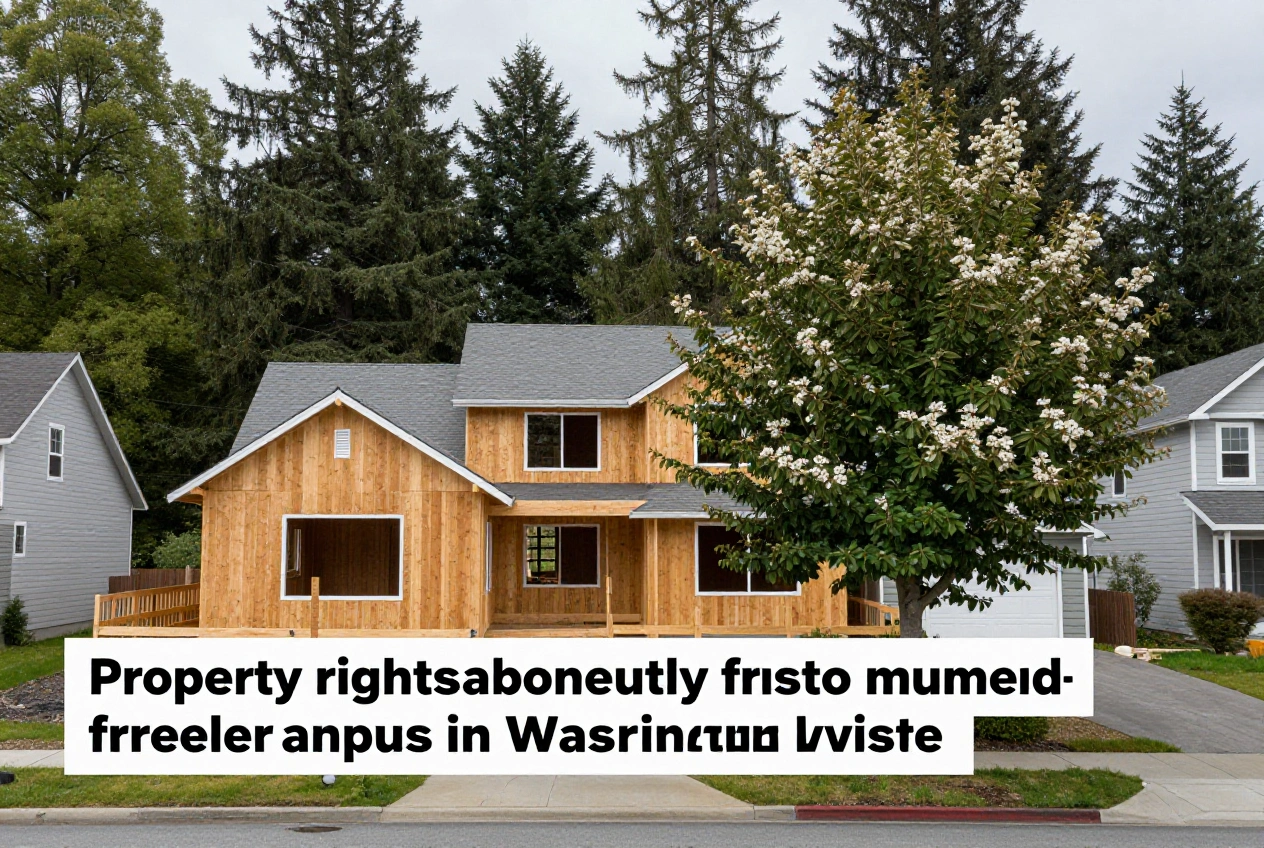
Washington Supreme Court to Review Edmonds ‘Forever Tree’ Permit Dispute
November 13, 2026 | Washington State
The Washington Supreme Court has agreed to review a legal dispute involving the City of Edmonds and a property owner who challenged tree replacement requirements imposed as a condition of receiving a residential building permit.
The case, Nathan Rimmer v. City of Edmonds, centers on whether a local government can be held financially responsible for imposing unconstitutional conditions on a property owner seeking approval to build a home.
The court’s decision to accept the case follows a March 2026 ruling by the Washington Court of Appeals, which dismissed the dispute as moot after the city issued the building permit, the property was sold, and the home was subsequently constructed.
The Supreme Court accepted Rimmer’s petition for review on November 6, 2026. The case raises important questions about property rights, local government authority, and the limits of development-related permit requirements.
What Happened in the Edmonds Tree Permit Dispute?
The dispute began after Nathan Rimmer purchased a vacant residential property in Edmonds, Washington, in 2022. He planned to construct a single-family home on the lot, which contained an ornamental dogwood tree that would need to be removed to accommodate the proposed construction.
Under the city’s tree regulations, officials required Rimmer to plant two replacement trees on the property and record a notice on the property’s title documenting the tree requirements.
The conditions also involved ongoing maintenance responsibilities for the replacement trees.
Rimmer challenged the requirements, arguing that the city was imposing obligations that were disproportionate to the impact of his proposed development and violated his constitutional property rights.
In January 2024, a Snohomish County Superior Court judge ruled in Rimmer’s favor on his request for declaratory relief and directed the city to issue the building permit without the disputed conditions.
The city subsequently issued the permit in April 2024. However, the disagreement over the legal consequences of the original permit conditions continued.
Why Did the Case Reach the Washington Supreme Court?
In March 2026, the Washington Court of Appeals dismissed the city’s appeal as moot, concluding that neither party could receive meaningful relief through further proceedings.
Several developments contributed to the decision:
- The city had already issued the building permit without the disputed conditions.
- Rimmer had sold the property to another owner.
- A new residence had been constructed on the property.
- The city had issued a final certificate of occupancy.
- Edmonds had amended its tree regulations, removing the title-notice requirement.
The appeals court also determined that Rimmer had not pursued a separate review under Washington’s Land Use Petition Act (LUPA) within the required 21-day period following the city’s final land-use decision.
The central issue now before the Washington Supreme Court concerns whether Rimmer can pursue a claim for damages arising from the city’s earlier actions, despite the subsequent developments that led to the dismissal of the appeal.
The Supreme Court’s review provides an opportunity to examine the legal questions surrounding property owners’ rights when local governments impose disputed conditions during the permitting process.
What Does This Mean for Washington Homeowners and Property Owners?
Although the case does not immediately change Washington’s building or tree preservation regulations, it highlights the potential legal and financial implications of local permitting requirements.
Homeowners, property investors, and developers may encounter similar conditions when planning new construction, home additions, or property improvements.
Depending on local regulations, these requirements may involve:
- Replacing trees removed during construction.
- Preserving designated trees or environmentally sensitive areas.
- Recording conservation restrictions or other notices on property titles.
- Complying with ongoing landscaping and maintenance obligations.
- Obtaining additional approvals before receiving building permits.
The outcome of the case could help clarify the limits of local governments’ authority to impose property-related obligations as conditions for approving development projects.
It may also provide guidance on whether property owners can seek financial compensation when they believe a government agency has imposed unconstitutional permit conditions.
Has the City of Edmonds Changed Its Tree Regulations?
Yes. According to the Washington Court of Appeals’ March 2026 opinion, the City of Edmonds substantially amended its tree-related ordinance in October 2025.
The amendments modified certain tree replacement procedures and removed the requirement to record a title notice concerning replacement trees.
This is an important distinction: the legal dispute concerns the earlier version of the city’s regulations and how those requirements were applied to Rimmer’s property.
The Supreme Court’s review does not automatically invalidate tree preservation ordinances or similar requirements adopted by other Washington municipalities.
What Happens Next?
The Washington Supreme Court has accepted the case for review under docket number 105423-8.
The court’s published accepted-cases list places Rimmer v. City of Edmonds among the cases ready for possible scheduling during the Winter 2027 term.
The justices will consider the legal issues raised in the petition and the parties’ arguments. The court has not yet issued a final ruling on the merits of the dispute.
Until a decision is released, Washington homeowners and developers should continue following applicable local building codes, tree preservation ordinances, and permitting requirements.
The case is worth watching because its eventual outcome could help clarify how property rights and local development regulations interact in Washington State.
For homeowners and community associations, understanding local requirements before undertaking construction or property improvements remains an important part of avoiding unexpected costs, delays, and disputes.
Frequently Asked Questions
1. What is the Edmonds ‘Forever Tree’ case about?
The case involves Nathan Rimmer, a property owner who challenged the City of Edmonds’ requirement to plant replacement trees and record a notice on his property’s title before receiving a building permit for a single-family home. The dispute now focuses on whether he can pursue damages over the city’s earlier permit conditions.
2. Why is the Washington Supreme Court reviewing the case?
The Supreme Court accepted Rimmer’s petition for review after the Court of Appeals dismissed the dispute as moot in March 2026. The review concerns the legal issues surrounding his ability to seek damages following the city’s original permit requirements and the subsequent procedural developments.
3. Does this ruling mean cities can no longer require tree replacement?
No. The Supreme Court has not issued a decision on the merits of the case. The acceptance of review does not invalidate existing tree preservation ordinances or prohibit cities from requiring reasonable tree replacement measures.
4. Has Edmonds changed its tree preservation requirements?
Yes. The city amended its tree regulations in October 2025, modifying tree replacement procedures and removing the title-notice requirement involved in the dispute.
5. How could this case affect homeowners and developers?
The eventual decision could clarify the legal limits of development permit conditions and whether property owners may recover damages when government requirements are found to violate constitutional protections. Homeowners planning construction should review local regulations and understand permit conditions before beginning their projects.
Practical Takeaway
The Edmonds case highlights the importance of understanding property rights and local development regulations before undertaking construction or property improvements.
For homeowners, buyers, developers, and community associations, permit conditions involving tree preservation, land dedication, and ongoing maintenance can have long-term implications for property use and ownership.
Although the Washington Supreme Court has not yet issued its final decision, the case could provide important guidance on how municipalities balance environmental protection, development requirements, and individual property rights.