
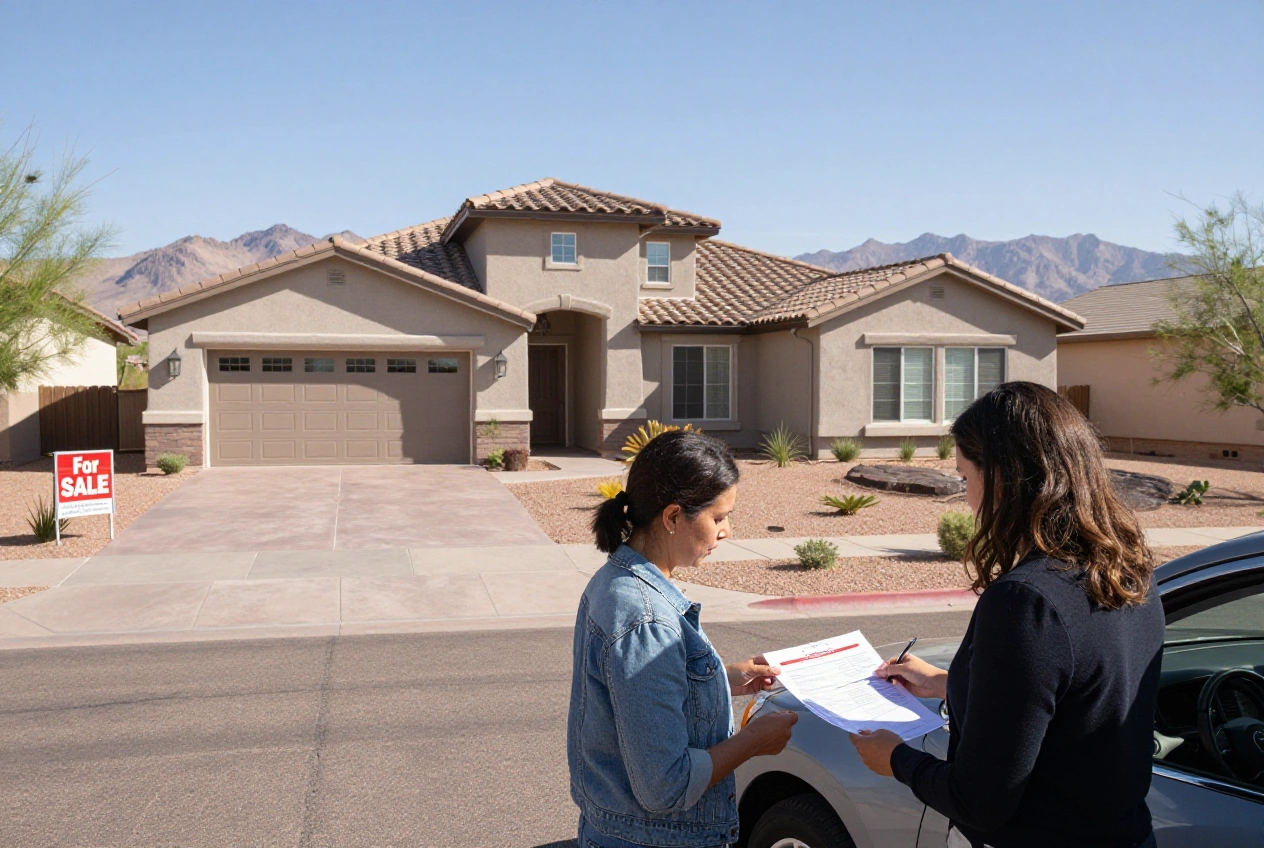
Phoenix and Tucson Housing Markets Shift Toward Buyers as Mortgage Costs Remain High
Homebuyers in Phoenix and Tucson are gaining negotiating leverage as Arizona’s housing markets move away from seller-dominated conditions. However, elevated mortgage rates continue to put pressure on affordability, making it harder for buyers to turn improved market conditions into lower overall housing costs.
Realtor.com’s third-quarter 2026 Market Clock report placed both the Phoenix-Mesa-Chandler and Tucson metropolitan areas at the four o’clock position, categorized as “late balanced, loosening.” The classification indicates that neither buyers nor sellers hold a decisive advantage, although conditions are moving increasingly in buyers’ favor.
For buyers, sellers and investors—including people in Oregon considering a move to the Southwest—the latest figures offer insight into changing market conditions. Still, the data does not guarantee further price declines or establish that Arizona’s market shift will trigger increased migration from Oregon.
What the Market Clock Says About Phoenix and Tucson
Realtor.com’s Market Clock measures housing-market conditions using indicators such as inventory, sales activity and contract trends. Its third-quarter report found that both Phoenix and Tucson were in the late-balanced stage, with conditions loosening toward buyers.
This is different from an outright buyer’s market, where buyers generally have a stronger advantage in negotiations. In a balanced market that is loosening, purchasers may have more opportunities to negotiate prices, request closing-cost assistance or seek repairs and other concessions.
The national housing market was also positioned at four o’clock in the report. However, conditions varied widely across metropolitan areas, reinforcing the importance of examining local data rather than assuming the same trends apply everywhere.
For Phoenix and Tucson, the findings suggest that buyers may have more room to negotiate than they did during stronger seller-favored periods. Sellers, meanwhile, may need to be more realistic about asking prices and prepared for greater competition from other listings.
Mortgage Rates Continue to Challenge Affordability
The easing of market competition has coincided with higher borrowing costs. Realtor.com reported that the average 30-year fixed mortgage rate rose from 6.66% in late August to 7.40% on October 8, 2026, a 74-basis-point increase.
According to the report, that change reduced purchasing power by approximately 7.2% for a buyer working with a $2,000 monthly principal-and-interest budget—equivalent to more than $22,000 in home value.
Freddie Mac’s weekly survey later showed the average 30-year fixed mortgage rate at 7.24% on October 29. Although that was below the mid-October peak, financing costs remained elevated compared with late summer.
The distinction is important: buyers may have more leverage when negotiating with sellers, but higher interest rates can still increase monthly payments and reduce the amount a household can comfortably borrow. Actual mortgage costs depend on the loan amount, down payment, credit profile, loan terms and other expenses.
Phoenix Home Values Decline as Inventory Rises
September data from Zillow showed further signs of cooling in the Phoenix metropolitan area.
The typical Phoenix-area home value was $440,821, down 1.1% from September 2025 and 0.4% from August 2026. Home sales fell 5.1% year over year, while the number of homes available for sale increased 4.4%.
These figures suggest that buyers had more properties to choose from while transactions slowed. Increased inventory can give purchasers additional time to compare homes and negotiate, particularly when a property has been listed for an extended period.
However, the figures measure different aspects of the market. Zillow’s typical home value is not the same as the median sale price, and changes in one measure should not be treated as identical to changes in the other.
Greater Phoenix data also showed a September median sale price of $475,000 for single-family homes, down 2.1% year over year. Pending sales weakened, pointing to continued caution among prospective buyers.
Together, the figures indicate that the market is adjusting to a combination of affordability pressures, slower transaction activity and increased competition among sellers.
Scottsdale Shows a Different Market Picture
Conditions are not uniform throughout the Phoenix metropolitan area. Scottsdale, which has a higher-priced housing market than many other parts of the region, may experience different trends from the broader metro area.
The original report cited year-to-date increases in Scottsdale closed sales and median prices. Those figures should be checked against the underlying local market report before publication, as performance in one city or price segment may differ from the wider Phoenix market.
For buyers and sellers, the practical lesson is to compare recent sales and active listings in the specific neighborhood and property category they are considering. Metro-wide averages can provide useful context, but they do not determine the value or sale prospects of an individual property.
How Arizona’s Market Compares With Oregon
Oregon offers a useful comparison for readers evaluating a relocation or second-home purchase. Redfin reported a statewide median sale price of $504,949 in September 2026, up 1.0% year over year. The number of homes sold fell 5.4%, while the number of homes for sale rose 0.7%, to 20,214.
Those figures suggest a market in which prices remained slightly higher than a year earlier even as sales slowed. They also show why buyers should compare more than headline prices when evaluating different states.
Phoenix’s typical home value of $440,821 was lower than Oregon’s reported statewide median sale price, but the measures are not directly comparable: one is a typical-value estimate and the other is a median of completed sales. Differences in home type, neighborhood, taxes, insurance, maintenance and financing can also materially affect the cost of ownership.
For Oregonians considering Arizona, the more balanced conditions may offer additional opportunities to negotiate. But relocating or investing should involve a property-specific assessment of carrying costs, employment needs, climate, insurance availability and long-term plans—not just a comparison of statewide or metro-level price figures.
What Buyers and Sellers Should Watch Next
The next phase of the Phoenix and Tucson markets will depend in part on mortgage rates, household budgets, inventory and the pace of sales.
For buyers: Compare recently sold properties, look for listings that have spent more time on the market, and consider negotiating on price or closing costs. Obtain mortgage preapproval and calculate the full monthly cost of ownership before committing.
For sellers: Review comparable sales and competing listings, set a realistic asking price, and be prepared to respond to buyer concerns about financing costs or property condition.
For investors: Evaluate rental demand, operating expenses, taxes, insurance and realistic resale assumptions. A market becoming more buyer-friendly does not by itself guarantee an attractive investment return.
Practical Takeaway
Phoenix and Tucson are moving toward buyers, but neither was classified as an outright buyer’s market in Realtor.com’s third-quarter 2026 report. Declining Phoenix home values, slower sales and higher inventory indicate a market with more room for negotiation, while mortgage rates above 7% continue to limit affordability.
For Arizona residents and prospective movers from Oregon, the best strategy is to focus on local data and the full cost of ownership. Buyers may have more leverage than before, but careful budgeting and realistic expectations remain essential.