
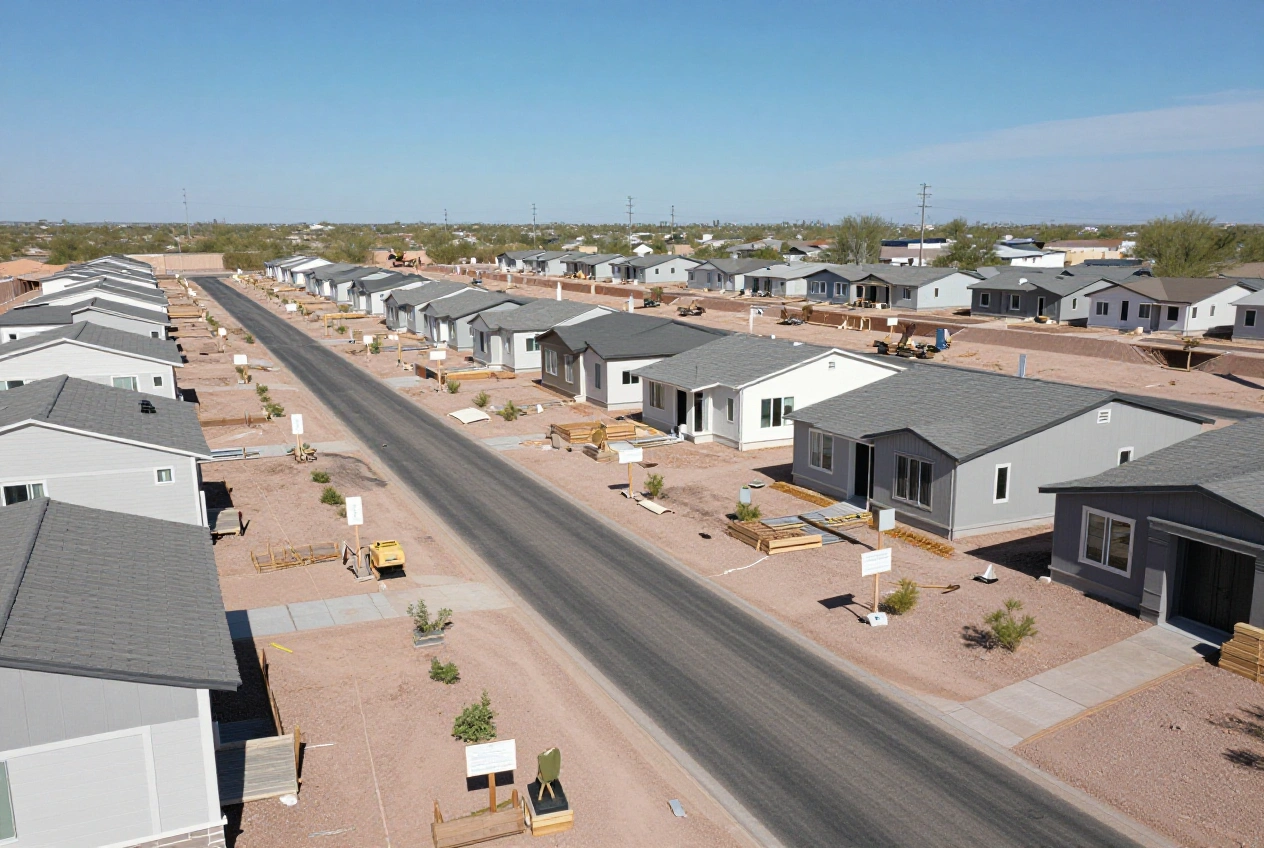
Arizona Launches SAID Program to Help Finance Infrastructure for New Housing
Arizona has launched a new infrastructure financing program intended to help communities prepare land for housing development. The State Affordability Infrastructure District (SAID) framework became operational in September 2026, giving eligible property owners a process to petition the Arizona Finance Authority (AFA) to establish districts that can finance public infrastructure.
Created through House Bill 2999, signed by Governor Katie Hobbs in June 2026, the program is designed to address one of the major upfront costs of building new communities: installing the roads, water and sewer systems, and other public infrastructure needed before homes can be occupied.
How the SAID Program Works
The SAID framework provides a statewide mechanism for financing qualifying public infrastructure before development begins. Eligible landowners can submit a formation petition to the Arizona Finance Authority, along with required supporting documents.
If a district is approved and established, it can use authorized financing tools, including tax-exempt bonds, to fund eligible infrastructure projects. Rather than requiring all infrastructure expenses to be covered upfront, the financing structure allows costs to be paid over time through the district’s authorized financial arrangements.
The Arizona Finance Authority has published program information, forms, frequently asked questions and submission instructions for applicants.
What Infrastructure Can Be Funded?
The program is intended to support public infrastructure needed for housing and community growth. Eligible projects may include:
- Roads and streets serving new development.
- Water and sewer infrastructure.
- Public utilities and related facilities allowed under the law.
- Public safety facilities and other qualifying infrastructure.
The availability of financing depends on the proposed district, statutory requirements, infrastructure plans and the applicable approval process. The program does not automatically approve every development or replace local zoning and land-use decisions.
What Could This Mean for Homebuyers and Communities?
Infrastructure expenses can be a significant barrier to developing new housing. By providing another way to finance qualifying improvements, SAID districts may help some projects move forward that would otherwise face substantial upfront costs.
If projects proceed, nearby communities could eventually see additional housing, supporting infrastructure and related development activity. However, the program’s launch does not mean new homes will immediately become available or that prices will necessarily fall.
The actual effect on housing affordability will depend on whether districts are formed, whether projects receive financing, how infrastructure is delivered and how development costs are reflected in home prices.
Important Considerations for Property Owners
SAID districts are separate public entities with specific powers and financial responsibilities. Under the framework, obligations such as authorized taxes, assessments and bonds are borne by property within the district rather than automatically becoming debts of the state or the surrounding city or county.
For buyers considering a property in a SAID district, it is important to understand whether the property is within the district and what taxes, assessments or other obligations may apply. Arizona’s framework also includes property-disclosure requirements.
Landowners and developers should review the program’s formation requirements and financing conditions before assuming a district will be suitable for a particular project.
From Legislation to Implementation
Governor Hobbs signed HB 2999 in June 2026, and the program became operational in September. The Arizona Finance Authority now provides the process for eligible landowners to seek district formation.
The next important milestones will be the submission and review of petitions, the establishment of qualifying districts and the progress of infrastructure projects using the financing mechanism.
The SAID program gives Arizona another tool for addressing infrastructure costs associated with housing development. Its long-term impact will become clearer as districts are formed and projects move from planning into construction.