
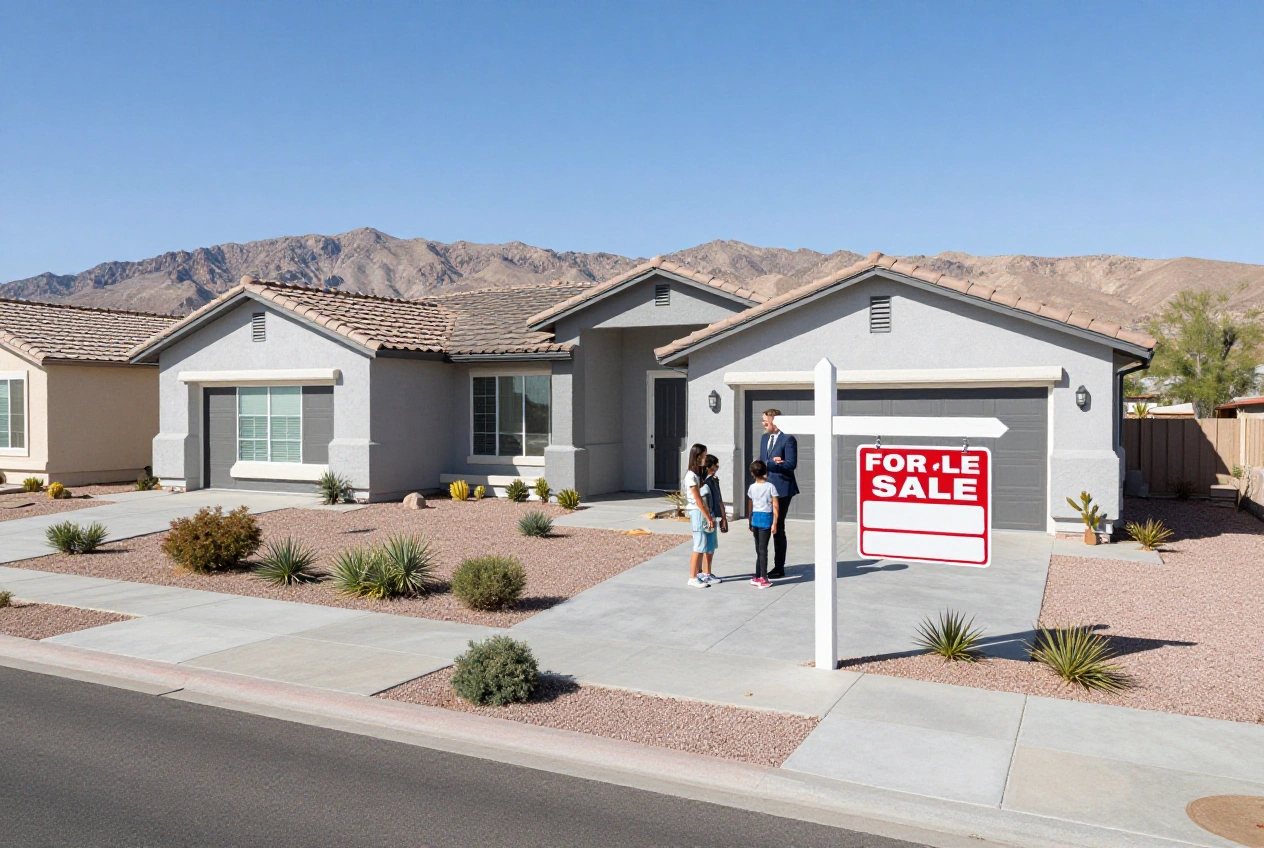
Las Vegas Housing Market Cools in September as Sales Decline and Inventory Rises
Las Vegas’ housing market showed signs of cooling in September 2026, with fewer existing homes sold, rising inventory and prices below recent highs. Data reported by Las Vegas REALTORS® (LVR) suggests buyers may have more properties to consider, while sellers face greater pressure to price their homes competitively.
September Market Snapshot
The median sale price for an existing single-family home in Southern Nevada was $470,000 in September. That was down 1.1% from August but unchanged compared with September 2025. The figure also remained $20,000 below the record median of $490,000 reached earlier in 2026.
For existing condos and townhomes, the median sale price was $290,000, down 1.4% from a year earlier. That remained below the segment’s record median of $315,000, set in October 2024.
These figures reflect existing-property sales reported through the LVR multiple listing service. They should not be treated as the value of every home in the region, since prices can vary significantly by location, property type and condition.
Sales Slow as More Listings Remain Unsold
A total of 2,169 existing homes, condos and townhomes sold in Southern Nevada during September.
Compared with September 2025, single-family home sales declined by 7.4%, while condo and townhome sales fell by 12.6%. The larger drop in attached properties points to softer sales activity in that segment.
Inventory also increased year over year. At the end of September, 7,995 single-family homes were listed without offers, up 6.6% from a year earlier. Another 2,796 condos and townhomes were listed without offers, an increase of 7.3%.
The reported inventory represented approximately 4.6 months of supply for single-family homes and 6.6 months for condos and townhomes, based on the month’s sales pace. The difference suggests that market conditions are not identical across property types.
Mortgage Costs Add to Affordability Challenges
Higher borrowing costs remain an important consideration for prospective buyers. Freddie Mac reported that the average U.S. rate for a 30-year fixed mortgage reached 7.40% for the week of October 15, 2026, making financing more expensive than it would be at lower rates.
Mortgage rates are influenced by broader financial and economic conditions, not solely by Federal Reserve decisions. Although higher rates can affect purchasing power, the September Las Vegas figures alone do not establish how much of the local sales decline was caused by borrowing costs.
Distressed transactions—including short sales and foreclosures—accounted for approximately 1.1% of sales, according to reporting on the LVR data. This indicates that such transactions remained a small share of the existing-property market.
What the September Numbers Mean for Buyers and Sellers
For buyers, rising inventory may provide more opportunities to compare properties and negotiate, depending on the home’s location, asking price and competition from other buyers. Reviewing recent comparable sales and calculating the full cost of financing can help buyers determine whether a property fits their budget.
For sellers, the data reinforces the importance of setting a realistic asking price. Homes priced above comparable properties may face more competition as buyers gain additional choices. Sellers may also want to consider buyer feedback and whether repairs or concessions could help a transaction move forward.
September’s figures point to a market with slower sales and more available inventory, but they do not mean every Las Vegas property is losing value. Local conditions can differ by neighborhood and property type, so buyers and sellers should evaluate their decisions using current, property-specific information.