
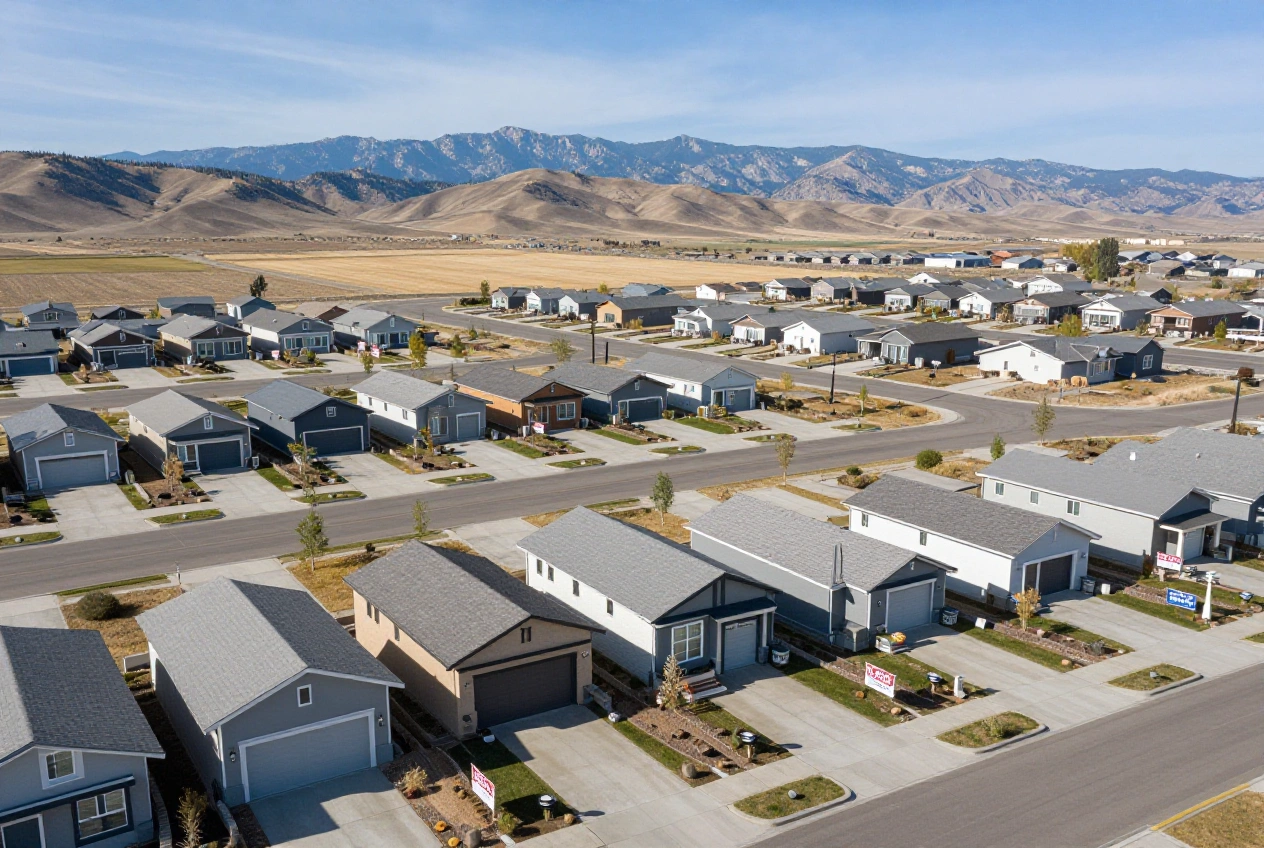
Treasure Valley Home Sales Rise 4.9% as Idaho Market Shows Resilience
The Treasure Valley housing market recorded stronger sales activity in September 2026, with more homes sold, rising median prices, and properties spending less time on the market than a year earlier.
According to September market data compiled by Build Idaho from local MLS records, 1,431 homes closed during the month, a 4.9% increase from 1,364 transactions in September 2025. The median sale price rose 3.7% to $514,000, while median days on market declined approximately 28% to 18 days.
The results indicate continued activity across the Boise-area housing market despite elevated mortgage rates and affordability challenges facing prospective buyers.
September Sales and Price Trends
The September figures show growth in both transaction volume and median sale prices across the Treasure Valley.
Key indicators included:
- Closed home sales: 1,431, up 4.9% year over year.
- Median sale price: $514,000, up 3.7% from September 2025.
- Median days on market: Approximately 18 days, down from about 25 days a year earlier.
- Sale-to-list price ratio: 99.3%, compared with 98.9% in September 2025.
- Luxury home sales: Transactions involving homes priced at $1 million or more increased from 125 to 150.
The figures suggest that well-positioned properties continued to attract buyers, although market conditions differed by city, price range, and property type.
A shorter marketing period does not mean every home is selling quickly. Pricing, condition, location, and the availability of competing properties remain important factors in individual transactions.
Ada and Canyon Counties: Understanding Local Differences
The Treasure Valley includes communities across Ada and Canyon counties, with housing options ranging from established neighborhoods in Boise to newer developments in growing suburban communities.
Ada County includes markets such as Boise, Meridian, Eagle, and Star, while Canyon County includes communities such as Nampa, Caldwell, and Middleton. Prices and market conditions can vary significantly across these locations.
The September figures indicate that the region’s overall sales growth was not necessarily uniform. For example, Eagle recorded 122 home sales, up 31.2% year over year, while its median sale price declined 10.9% to $846,782. Kuna also recorded a substantial increase in transactions.
These differences illustrate why buyers and sellers should review local statistics rather than rely solely on the Treasure Valley-wide median.
Canyon County is often considered by buyers seeking alternatives to higher-priced areas of Ada County. However, affordability depends on the specific community, property type, home size, and ongoing ownership costs. A countywide price comparison should be based on the same reporting period and comparable property categories.
Mortgage Rates Continue to Influence Affordability
Mortgage rates remain an important consideration for buyers evaluating their budgets.
Freddie Mac reported that the average 30-year fixed mortgage rate was 7.40% for the week ending October 15, 2026, compared with 6.27% during the same week in 2025.
Higher financing costs can increase monthly payments and reduce the purchase price a household can afford. Buyers may therefore need to compare loan options, evaluate down-payment requirements, and account for taxes, insurance, and maintenance when calculating their total housing expenses.
Despite these national financing pressures, the Treasure Valley recorded year-over-year growth in both sales volume and median sale price during September. Local activity can differ from national trends because of regional supply, employment, population changes, and the mix of homes available for sale.
How the National Housing Market Compares
The National Association of REALTORS reported that existing-home sales increased 1.5% from August to a seasonally adjusted annual rate of 3.99 million in September 2026.
However, national sales remained 2.2% below September 2025 levels. The national median existing-home sale price was $417,500, up 1.3% year over year.
These national figures provide context but should not be directly compared with Treasure Valley data without accounting for differences in geography, reporting methods, and market composition.
The Treasure Valley’s September performance was stronger in terms of year-over-year transaction growth, while the national market continued to face affordability challenges and elevated mortgage rates.
What Buyers and Sellers Should Know
For prospective buyers, the Treasure Valley’s increased sales activity and shorter marketing periods suggest that competition can remain strong for appropriately priced properties. Buyers should prepare financing in advance, compare recent comparable sales, and assess the total cost of ownership before making an offer.
Sellers may benefit from the region’s increased transaction volume, but pricing remains critical. The average home sold for 99.3% of its final asking price, indicating that the final listing price can be an important factor in negotiations.
Investors should assess each location separately, taking into account purchase prices, rental demand, financing costs, property taxes, insurance, and maintenance expenses.
Looking Ahead
The Treasure Valley’s September housing results show that local sales activity can remain resilient even when mortgage rates are elevated. Sales increased, the median sale price rose, and homes spent less time on the market than a year earlier.
However, the outlook for individual communities will depend on affordability, available inventory, economic conditions, and buyer demand. Monitoring monthly MLS statistics alongside mortgage-rate changes can help residents better understand how the market evolves.