
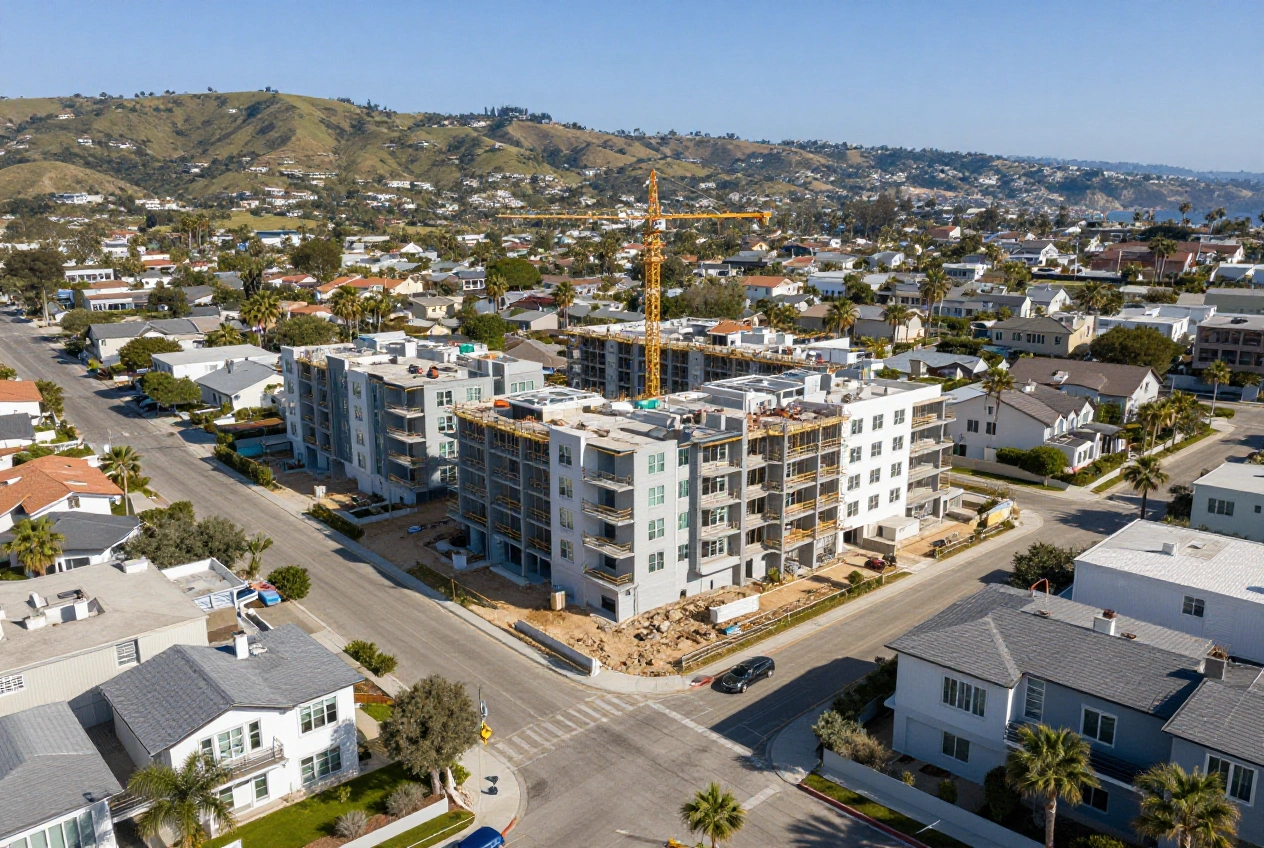
California Multifamily Building Permits Rise 33% in 2026
California’s multifamily housing sector is showing stronger permitting activity in 2026, with 36,600 apartment and other multifamily housing units permitted statewide during the first eight months of the year. That represents a 33% increase compared with the same period in 2025, according to an analysis of U.S. Census Bureau building permit data published in October.
The increase marks the third-strongest start to a year since 1990, highlighting renewed activity in a state where housing supply and affordability remain important concerns.
Although the figures indicate that more multifamily developments are moving through the permitting process, they do not mean all the approved homes have begun construction or are ready for occupancy.
Stronger Start for Multifamily Construction
Building permits provide an early indicator of potential housing construction. The latest figures suggest that developers are advancing more multifamily projects in California than they did during the same period last year.
According to the October 8 analysis by Southern California News Group business columnist Jonathan Lansner, the state’s 36,600 permitted multifamily units represented a pace approximately 12% above the 10-year average.
Over the past decade, California recorded approximately 502,500 multifamily permits, a 48% increase compared with the preceding decade.
The longer-term figures provide context for the current increase, although annual permitting levels can fluctuate with financing conditions, construction costs, local approvals, and market demand.
Los Angeles and Orange Counties Lead Regional Growth
The Los Angeles–Orange County area accounted for a substantial share of California’s multifamily permitting activity.
During the first eight months of 2026, the two-county region recorded 16,643 multifamily units permitted, an 82% increase compared with the same period in 2025. The pace was the second strongest for the first eight months of a year since 1990 and approximately 32% above the region’s 10-year average.
The regional increase highlights the importance of Southern California in the state’s multifamily development activity.
However, permits issued across a metropolitan area do not necessarily translate into an equal increase in completed housing. Construction schedules, financing, labor availability, and additional approvals can influence when individual projects move forward.
What the Numbers Mean for California’s Housing Supply
Multifamily development is an important component of California’s efforts to expand its housing stock. Apartment buildings can add homes in areas where land is expensive or limited, and larger projects may provide a range of unit sizes and rental options.
Nevertheless, a rise in permits alone does not establish whether the state is producing enough housing to meet demand. It also does not demonstrate that rents have declined or that affordability has improved.
The effect on renters will depend on how many permitted units ultimately reach completion, where they are located, their rental prices, and the level of demand in each local market.
The U.S. Census Bureau’s Building Permits Survey provides a useful way to monitor this early stage of residential development. Readers can review its state and metropolitan-area data to follow changes in permitting activity over time.
What Renters, Buyers, and Investors Should Watch
For renters, increased permitting may indicate that additional rental housing could become available in the coming years. However, the timing and affordability of that housing remain uncertain.
Multifamily investors and developers can use permitting trends as one indicator of market activity, alongside financing costs, construction expenses, vacancy rates, rental demand, and local economic conditions.
Homebuyers may also watch new apartment construction as part of the broader housing supply picture, but the relationship between rental development and home prices varies by location and market conditions.
California’s 2026 permitting increase is a meaningful sign of activity in the multifamily development pipeline. Whether it results in more affordable housing will depend on the number of projects completed and the conditions in the communities where those homes are delivered.