
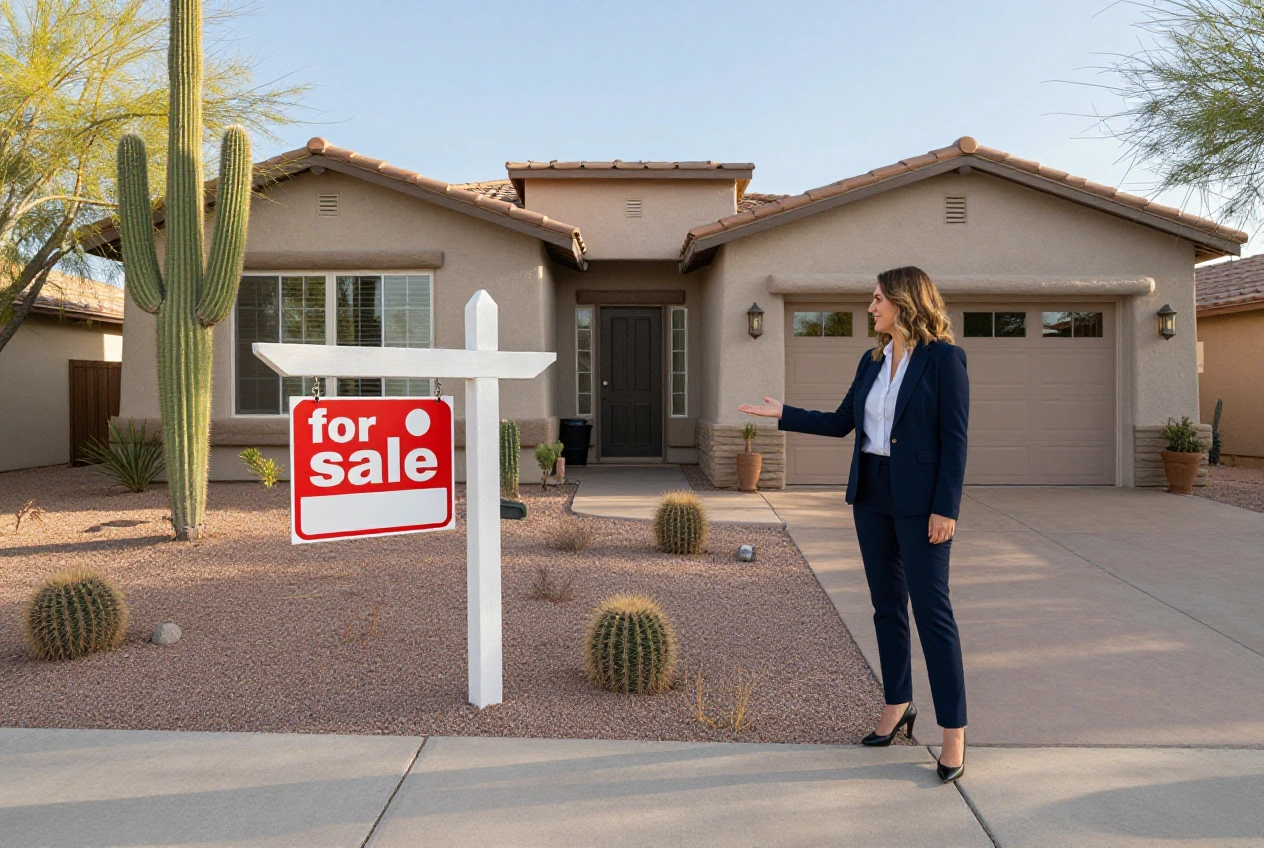
Greater Phoenix Housing Market Slows as Mortgage Rates Pressure Buyers
Greater Phoenix’s housing market experienced slower sales activity in September 2026, with fewer closed transactions and a sharp decline in pending sales compared with the same month last year. The latest figures point to affordability challenges and uncertainty among buyers, even as year-to-date sales remain ahead of 2025 levels.
According to data from Phoenix REALTORS, Greater Phoenix’s single-family market recorded a 4.9% year-over-year decline in closed sales in September. Pending sales fell 40.1%, while new listings decreased 3.7%.
The figures suggest that buyers are taking a more cautious approach as borrowing costs remain elevated and housing affordability continues to influence purchasing decisions.
Greater Phoenix: September Housing Market Highlights
The September report showed several changes in the region’s housing activity:
- Closed sales: Down 4.9% compared with September 2025.
- Pending sales: Down 40.1% year over year, indicating a substantial slowdown in newly contracted transactions.
- New listings: Down 3.7% from the previous year.
- Median listing price: Realtor.com reported a median Phoenix listing price of $475,000, down 4.8% year over year.
- Days on market: Realtor.com reported a median of 62 days for Phoenix listings, 4.7% fewer than a year earlier.
These figures come from different reporting sources and measure different aspects of the market. Closed sales reflect completed transactions, while pending sales measure homes under contract. Listing prices represent sellers’ asking prices rather than the final amounts buyers pay.
Despite weaker September activity, Phoenix REALTORS reported that year-to-date sales remained above the corresponding period in 2025.
Phoenix, Scottsdale and Tucson: Different Market Conditions
Housing conditions vary across Arizona, and city-level listing statistics provide additional context for buyers and sellers.
Phoenix
Realtor.com’s September report recorded 18,437 active listings in Phoenix, an increase of 7.5% from a year earlier. New listings rose 3.6% to 7,322, while the median listing price declined 4.8% to $475,000.
The combination of increased inventory and lower asking prices may give buyers more properties to consider. Sellers, meanwhile, may need to pay closer attention to comparable listings and pricing strategy.
Scottsdale
Scottsdale’s housing market operates at a different price level from the broader Phoenix market. Realtor.com’s September 2026 data showed a median listing price of $899,000 and a median sold price of $885,000.
The distinction matters when comparing local market conditions: asking prices and completed-sale prices can move differently, and citywide figures may conceal differences between neighborhoods and property types.
Tucson
Tucson also recorded a decline in asking prices. Realtor.com’s September report showed a median listing price of $372,500, down 3.2% year over year.
Active listings increased 2.5% to 3,851, while 22.2% of listings had price reductions. The median days on market was 58.
These figures suggest that some Tucson sellers are adjusting their asking prices as buyers weigh affordability and available choices.
Mortgage Rates and Housing Affordability
Mortgage costs remain an important factor in homebuying decisions. Freddie Mac’s weekly measure of the average 30-year fixed mortgage rate reached 7.28% for the week ending October 1, 2026, its highest reading since November 2023.
Higher mortgage rates increase the monthly cost of financing a home, potentially limiting the purchase price buyers can afford or prompting some households to delay a transaction.
Meanwhile, Arizona Regional Multiple Listing Service (ARMLS) reported a statewide median sales price of $450,000 in September, unchanged from September 2025. The report also placed statewide housing supply at 4.45 months.
Market conditions vary by location. ARMLS identified Chandler, with a median of 66.5 days on market, and Gilbert, at 65.6 days, among the faster-moving markets in its reporting.
These statewide figures provide useful context, but they should not be interpreted as identical to Greater Phoenix’s single-family market statistics.
What the Market Changes Could Mean for Arizona Residents
For prospective buyers, a larger selection of listings in some areas and seller price reductions may create opportunities to compare properties and negotiate. However, higher financing costs can offset some of the benefit of a lower asking price.
Homeowners preparing to sell may need realistic pricing expectations and a clear understanding of competing properties. Investors should also evaluate local inventory, completed-sale prices, financing expenses, and rental demand rather than relying on statewide averages alone.
Arizona’s longer-term population outlook remains relevant to housing demand. The Arizona Office of Economic Opportunity projects the state’s population will increase from approximately 7.7 million in 2025 to 9.8 million by 2060—growth of more than 2 million people, or about 26%.
That projection provides long-term demographic context, but it does not guarantee future home-price increases or uniform demand across all Arizona communities.
What Buyers and Sellers Should Watch
As the market moves through the fall, buyers and sellers can monitor several indicators to better understand changing conditions:
- Monthly closed and pending sales.
- Active inventory and newly listed properties.
- Median sold prices compared with asking prices.
- Mortgage rates and their effect on monthly payments.
- Local market conditions in individual cities and price ranges.
The September figures point to a more cautious housing market in parts of Arizona, but conditions differ by geography and by the type of housing data being measured. Reviewing local statistics alongside financing costs can help residents make more informed real estate decisions.