
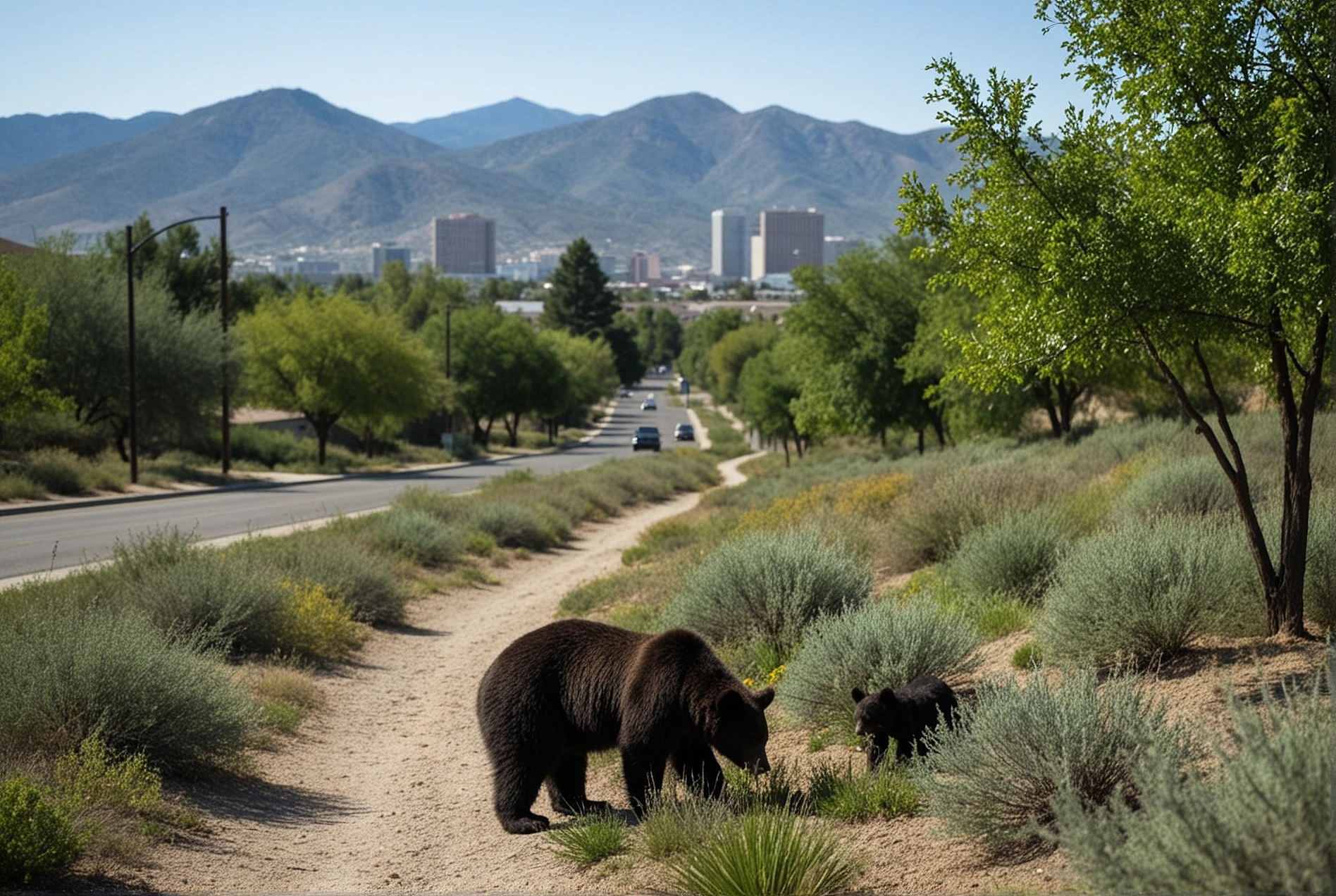
Northern Nevada Residents Urged to Take Precautions as Fall Bear Activity Increases
Residents across northern Nevada are being reminded to take extra precautions as black bears become more active in developed areas during their fall feeding period.
The Nevada Department of Wildlife (NDOW) says bears are entering hyperphagia, a natural period when they dramatically increase their food intake to build fat reserves before winter. During this time, bears can spend much of the day searching for food and may venture closer to neighborhoods, roads and other developed areas.
Why This Matters to Local Residents
NDOW reports that black bears can consume thousands of additional calories during hyperphagia, with the agency citing as much as 20,000 to 25,000 calories per day depending on the source and conditions. Unsecured garbage, pet food, birdseed, fallen fruit and other human-provided food sources can make developed areas particularly attractive.
The goal for residents is not simply to avoid bears, but to prevent bears from becoming accustomed to finding food around people. Bears that repeatedly access human food can become food-conditioned, increasing the potential for property damage and dangerous encounters.
Recent Bear Encounter at Rancho San Rafael Park
On Monday, wildlife officials responded to reports of a mother bear and her two cubs in the Rancho San Rafael Regional Park area in Reno.
The three bears were not aggressive, but because they were in an area with a large number of people and pets, NDOW staff safely darted them as a precaution. Officials collected DNA and biological samples and fitted the adult female with a GPS collar to monitor her movements and behavior.
The mother and her two cubs were kept together and released back into the wild Tuesday afternoon. No members of the public, wildlife staff or bears were injured.
The encounter occurred while the Wilbur D. May Arboretum was hosting the Dragon Lights event. NDOW said the festival was not interrupted.
Bear-Vehicle Collisions Are Also a Concern
Fall bear activity can create additional risks for drivers.
NDOW recently reminded motorists that bears may spend more time moving across highways and other roads while searching for food. Shorter daylight hours can also make wildlife harder to see, particularly around dawn, dusk and at night.
According to NDOW, a crash in September resulted in the death of a three-year-old female bear. Wildlife officials are warning that bear-vehicle collisions can increase during October as daylight decreases and bears remain active in their search for food.
Drivers should slow down in areas where wildlife is present, watch both sides of the road and be prepared for additional bears to follow. If a bear crosses the road, motorists should give it plenty of time and space rather than stopping or swerving suddenly.
How Residents Can Help
Residents can reduce the likelihood of bears entering neighborhoods by removing or securing potential food sources.
- Secure garbage in bear-resistant or tightly closed containers.
- Keep pet food indoors and remove other outdoor food attractants.
- Pick ripe fruit from trees and clean up fruit that has fallen to the ground.
- Secure bird feeders and birdseed when bears are active in the area.
- Clean and secure barbecue grills after use.
- Never intentionally feed a bear.
- Give bears plenty of space and never approach or attempt to take food away from one.
- When driving, slow down and watch for wildlife, particularly at dawn, dusk and during nighttime hours.
A Seasonal Pattern, Not an Unusual Behavior
The increased activity is part of the bears’ normal annual cycle. Hyperphagia is a survival behavior that helps bears build the fat reserves needed for winter.
However, human food sources can change where bears spend their time. Keeping garbage, pet food and other attractants secured can help prevent bears from becoming dependent on developed areas and reduce the risk of conflicts between wildlife, residents and drivers.
Key Takeaway
Northern Nevada residents can help reduce bear encounters by making neighborhoods less attractive to wildlife and remaining alert when traveling through bear habitat.
For residents and property managers, simple steps such as securing trash, removing food attractants and reminding residents to slow down around wildlife can help protect both communities and bears during the fall feeding season.
For bear-related incidents in Nevada, NDOW lists 775-688-BEAR (2327) as its reporting number. Emergencies that pose an immediate threat to public safety should be reported to 911.