
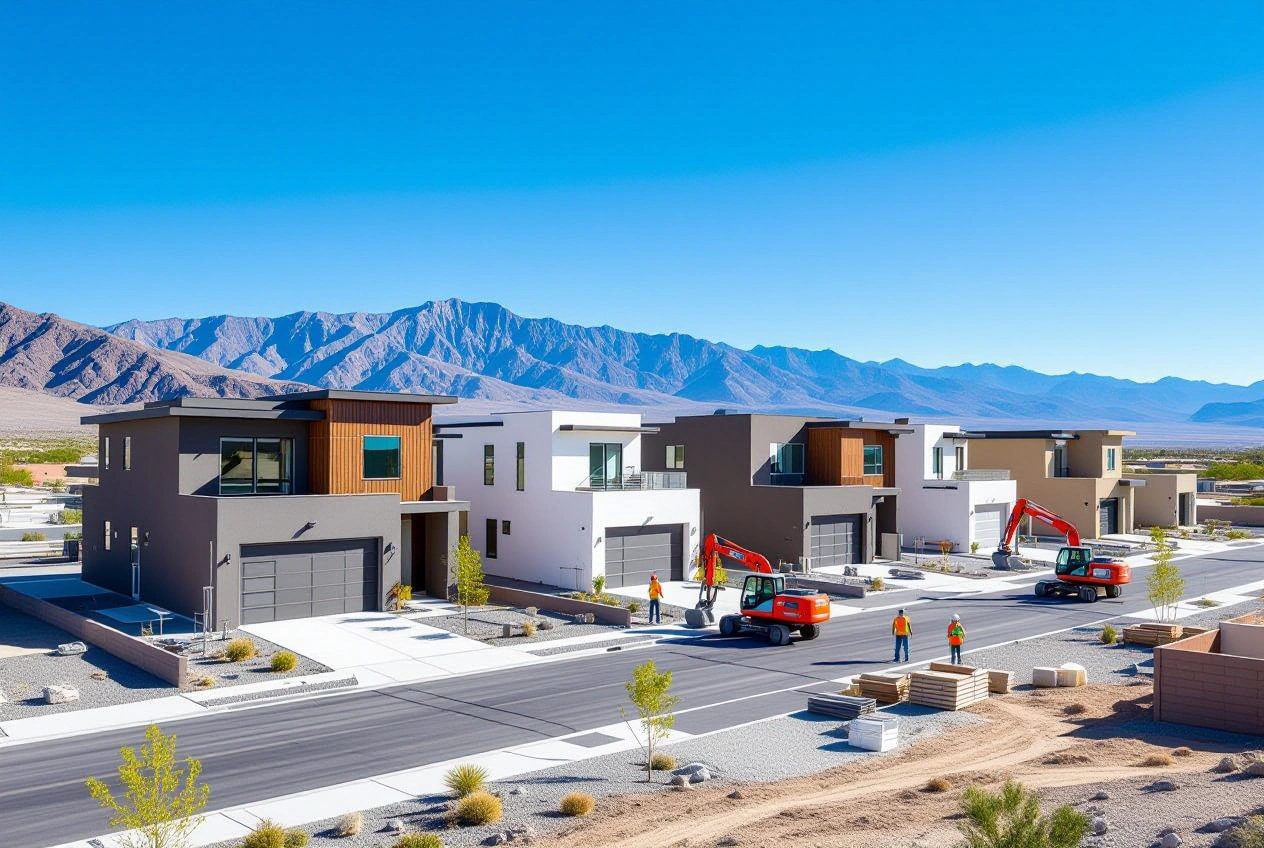
Las Vegas Suburbs Continue to Grow as New Housing Development Expands
Residential development continues to shape Southern Nevada as communities across the Las Vegas Valley add new homes, infrastructure and commercial projects.
Henderson, North Las Vegas and other growing areas of the Valley continue to attract residential development as builders respond to housing demand and population growth.
The expansion is creating new opportunities for homebuyers while also placing greater demands on roads, utilities, schools, public services and community infrastructure.
Henderson and North Las Vegas Remain Important Growth Areas
Henderson and North Las Vegas continue to be two of the most active areas for residential and commercial development in Southern Nevada.
Both cities have large areas of undeveloped or developing land and have established long-term plans for accommodating population growth.
North Las Vegas, in particular, has experienced significant expansion over the past several years as new residential communities have developed alongside industrial and commercial projects.
Henderson also continues to approve and develop new residential communities while expanding infrastructure to support future growth.
Rather than characterizing the activity as a single construction “boom,” it is more accurate to view it as part of the Valley’s continuing long-term expansion.
New Communities Are Adding Housing Options
New construction gives buyers additional choices beyond the existing-home market.
New communities can offer:
- Modern floor plans
- Energy-efficient appliances and systems
- New construction materials
- Community amenities
- Parks and recreational areas
- New infrastructure
- Home warranties
For buyers who prefer newer properties, these developments can provide an alternative to purchasing an older home that may require immediate repairs or upgrades.
However, buyers should consider more than the advertised purchase price.
Property taxes, insurance, HOA assessments, financing costs and other community-related expenses can significantly affect the total cost of owning a newly constructed home.
Development Brings More Than Homes
Residential construction also creates demand for supporting infrastructure.
As new neighborhoods are developed, communities may need:
- Roads and intersections
- Water and sewer infrastructure
- Electrical services
- Schools
- Parks
- Retail centers
- Restaurants
- Medical services
- Public transportation
This is particularly important in master-planned communities.
A successful development requires coordination between builders, local governments, infrastructure providers and community organizations.
Growth Can Affect Existing Communities
New construction can also affect established neighborhoods.
As population increases, existing communities may experience changes in:
- Traffic
- Road usage
- School enrollment
- Retail activity
- Parking demand
- Property values
- Public services
Homeowners associations may also see changes in resident expectations as surrounding neighborhoods develop.
For example, residents may become more interested in landscaping standards, traffic management, neighborhood appearance and community amenities as nearby development increases.
The Importance of Community Planning
Rapid residential development creates a need for careful long-term planning.
New communities need functioning infrastructure and clear systems for managing common areas, amenities and homeowner communication.
This is especially important for master-planned developments containing hundreds or thousands of homes.
As new residents move into these communities, homeowners associations can become an important part of maintaining shared spaces and establishing consistent community standards.
What This Means for Homebuyers
Buyers considering new construction should research the entire community rather than focusing only on the individual home.
Before purchasing, buyers should consider:
HOA fees: Understand the monthly or annual assessment and what services it covers.
Community amenities: Determine which amenities are included and whether additional fees apply.
Future development: Research what additional residential or commercial construction is planned nearby.
Infrastructure: Consider planned roads, schools, retail centers and transportation improvements.
Builder incentives: Compare financing incentives, upgrades and closing-cost assistance based on their total financial value.
Construction timeline: Buyers purchasing homes that have not yet been completed should understand the builder’s estimated completion schedule and the terms of the purchase agreement.
Las Vegas Valley Growth Is a Long-Term Story
Southern Nevada’s housing development should be viewed as part of a broader regional growth pattern.
The Las Vegas Valley continues to attract residents and businesses, which creates ongoing demand for housing and supporting infrastructure.
At the same time, construction activity can fluctuate depending on mortgage rates, land costs, construction expenses, consumer demand and broader economic conditions.
For that reason, individual communities may experience different development patterns even when the broader Valley is growing.
What Residents Should Watch
As residential development continues, several factors will be worth monitoring:
New-home inventory: Additional construction can provide buyers with more options.
Infrastructure: Roads, utilities and public facilities need to keep pace with population growth.
Commercial development: New retail, restaurants and services often follow residential expansion.
Transportation: Growing communities can create additional traffic and increase demand for transportation improvements.
HOA development: New communities require effective systems for maintaining common areas and communicating with homeowners.
Local planning: City and county development plans can provide valuable information about future growth.
Final Takeaway
Las Vegas’ suburban communities continue to evolve as residential construction expands throughout Southern Nevada.
Henderson and North Las Vegas remain important areas of development, with new housing being built alongside commercial projects and infrastructure improvements.
For buyers, new construction can provide additional choices and modern housing options.
For existing homeowners, continued development can bring new amenities and services while also creating challenges involving traffic, infrastructure and community growth.
For homeowners associations and community managers, the continued expansion of Southern Nevada reinforces the importance of well-planned, well-maintained and well-communicated communities.
As the Las Vegas Valley continues to grow, the success of new developments will depend not only on how many homes are built, but also on how effectively those communities are planned and managed.